

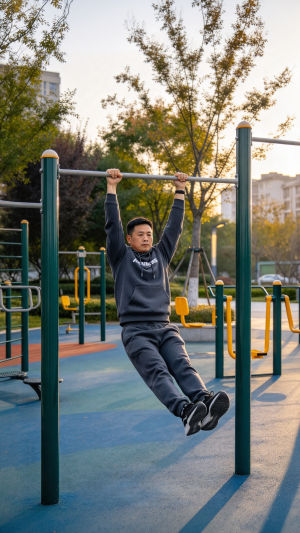
Strength training is an essential part of maintaining physical health and supporting long-term physical function.
Beyond developing muscular strength, regular resistance exercise contributes to joint stability, skeletal health, metabolic function, and the preservation of physical independence. It also helps maintain the strength needed for everyday activities, from climbing stairs to lifting and carrying objects.
Exercises such as pull-ups, push-ups, squats, and dead hangs use body weight as resistance to challenge different muscle groups. When incorporated into a balanced exercise programme, these movements can improve physical performance and support overall health throughout life.
<h3>How Resistance Training Builds Muscle Strength</h3>
Resistance training challenges muscles against an opposing force, which may come from body weight, free weights, resistance bands, or exercise machines. This stimulates muscular adaptations that gradually improve strength and endurance.
With consistent training, muscles become better equipped to handle physical demands. This can improve performance in everyday activities that involve lifting, pushing, carrying, and climbing.
Bodyweight exercises offer a practical way to develop strength without specialised equipment. Their difficulty can be adjusted through changes in movement, repetitions, and exercise variations to accommodate different fitness levels.
<h3>Supporting Joint Stability and Mobility</h3>
The muscles surrounding the shoulders, hips, knees, and spine play an important role in supporting joint stability and controlling movement. Strengthening these muscle groups can improve coordination and help the body maintain proper movement patterns during daily activities.
Controlled resistance exercises also encourage muscular coordination through different ranges of motion. Combining strength training with appropriate mobility exercises can further support flexibility and functional movement.
<h3>Maintaining Skeletal Health</h3>
Resistance training places mechanical stress on the skeleton, stimulating natural remodelling processes that help maintain skeletal strength. Weight-bearing activities such as squats, step-ups, and appropriately selected resistance exercises can support skeletal density when performed consistently.
Maintaining skeletal strength becomes increasingly important with age, particularly as changes in muscle mass and skeletal structure can influence balance and physical function.
Combining resistance exercises with balance training provides a comprehensive approach to supporting skeletal health, mobility, and independence.
<h3>Improving Metabolic Health</h3>
Muscles play a central role in blood glucose regulation because they use glucose as an energy source during physical activity. Regular resistance training can improve insulin sensitivity, helping the body use glucose more effectively.
Strength training can also support healthy body composition by preserving or increasing lean muscle mass. When combined with aerobic exercise and balanced nutrition, it contributes to a comprehensive approach to metabolic health.
<h3>Strength Training and Healthy Aging</h3>
Maintaining muscular strength is essential for preserving physical independence throughout life. As people age, changes in muscle mass and physical capacity can influence balance, coordination, walking ability, and everyday mobility.
Regular resistance exercise helps preserve muscle function and supports the physical capabilities needed for independent living. For older people, appropriately designed exercises can improve performance in practical movements such as standing from a chair, climbing stairs, and carrying groceries.
Starting with manageable resistance and progressing gradually allows exercise programmes to accommodate changing physical needs while supporting long-term participation.
<h3>How to Exercise Effectively</h3>
A successful strength-training programme should combine appropriate exercise selection, correct technique, gradual progression, and sufficient recovery.
The World Health Organization provides the following recommendation: “Muscle-strengthening activities should be done involving major muscle groups on 2 or more days a week.”
This recommendation highlights the importance of incorporating regular strength exercises into a balanced physical activity routine.
Several principles can help maximise the benefits of training:
- Start gradually: Choose resistance that matches your current strength and increase the difficulty progressively.
- Prioritise technique: Maintain controlled movements and proper positioning throughout each exercise.
- Allow recovery: Give trained muscle groups adequate time to recover between demanding sessions.
- Maintain consistency: Follow a regular routine that can be sustained over time.
- Adapt exercises: Consider individual fitness levels, previous injuries, and existing health conditions when selecting movements.
- Follow appropriate guidance: Seek professional advice when developing an exercise programme around specific health or physical requirements.
Strength training is a valuable component of long-term health, supporting muscular function, joint stability, skeletal strength, and metabolic well-being. Its benefits extend beyond exercise performance, helping people maintain the physical capabilities required for everyday independence.
Whether performed with gym equipment or body weight, resistance exercises can contribute to better health when included in a balanced and consistent routine. Appropriate progression, sound technique, and adequate recovery are key elements of an effective approach to lifelong physical fitness.


