

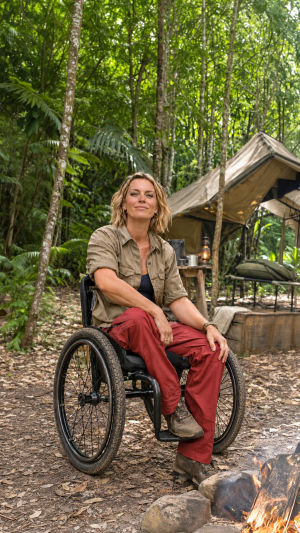
Taking part in a popular reality television show can be challenging for anyone, but entering a remote jungle camp with limited access brings a different set of considerations. For Paralympic medallist and television presenter Ade Adepitan, joining I'm a Celebrity… Get Me Out of Here! is about more than facing unfamiliar challenges.
At 53, he is preparing to become the programme's first wheelchair user, an opportunity he hopes will encourage wider conversations about disability, accessibility and representation.
<h3>A Historic Step for the Show</h3>
Adepitan has spent much of his life using a wheelchair and has built a successful career as a wheelchair basketball player and television presenter. Born in Lagos, Nigeria, he contracted polio as an infant. He later became a Paralympic medallist and developed a career presenting programmes about sport, the natural world and other subjects.
His upcoming appearance on I'm a Celebrity represents a significant moment for the programme. No wheelchair user had previously taken part, making his participation an important opportunity to show a broader range of people on mainstream television. The announcement attracted considerable attention online. Some critics questioned whether adapting the camp would give him an unfair advantage, while others challenged the idea of including a wheelchair user in the format.
<h3>Preparing the Camp for Accessibility</h3>
Before the series, Adepitan travelled to Australia to visit the filming location and work with the production team. He helped identify areas where the camp's layout could create difficulties, including uneven ground, narrow routes and places where transferring between mobility aids would be necessary.
The production team then made several adjustments. Pathways were modified, designated spaces were created for his wheelchairs, and resting points were added along the route between the camp and the creek. A stairlift was also installed to provide access to the jungle shower.
Adepitan will have different mobility options available, including several wheelchairs and sets of crutches. An electric wheelchair will help him navigate more difficult surfaces, while another chair will be available for challenges outside the main camp. These arrangements were developed around his individual access needs. Importantly, he has not been given advance information about the programme's planned challenges or other surprises.
<h3>Living With Barriers Beyond Television</h3>
For Adepitan, thinking about accessibility is nothing new. He compares moving around the jungle with navigating London, where broken station lifts and inaccessible transport can make ordinary journeys unexpectedly complicated. One recurring problem has involved taxi drivers refusing to carry him and his wheelchair. He has described situations in which he had to find creative ways to get a taxi to stop, including asking a friend to approach the vehicle first.
Although some improvements have taken place over the years, he says refusals and access problems still happen. In one case, he pursued a complaint through the courts after a driver declined to take him. The experience also encouraged other wheelchair users to share similar stories. His wider message is that disability is not simply a matter of using a wheelchair.
<h3>The Importance of Being Seen</h3>
Adepitan has spoken about feeling conspicuous from a young age. When he started school wearing callipers, he noticed the attention directed towards him and became aware that other people often formed opinions before getting to know him.
That experience influenced his understanding of representation. He believes seeing people with disabilities in ordinary public roles can help challenge assumptions about what they can achieve. He also remembers how meaningful it was to encounter public figures with similar experiences. Seeing someone with a disability succeed in a visible career helped him understand that he did not have to remain on the sidelines.
However, Adepitan does not claim that one television appearance can represent every disabled person. People's experiences and access requirements are different. His hope is simply that his participation will encourage viewers to think more carefully about inclusion and the barriers that remain.
<h3>A Personal Tribute to His Parents</h3>
Taking part in the programme also has a deeply personal meaning. Adepitan has spoken warmly about the sacrifices his parents made to give him and his sister opportunities in the United Kingdom. He recalls how they worked multiple jobs while continuing their studies and raised their family in difficult living conditions. Their efforts gave him the chance to build a life and career that he hopes will make them proud.
Adepitan's appearance on I'm a Celebrity brings an important conversation about accessibility into a familiar entertainment format. The changes made to the camp demonstrate that participation can become possible when organisers listen to the people who understand their own access needs.
His journey is not about proving that disability disappears in a challenging environment. It is about showing that people should have opportunities to take part without unnecessary barriers. Whatever happens during the series, his presence represents a meaningful step towards broader visibility and a more inclusive television experience.


