

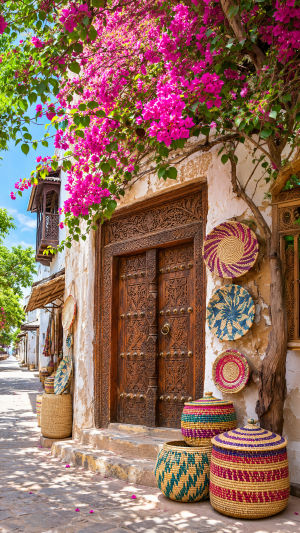
Coral-stone houses, narrow winding streets, and beautifully carved wooden doors give Lamu Old Town a distinctive appearance along Kenya's northern coast. In 2026, the historic settlement marks 25 years on UNESCO's World Heritage List, recognising its importance as one of East Africa's oldest and best-preserved Swahili towns.
Despite centuries of change along the coast, Lamu has retained much of its original character, with historic buildings and neighbourhoods continuing to serve as part of everyday community life.
<h3>A Settlement With More Than 700 Years of History</h3>
Located on Lamu Island, approximately 350 kilometres north of Mombasa, the old town has been continuously inhabited for more than seven centuries. It once served as an important trading centre, connecting East Africa with merchants from Arabia, Persia, and other regions.
While several historic coastal settlements have lost their populations, Lamu has remained an active town. Its streets, homes, and traditional buildings continue to reflect the development of Swahili society and the cultural exchanges that shaped the region. UNESCO added Lamu Old Town to its World Heritage List in 2001. The recognition highlighted its historic street layout, distinctive architecture, and importance as a surviving example of East African coastal settlements.
<h3>Coral-Stone Houses and Distinctive Architecture</h3>
Local materials played an important role in shaping Lamu's architectural identity. Traditional buildings were constructed using coral stone, lime, and timber poles collected from nearby mangrove forests. Many houses face inward towards private courtyards, creating sheltered spaces within the buildings. Along the waterfront, structures feature open verandas and arcades that give the seafront a consistent appearance for people arriving by boat.
Inside older homes, visitors can encounter painted ceilings, decorative wall niches known as madaka and zidaka, and pieces of Chinese porcelain incorporated into plasterwork. The town is also divided into small neighbourhoods called mitaa, consisting of groups of houses traditionally occupied by closely connected families.
One of its most recognisable architectural features is the carved wooden door. Heavy timber frames and lintels display detailed geometric and floral patterns, demonstrating the craftsmanship of local woodworkers. Historic examples are also preserved in the town's museum.
<h3>Museums Preserve the Town's History</h3>
The National Museums of Kenya manages five heritage attractions in and around Lamu: the Lamu Museum, Lamu Fort, the German Post Office, the Swahili House, and the Takwa Ruins. Established during the 1960s, the Lamu Museum holds an extensive collection documenting life across the archipelago. Its displays include traditional clothing, jewellery, manuscripts, musical instruments, and equipment associated with dhow sailing.
The museum also presents the work of Mohammed Kijumwa, a Swahili poet and wood carver. Visitors can view archaeological collections and examples of traditional carved doors, providing insight into the area's artistic and maritime heritage. Another important landmark is Lamu Fort, a stone structure built during the early 19th century. Today, it houses a museum and library, offering another opportunity to understand the town's history.
<h3>Conservation Protects Historic Buildings</h3>
Maintaining Lamu's architectural character requires ongoing work. The National Museums of Kenya has operated a conservation office in the town since 1986, while a planning commission has overseen construction within the protected area since 1991. The site is also protected under Kenya's National Museums and Heritage Act of 2006.
UNESCO's assessment provides an indication of the work still needed. Approximately 65% of the buildings are considered to be in good condition, while 20% require minor repairs and another 15% need more extensive restoration. The surrounding environment is equally important. Shela's sand dunes help supply fresh water to the town, while nearby mangrove forests shelter the harbour. Protecting these natural features supports the long-term preservation of the historic settlement.
<h3>Swahili Traditions Remain Part of Daily Life</h3>
Lamu's cultural identity continues beyond its historic buildings and museum collections. Traditional craftsmanship, maritime activities, music, and community celebrations remain important parts of local life. The annual Lamu Cultural Festival provides an opportunity to present Swahili traditions through songs, dances, and performances along the waterfront. The three-day event also attracts visitors interested in the area's history and creative heritage.
Lamu Old Town's 25th anniversary on UNESCO's World Heritage List highlights the importance of preserving a historic settlement that has remained active for more than 700 years. Its coral-stone architecture, carved wooden doors, museum collections, and maritime connections provide a valuable record of Swahili coastal heritage.
Continued conservation and support for traditional craftsmanship will be essential to maintaining its character. By protecting both its historic buildings and surrounding landscape, Lamu can preserve its distinctive identity while remaining a living community.


