

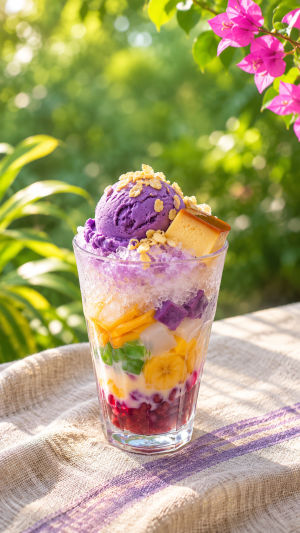
Hi, Lykkers! Halo-halo is a popular Filipino shaved-ice dessert known for its colorful appearance and refreshing combination of sweet ingredients.
Made with preserved tropical fruits, sweetened beans, coconut products, milk, and finely shaved ice, this traditional treat offers a satisfying mixture of creamy, fruity, and chewy textures.
Although it is widely available in Filipino restaurants and dessert shops, halo-halo can also be prepared at home using ingredients from Asian supermarkets or specialty grocery stores.
The preparation is relatively simple, and the ingredients can be adjusted according to personal preferences.
<h3>Ingredients for Filipino Halo-Halo</h3>
This recipe makes approximately two generous servings.
<b>Main ingredients:</b>
- 2 cups finely shaved ice.
- 150 ml evaporated milk.
- 2 tablespoons sweetened red beans.
- 2 tablespoons sweetened mung beans.
- 2 tablespoons sweetened jackfruit, sliced into thin strips.
- 2 tablespoons kaong or sweetened sugar palm fruit.
- 2 tablespoons nata de coco.
- 2 tablespoons macapuno or sweetened coconut strings.
- 1 small sweetened banana, sliced.
- 2 tablespoons sweetened chickpeas, optional.
<b>For the toppings:</b>
- 2 tablespoons ube halaya.
- 2 slices leche flan.
- 2 scoops ube ice cream.
- 2 tablespoons toasted pinipig or crushed toasted rice.
Most of these ingredients are available in jars or cans at Filipino and Asian grocery stores. If a particular ingredient is unavailable, it can be omitted or replaced with another sweetened fruit or jelly.
<h3>Step-by-Step Preparation</h3>
<b>Step 1: Prepare the Sweetened Ingredients</b>
Drain the excess syrup from the red beans, mung beans, jackfruit, kaong, nata de coco, and macapuno.
Slice the jackfruit into thin strips and cut the banana into bite-sized pieces. Prepare the leche flan by cutting it into small portions.
Keeping the ingredients in separate bowls makes assembly easier and allows each serving to have a balanced combination.
<b>Step 2: Prepare the Shaved Ice</b>
Crush clean ice cubes using an ice shaver or a suitable blender with an ice-crushing function.
The ideal texture should be fine and fluffy rather than consisting of large ice chunks. Finely shaved ice melts more evenly and absorbs the evaporated milk, creating the characteristic creamy consistency of halo-halo.
If using a blender, work in small batches to avoid overloading the appliance.
<b>Step 3: Arrange the Ingredients in Glasses</b>
Prepare two tall serving glasses or dessert bowls.
Divide the sweetened beans, banana, jackfruit, kaong, nata de coco, macapuno, and optional chickpeas between the glasses.
Arrange the ingredients in layers rather than mixing them immediately. This creates the colorful appearance traditionally associated with halo-halo.
<b>Step 4: Add the Shaved Ice and Milk</b>
Fill each glass generously with shaved ice, creating a rounded mound above the ingredients.
Slowly pour approximately 75 ml of evaporated milk over each serving. The milk will gradually combine with the melting ice and sweetened ingredients, producing a creamy dessert base.
<b>Step 5: Add the Signature Toppings</b>
Place a portion of ube halaya and leche flan on top of the shaved ice.
Add one scoop of ube ice cream to each glass, followed by toasted pinipig for additional texture.
The toppings provide contrasting flavors and make the finished dessert visually appealing.
<b>Step 6: Serve Immediately</b>
Serve halo-halo immediately while the shaved ice remains fluffy.
Traditionally, the dessert is mixed thoroughly before eating so that the milk, ice, fruits, beans, and toppings combine into one flavorful mixture.
<h3>Tips for Better Halo-Halo</h3>
The quality of the ice makes a noticeable difference. Avoid using large crushed ice pieces because they can create a watery texture and make the dessert less enjoyable.
Drain canned ingredients properly to prevent excessive syrup from diluting the milk. However, a small amount of syrup can be retained if a sweeter result is preferred.
For a more balanced flavor, combine sweet ingredients with different textures rather than using only fruits or jelly. Ube halaya and leche flan provide richness, while jackfruit adds fragrance and nata de coco offers a chewy contrast.
If evaporated milk is unavailable, fresh milk can be used, although the final flavor will be less rich.
<h3>Popular Variations to Try</h3>
Halo-halo is highly adaptable, making it suitable for different tastes and dietary preferences.
A tropical variation can include additional mango, coconut, and pineapple. Those who enjoy creamy desserts can add extra ube ice cream or leche flan.
For a lighter version, reduce the amount of sweetened beans and syrup while increasing fresh fruit. Coconut milk can also be used as an alternative to evaporated milk, although this changes the traditional flavor profile.
<h3>Serving and Storage Recommendations</h3>
Halo-halo is best prepared immediately before serving because shaved ice melts quickly when exposed to milk and room temperature.
The sweetened ingredients can be prepared and refrigerated separately in advance. However, the ice, milk, and toppings should only be assembled when the dessert is ready to eat.
This colorful Filipino dessert is an enjoyable way to experience the country's culinary traditions at home. With a combination of sweet fruits, creamy toppings, and finely shaved ice, homemade halo-halo offers a refreshing treat that is both visually attractive and satisfying.


