

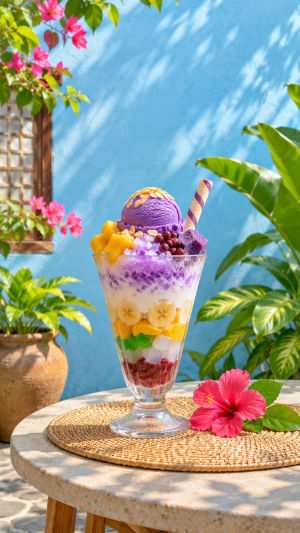
Hi, Lykkers! Halo-halo is one of the most recognizable desserts in the Philippines, celebrated for its colorful appearance, refreshing ingredients, and distinctive combination of textures.
The name comes from the Filipino expression meaning “mix-mix,” which describes the way its ingredients are combined before eating.
More than a simple cold dessert, halo-halo represents the creativity of Filipino food culture and its appreciation for sweet, refreshing treats.
<h3>The Origins of Halo-Halo</h3>
The history of halo-halo is closely connected to the development of traditional Filipino shaved-ice desserts. Before modern refrigeration became widely accessible, crushed and shaved ice provided an effective way to create refreshing snacks in the country's warm climate.
One of its earlier influences was monggo con hielo, a dessert combining sweetened mung beans with shaved ice. Over time, other ingredients were introduced, including sweetened fruits, beans, jellies, and milk. These combinations gradually developed into more elaborate cold desserts.
The practice of combining different ingredients with shaved ice became increasingly popular in local food establishments and households. Rather than following one fixed recipe, people experimented with ingredients according to regional preferences and availability.
This gradual development helped establish halo-halo as a distinctive dessert with numerous variations.
<h3>How Halo-Halo Became a Filipino Favorite</h3>
Halo-halo gained popularity because it offered an enjoyable way to combine several familiar sweet ingredients in one serving. Its preparation also allowed households and dessert vendors to use locally available produce and preserved foods.
The dessert eventually became a familiar feature of Filipino restaurants, neighborhood eateries, market stalls, and roadside refreshment shops.
Its popularity also grew through its visual appeal. A traditional glass of halo-halo often displays colorful layers of purple yam, yellow jackfruit, red sweetened beans, green palm fruit, and other ingredients beneath a generous topping of shaved ice.
The contrast between its colors and textures makes it particularly attractive to both local customers and international visitors.
<h3>Understanding the Traditional Ingredients</h3>
Although recipes differ between households and establishments, several ingredients are commonly associated with classic halo-halo.
Sweetened bananas provide a soft texture and natural sweetness, while jackfruit adds a fragrant tropical flavor. Sweetened red beans, mung beans, and chickpeas contribute a more substantial texture.
Kaong, also known as sugar palm fruit, and nata de coco provide a pleasantly chewy consistency. Macapuno, a variety of coconut with a soft, jelly-like texture, is another popular addition.
Shaved ice and evaporated milk form the refreshing base, while ube halaya, a sweet purple yam preparation, is frequently used as a topping.
Other popular additions include leche flan, ube ice cream, and pinipig, which is made from toasted flattened rice.
<h3>Regional and Modern Variations</h3>
Halo-halo does not have one universally fixed ingredient list. Different regions and food establishments have developed their own versions according to local tastes.
Some vendors prefer a generous combination of sweetened fruits and beans, while others emphasize creamy toppings such as leche flan and ube ice cream.
Modern interpretations sometimes include additional flavors, different ice cream varieties, coconut-based ingredients, or creative presentations served in larger bowls and dessert glasses.
Despite these variations, the central idea remains unchanged: combining contrasting ingredients to create a refreshing and satisfying dessert.
<h3>Halo-Halo in Filipino Food Culture</h3>
Halo-halo is especially associated with warm afternoons and relaxed gatherings. It is frequently enjoyed as an afternoon snack or after a meal, particularly during the hotter months.
Families often prepare it at home using ingredients purchased from local markets or supermarkets. Restaurants and dessert shops, meanwhile, present it as a signature Filipino specialty for visitors interested in exploring local cuisine.
Its popularity also extends beyond the Philippines, where Filipino restaurants and international food establishments introduce the dessert to new audiences.
<h3>A Dessert That Celebrates Creativity</h3>
The appeal of halo-halo comes from its ability to bring different flavors and textures together in one bowl. Each ingredient contributes something distinctive, creating a dessert that is simultaneously creamy, fruity, chewy, and refreshing.
From its early shaved-ice influences to its modern restaurant presentations, halo-halo has developed into an important part of the Philippines' culinary identity.
Its colorful appearance may attract attention initially, but its variety of flavors and textures is what continues to make it a favorite among dessert enthusiasts.


