

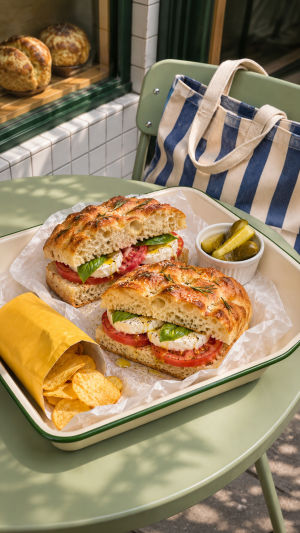
Focaccia is a forgiving bread, and this tomato and cheese version is the batch I make when I want something that looks like effort but mostly just needs time.
The dough rests overnight before stretching and topping. The aim is a soft interior with a crisp, olive-oil-rich base, rather than a loaf that needs lengthy kneading.
<h3>Ingredients</h3>
Keep the oil for the dough separate from the oil used to coat the tin and finish the surface. Gather the following ingredients:
- 500g strong white bread flour
- 375g lukewarm water
- 10g fine salt
- 7g instant yeast
- 40ml olive oil for the dough
- At least 2 tablespoons olive oil for the tin, plus a little for your fingers
- 3 tablespoons olive oil for the surface
- 200g cherry tomatoes, halved
- 150g mozzarella, torn
- 40g Parmesan, grated
- A pinch of dried oregano
- A little flaky salt
<h3>Steps</h3>
Focaccia dough should feel almost too soft to handle. Work gently when folding and stretching it; the rests are part of the process, not a sign that the dough has gone wrong. Follow these steps:
1. Mix the flour, water, fine salt, instant yeast and 40ml olive oil in a bowl until thoroughly combined into a shaggy dough. It will be wet and sticky rather than a firm ball.
2. Leave the dough to rest for 20 minutes before folding it over itself a few times. With a wet hand, lift an edge and bring it towards the middle, then turn the bowl and repeat around the dough. Stop when it becomes resistant to stretching.
3. Cover the bowl and put it in the fridge for 12 to 18 hours. A cold, slow rise develops flavour and gives the dough time to ferment without needing attention throughout the evening.
4. Take the bowl out of the fridge and let the dough sit at room temperature for about an hour. Meanwhile, coat a 30cm by 22cm tin with at least 2 tablespoons of olive oil, spreading it over the bottom and up the sides.
5. Tip the dough into the oiled tin and press it gently towards the corners. If it springs back, cover it, wait 10 minutes and try again. Avoid forcing resistant dough across the tin; resting lets it relax before the next stretch.
6. Leave the dough covered in the tin until visibly puffy and spread across the pan. Use its appearance rather than assuming it is ready as soon as it reaches the corners. Heat the oven to 220°C, or 200°C fan, with the shelf in the middle.
7. Oil your fingers and press straight down across the surface to make deep dimples. Those wells catch olive oil and help hold the toppings. Drizzle the remaining 3 tablespoons of olive oil over the surface.
8. Scatter over the tomatoes, mozzarella and Parmesan, then finish with the oregano and flaky salt. Avoid adding wet mozzarella straight from a tub, as it can leave soggy patches. If that is what you have, drain it on paper towels for 15 minutes before topping.
9. Bake for 22 to 25 minutes, until the top is golden and the cheese has blistered in spots. If the top browns too fast, lay a sheet of foil loosely over it. Carefully lift a corner with a spatula to check that the base is crisp, not pale and soft.
10. Let the focaccia cool in the tin for 10 minutes before cutting, so the melted cheese has time to settle. Loosen any cheese stuck around the edges with a spatula before lifting the bread out.
Serve while still warm, and refrigerate leftover slices promptly in a covered container rather than leaving this moist, cheese-topped bread at room temperature. Reheat only the portion you plan to eat, warming it through in the oven before serving.


