

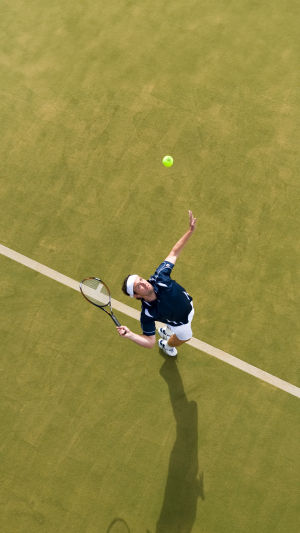
A good tennis serve involves more than hitting the ball with power. Spin, accuracy, and consistency are equally important. Whether you are a beginner or an experienced recreational player, improving a few basic techniques can make your serve more effective.
From adjusting your racket movement to choosing a suitable grip, these six strategies can help you develop better control and confidence on the court.
<h3>1. Increase Racket Head Speed</h3>
Racket head speed plays an important role in producing spin. Many recreational players slow down their racket when attempting topspin or sidespin because they worry about losing control. However, faster racket movement can create more rotation and help the ball follow a more controlled path.
Topspin makes the ball dip toward the service box, while sidespin changes its sideways movement. Spin can add margin for error compared with relying entirely on a powerful flat serve. Focus on accelerating the racket smoothly through contact instead of simply hitting harder. With regular practice, you can develop a useful balance of speed, spin, and accuracy.
<h3>2. Learn to Brush the Ball</h3>
Brushing the ball is essential for producing topspin. Instead of hitting directly through its center, move the racket upward across the ball's surface.
A helpful exercise is to practice serving from a kneeling position. Begin with a few comfortable attempts. Since your contact point is relatively close to net height, hitting straight through the ball may make it difficult to clear the net.
Imagine the ball as a clock face. Right-handed players can picture moving the racket from seven o'clock toward one o'clock. Left-handed players can imagine moving from five o'clock toward eleven o'clock. Complete ten serves with moderate power before standing up and repeating the same movement. This exercise helps you understand how upward contact creates spin and encourages a higher bounce.
<h3>3. Choose the Right Grip</h3>
Your grip affects how easily you can produce different types of spin. Beginners often use a forehand-style grip because it feels familiar, but this position can limit their serving technique. The continental grip is a useful option for developing a versatile serve. An eastern backhand grip is another option for experimenting with additional spin.
To find the continental grip, hold the racket handle as if you were holding a hammer. Keep your fingers slightly separated instead of squeezing the handle tightly. The position may feel unusual initially, but regular practice will help it become more comfortable.
<h3>4. Adjust Your Ball Toss</h3>
The position of your ball toss can influence the direction and amount of spin. For sidespin, try tossing the ball slightly toward your dominant side and a little farther away from your body. This makes it easier to brush sideways across the back of the ball.
For topspin, place the toss closer to the opposite side or above your head. This position allows you to move underneath the ball and brush upward. Make small adjustments rather than changing your entire serving motion. Observe how each toss position affects the ball's direction and bounce.
<h3>5. Improve Your Sidespin Technique</h3>
Producing sidespin requires brushing sideways across the back of the ball. Simply moving the racket around its outside can reduce control and make clean contact difficult.
Allow your forearm to rotate naturally through contact and the follow-through rather than trying to wrap the racket around the ball. Avoid forcing a thumb position or flicking your wrist to create spin. Practice slowly before increasing racket speed. Consistent contact is more valuable than rushing through the movement.
<h3>6. Keep Your Arm Relaxed</h3>
A relaxed arm helps generate racket head speed. Many recreational players hold the racket too tightly, creating tension in their hands, wrists, and forearms.
Try maintaining a comfortable grip that provides control without excessive pressure. Allow your wrist and arm to move naturally as the racket accelerates toward the ball. If your arm feels stiff, reduce your effort and return to a comfortable rhythm. Smooth movement can improve timing and help produce more effective spin.
Choose one adjustment for your next practice session and watch where the ball lands and how it bounces. If contact becomes inconsistent, slow down before trying to add more racket speed.
Simple Tennis Serve Technique Masterclass for Beginners
Video by Top Tennis Training - Pro Tennis Lessons


