

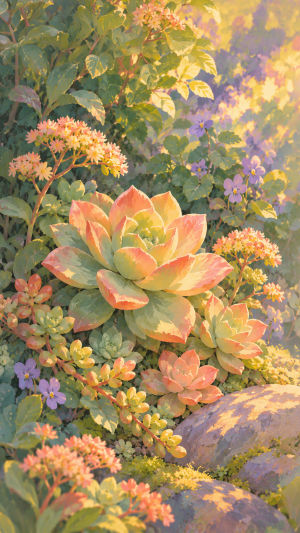
When you buy a pale green Echeveria, set it on the windowsill, and a few weeks later, the leaf edges may have gone deep red.
Nothing about your care changed. The plant changed. That color shift is one of the most reliable traits of succulents, and once you know the trigger, you can steer it rather than just watch it happen.
<h3>Pigments that sit under the green</h3>
The color was always there, hidden behind chlorophyll. Succulent leaves carry two other pigment groups: carotenoids, which appear orange and yellow, and anthocyanins, which appear red, pink, and purple. Chlorophyll is the loud one, so a happy, fast-growing plant looks green. Push it into slow growth and the green fades back, letting the other pigments show. That's the whole mechanism. Graptopetalum paraguayense is the easy proof: keep it shaded, and it stays a flat gray-green; give it strong light and the rosettes turn lavender-pink within a couple of weeks.
<h3>Why cool nights do the work</h3>
Temperature matters as much as the sun, and this is the part most people miss. Anthocyanin production ramps up when nights drop into the 50s Fahrenheit while days stay warm and bright. The cool air slows chlorophyll production, and the sugar that builds up in the leaves feeds the red pigments. Sedum spurium 'Dragon's Blood' turns a dull bronze in summer and a deep crimson in fall, and it's the same plant in the same container. Autumn is the season your succulents look their best, and now you know why.
<h3>Water stress, used carefully</h3>
A dry spell triggers color too. When the plant can't pull enough water, growth stalls and those secondary pigments take over. That's why growers talk about "stress colors." But do not just withhold water and hope. The line between stressed and damaged is thin. Aeonium 'Zwartkop' holds near-black leaves when kept on the dry side in full sun, and it rots fast if the soil stays wet. Let the soil dry completely between waterings, then water thoroughly. That cycle gives you color without the rot.
<h3>Light is the main dial</h3>
If you want to change color, start with light and change it slowly. Most Echeveria and Sedum plants want four to six hours of direct sun a day to show their best colors. Move a plant from shade to full sun in one jump, and you'll get sunburn, which shows as white or brown scar tissue that never fades. Give it an extra hour of morning sun per week instead. Grow lights work too, and a 12-hour cycle under a decent full-spectrum panel will bring out color in a Crassula ovata 'Hummel's Sunset' even in winter.
<h3>When color means trouble</h3>
Not every shift is good news. If leaves go red or purple while also turning soft, translucent, or dropping off, you're looking at cold damage or root rot, not stress color. Healthy color change keeps leaves firm. Check the stem at soil level. A mushy base is rot, and no amount of sunlight will fix it. Also skip the temptation to fertilize for color. High-nitrogen feed pushes new green growth and washes the reds right out.
The short version: strong light, cool nights, and a proper dry cycle between waterings bring out the reds and pinks that already live in the leaves. Try nudging one container this season and watch what it does. You'll learn more from that single plant than from any chart.


