

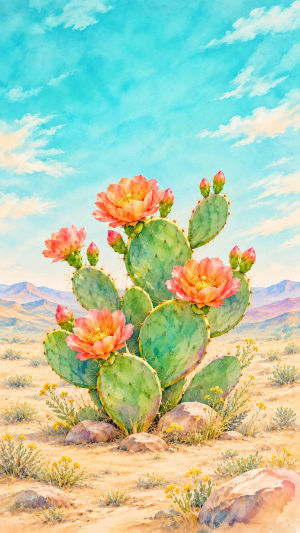
Hello, friends. A cactus sitting on a windowsill for years, green and healthy but never showing a single bud, is one of the most common complaints I hear.
The plant isn't broken. It's just missing a few conditions that trigger flowering, and most of them come down to how you treat it across the whole year, not just in spring.
<h3>Light decides everything</h3>
Most cacti sold as houseplants come from high-altitude or desert regions where they get direct sun for hours. A spot a few feet back from a south-facing window often isn't enough. Aim for at least four to six hours of direct sun during the growing season, and rotate the container a quarter turn every couple of weeks so the plant doesn't lean and shade its own growing tip. If your windowsill is dim, a small LED grow light run for 12 hours a day makes a visible difference within a season.
<h3>Winter cold does the work</h3>
This is the part people skip. Many cacti, especially Echinopsis and Mammillaria varieties, need a cool, dry rest period to form flower buds. From late autumn, move the plant to a room around 50 to 55 degrees Fahrenheit and cut watering back to once every three or four weeks, just enough to stop the soil from going completely dry. Keep it there for roughly eight to twelve weeks. Skip this, and you'll get steady growth but rarely a bud.
<h3>Container size and soil matter</h3>
A cactus in an oversized container spends its energy on roots, not flowers. Keep it slightly snug, with an inch or two of space around the root ball. Use a gritty mix, roughly two parts soil to one part coarse sand or pumice, so water drains fast. Feed lightly during spring and summer with a low-nitrogen cactus fertilizer, diluted to half strength. Too much nitrogen promotes soft, green growth and hinders flowering.
<h3>Age and patience play a part</h3>
Young plants simply aren't ready. Most cacti need three to five years before they flower for the first time, and some saguaro types take decades. I've had a golden barrel cactus that sat quietly for six years before producing its first yellow bloom in early summer. If the plant is still small and growing steadily, you're probably on track.
<h3>Water at the right moment</h3>
When you see buds forming in spring, resume normal watering gradually and don't move the container. Buds drop easily if the plant is turned or shifted late in development. A cactus that dries out completely at this stage can abort its flowers within days.
Get the winter rest, the light, and the container size right, and you'll usually see buds by early summer.
Next time your cactus sits stubbornly green, check the cold months first, because that's where most flowering gets quietly lost.


