

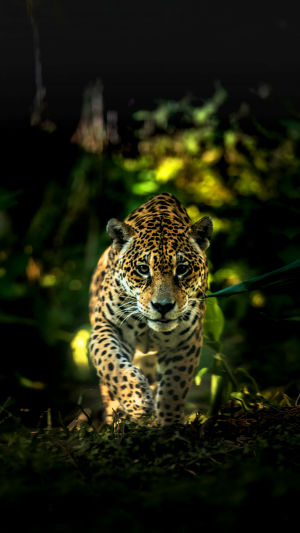
Jaguars are among the most recognizable wild cats in the Americas, yet many details about their daily lives remain fascinating. Their powerful build, unusual coat patterns, and ability to move through forests and waterways make them well suited to a variety of natural environments.
Although they are often associated with dense rainforests, their habits extend far beyond the trees. From their preference for quiet spaces to the way mothers raise their young, jaguars have a lifestyle shaped by their surroundings.
<h3>What Makes a Jaguar Unique?</h3>
The jaguar (Panthera onca) is the largest wild cat in the Americas and the third-largest cat species in the world. It has a broad head, strong shoulders, a compact body, and relatively short legs. Its physical structure gives it a powerful appearance that distinguishes it from other spotted cats.
Its coat is another recognizable feature. Golden or yellowish fur is covered with dark markings arranged in patterns called rosettes. Many rosettes contain smaller dark spots inside them, helping distinguish a jaguar's coat from the markings of a leopard.
No two jaguars have exactly the same pattern. The markings are useful to researchers who study individual animals through photographs and camera-trap images. Some jaguars also have a very dark coat because of a natural genetic variation. Their rosette patterns may still be visible under certain lighting conditions.
<h3>Where Jaguars Make Their Home</h3>
Jaguars live across parts of Central and South America, with their range also extending into Mexico. They occupy several types of natural environments, including tropical rainforests, wetlands, grasslands, and areas with dense vegetation.
Water is an important part of their habitat. Jaguars are frequently associated with rivers, swamps, and other freshwater areas. Vegetation provides places to rest and move through their surroundings, while nearby water supports the wider ecosystem they depend on.
The Amazon rainforest is particularly important for jaguar populations, but it is not their only home. The Pantanal, a large wetland region in South America, is another well-known habitat where jaguars can be observed. Their ability to live in different environments shows how adaptable they are, provided suitable cover, water, and space remain available.
<h3>A Mostly Solitary Lifestyle</h3>
Unlike animals that regularly travel in large groups, jaguars generally spend much of their time alone. Each individual uses a home range, and males and females may have overlapping areas. Jaguars communicate their presence through scent and visual signals. They may leave scent marks, scrape the ground, or scratch tree surfaces. Such signs provide information to other jaguars moving through the same area.
<h3>Remarkable Skills in the Water</h3>
One surprising part of jaguar behavior is how comfortable they are around water. Many cats avoid getting wet, but jaguars are capable swimmers and regularly move through rivers and streams. Their strong limbs help them travel across water, while their muscular bodies support movement through challenging natural environments. Waterways can also connect different sections of their habitat, making swimming a useful part of their daily routine.
Jaguars are also capable climbers. They can move through trees and may rest on branches, particularly in areas where the surrounding vegetation provides suitable cover. Their combination of swimming, climbing, and walking abilities allows them to use several parts of their environment.
<h3>How Mother Jaguars Raise Their Cubs</h3>
The early life of a jaguar begins in a sheltered place chosen by its mother. Newborn cubs are small and depend entirely on maternal care. Their eyes are initially closed, and they gradually become more active as they grow. A mother jaguar looks after her cubs on her own. She provides protection and guidance while they develop the skills needed to navigate their surroundings. As the young animals grow, they begin accompanying her and learning about their environment.
<h3>Why Healthy Habitats Matter</h3>
Jaguars depend on large areas of connected natural habitat. Forest clearing, expanding development, and the division of natural landscapes can make it harder for populations to remain connected. When forests and wetlands become separated into smaller areas, jaguars may have fewer suitable places to move, rest, and establish home ranges. Protecting freshwater systems and maintaining connected natural spaces are therefore important parts of conservation work.
Jaguars are much more than impressive spotted cats. Their distinctive markings, independent habits, swimming abilities, and extended family care reveal an animal closely adapted to life in diverse natural environments. By protecting the places where jaguars live, conservation efforts can help preserve not only this remarkable species but also the wider ecosystems that support it.


