

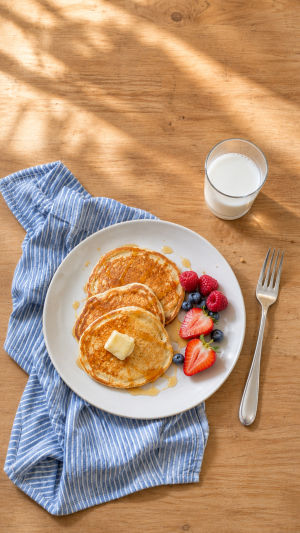
A stack of warm pancakes makes breakfast feel a little more special, especially when each one is soft in the middle with beautifully golden edges. Buttermilk pancakes are a lovely choice for a homemade morning meal because their gentle tang adds flavor while helping create a tender texture.
This recipe uses simple kitchen staples and takes approximately 15 minutes from preparation to cooking, making it practical even when time is limited.
<h3>Ingredients You Will Need</h3>
This recipe makes approximately eight pancakes, each around 8 inches wide.
- 2 cups (250 g) all-purpose flour
- 3 tablespoons sugar
- 2 teaspoons baking powder
- ½ teaspoon baking soda
- ½ teaspoon salt
- 2¼ cups (530 ml) buttermilk
- 2 large eggs, lightly beaten
- 1 teaspoon vanilla extract
- 4 tablespoons (57 g) unsalted butter, melted and cooled
- Cooking spray or canola oil for the skillet
- For serving, salted butter and maple syrup make simple, classic toppings.
- Fresh fruit or a favorite sweet sauce can also add variety.
<h3>How to Cook the Pancakes</h3>
1. Whisk the flour, sugar, baking powder, baking soda, and salt together in a large bowl.
2. In a separate bowl, mix the buttermilk, eggs, and vanilla extract. Gradually whisk in the melted, cooled butter.
3. Pour the wet mixture into the dry ingredients and fold gently with a spatula until just combined—leave small lumps intact and let the batter rest for 5 to 10 minutes while the skillet heats.
4. Brush a nonstick skillet or griddle lightly with canola oil or cooking spray and warm it over medium-low heat for about 5 minutes until a drop of water sizzles gently.
5. Once the skillet is heated, scoop about ½ to ⅔ cup of batter into it for each pancake.
6. Let the pancake cook until its edges begin to look set and bubbles appear across the surface, with some starting to burst.
7. Slide a spatula underneath and turn the pancake carefully. Continue cooking the other side until it develops a golden color.
8. Transfer finished pancakes to a wire rack set over a baking sheet in a 200°F (93°C) oven to stay crisp and warm while you wipe and lightly grease the skillet for the remaining batter.
9. Serve the pancakes while warm with salted butter and maple syrup.
<h3>Tips for a Better Texture</h3>
Test kitchens and culinary educators such as America's Test Kitchen and Serious Eats note that buttermilk's natural acidity reacts immediately with baking soda to create airy carbon dioxide pockets while tenderizing gluten strands—letting the batter sit for several minutes before ladling gives the starches time to absorb liquid so the pancakes rise taller on the griddle.
If you do not have cultured buttermilk in the refrigerator, stir 2 tablespoons of fresh lemon juice or white vinegar into 2 cups of regular milk and let it stand for 5 minutes as a reliable stand-in. Watch your skillet temperature as the batch goes on, too: pans retain more heat after the first round, so nudging the burner down slightly keeps later pancakes golden rather than scorched.
<h3>Simple Variations and Serving Ideas</h3>
For blueberry, sliced banana, or chocolate chip pancakes, ladle the plain batter onto the skillet first and dot mix-ins directly onto the wet surface before flipping so fruit and chocolate distribute evenly without scorching on the pan.
A pinch of ground cinnamon or grated lemon zest stirred into the dry ingredients adds subtle warmth, while sliced strawberries, toasted pecans, warm maple syrup, or lightly sweetened whipped cream turn a weekday stack into an effortless weekend brunch.
<h3>Final Thoughts</h3>
Once you keep a carton of buttermilk and a few pantry staples on hand, scratch-made pancakes take scarcely longer than a boxed mix. Master gentle folding and steady skillet heat, and you can turn out light, golden stacks any morning of the week.


