

The debate over children and screens is often reduced to a single question: how many minutes are too many? New research suggests that this approach may be too simple.
A review of 30 studies found that digital media can affect children in very different ways depending on their age, the quality of the content and whether an adults watches with them.
Some programs may support learning and social development, while heavy or poorly timed media use can still interfere with sleep, physical activity and face-to-face interaction.
<h3>Quality Matters As Much As Quantity</h3>
Educational and prosocial programs can offer real benefits when they are designed for the right age group.
Some preschool shows have been linked with stronger letter and sound recognition, while programs built around cooperation, empathy and problem-solving may reinforce positive social behavior.
The opposite can also happen. Repeated exposure to violent content has been associated with greater physical aggression in some children.
Researcher Minal Manisha explained that children do not simply watch media passively. They can absorb the values and behaviors presented on screen, which means choosing appropriate content is an important part of managing media use.
<h3>Young Children Need Real Interaction</h3>
Age appears to be especially important.
Infants and toddlers learn through direct experience: touching objects, moving through space, hearing language in conversation and responding to expressions.
The review found that heavier screen use in very young children was linked with concerns such as smaller vocabularies and weaker language development.
Older preschoolers, however, may be better able to understand educational programs and connect what they see on screen with experiences outside it.
This means the same program may be useful for one child and developmentally inappropriate for another.
<h3>Watching Together Can Help</h3>
One of the most practical findings involves co-viewing.
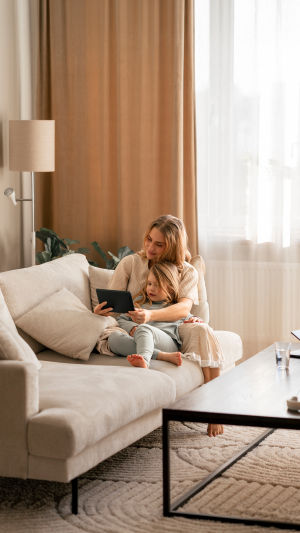
Parents do not need to turn every program into a lesson. Simply sitting with a child, answering a question or discussing what happened afterward can help make screen time more meaningful.
Manisha emphasized that adults should know what children are actually watching rather than focusing only on the clock.
A brief conversation about a character’s behavior, feelings or choices can encourage children to think more deeply about what they have seen.
<h3>Heavy Use Can Crowd Out Other Needs</h3>
Even high-quality content can become a problem when screens begin replacing activities children need.
Long periods with devices may leave less time for reading, outdoor play, exercise, sleep and interaction with family members.
Evening screen use was also linked with sleep difficulties in the review.
The issue is therefore not that every hour on a device is harmful, but that screen use can become costly when it regularly displaces other important parts of childhood.
<h3>Family Circumstances Shape Habits</h3>
Strict recommendations can be difficult for some households to follow.
The review paid particular attention to lower-income families, where children may spend more time with media because parents work long hours, childcare is limited or safe recreational spaces are harder to access.
Researchers argue that screen-time guidance should acknowledge these realities rather than assuming every family has the same resources and routines.
Modern technology also makes the issue more complicated than older television research suggests. Phones and tablets are portable, personalized and often driven by endless recommendation feeds.
<h3>Balance Is More Useful Than Fear</h3>
The findings do not suggest abandoning limits altogether.
Instead, parents may benefit from asking several questions at once: Is the content appropriate? Is the child old enough to understand it? Is the device replacing sleep or play?
Screens are now part of everyday childhood, so the goal may not be eliminating them completely.
A more realistic approach is to make media use intentional while protecting the experiences no device can replace: conversation, movement, creativity, sleep and time spent with other people.


