

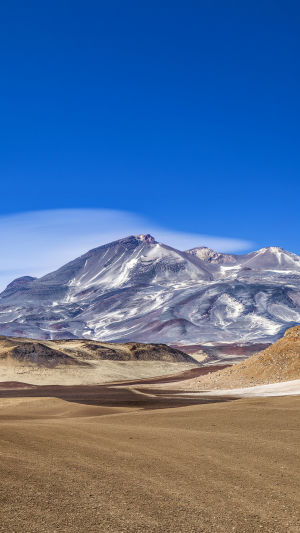
On the border between Chile and Argentina, Ojos del Salado is widely recognized as the world's highest active volcano. Its immense altitude, remote location, and harsh conditions make it a serious objective for experienced mountaineers.
But reaching the summit is not the only reason to visit this part of the Andes. High-altitude lagoons, salt flats, flamingos, and vast volcanic landscapes offer memorable experiences for travelers who prefer to remain at lower elevations. Here are six highlights to help you understand the region and plan a realistic journey.
<h3>Summit of Ojos del Salado</h3>
At approximately 6,893 meters, Ojos del Salado stands higher than any other active volcano on Earth. Its summit is a major objective for experienced high-altitude mountaineers, offering views across the volcanic landscapes of the Chilean-Argentine border.
Reaching the top is not simply a long hike. The upper mountain involves steep volcanic terrain, extreme altitude, and a short technical section near the summit where ropes may be required. Snow, ice, and strong winds can make conditions considerably more difficult.
The summit attempt is only one part of a much longer expedition. Climbers usually spend several days ascending gradually, resting, and completing acclimatization hikes before moving to higher camps.
Guided expeditions commonly last around 12–16 days, although itineraries vary. Comprehensive international packages can cost several thousand US dollars per person, with some reaching US$10,000 or more depending on services and group size.
Before committing, check the operator's experience, emergency procedures, equipment requirements, and current access permissions. The mountain's elevation makes proper acclimatization and a realistic assessment of personal fitness essential.
<h3>Laguna Verde</h3>
Laguna Verde lies at approximately 4,300 meters above sea level, surrounded by some of the highest mountains in the Atacama.
Its striking greenish-blue water contrasts with pale mineral deposits and the dry volcanic slopes beyond. The lagoon's color varies with light, weather, and the minerals present in the water.
This is an important staging area for expeditions approaching Ojos del Salado from Chile. The surrounding landscape also attracts travelers who want to experience the high Andes without attempting the summit.
Thermal springs occur near the lagoon, although their condition and suitability for bathing should be checked locally. The water of Laguna Verde itself is highly saline and should not be treated as a freshwater swimming destination.
From Copiapó, reaching the lagoon involves a long journey on remote mountain roads, commonly taking several hours. A suitable high-clearance vehicle, reliable navigation, and an experienced driver are strongly recommended.
There is generally no separate ticket for simply viewing Laguna Verde, but transport, guiding, and expedition services can represent substantial costs. Visitors should carry drinking water, warm clothing, and supplies for unexpected delays.
<h3>Nevado Tres Cruces National Park</h3>
Nevado Tres Cruces National Park protects a remarkable section of Chile's high-altitude desert, including wetlands, salt flats, and habitats used by Andean wildlife.
The park is often included in journeys toward Ojos del Salado, although the volcano itself lies outside the national park's boundaries.
Its best-known attractions include Laguna Santa Rosa and the Lagoon of the Black Man Francisco, both surrounded by dramatic mountain scenery. Flamingos and other high-altitude birds can sometimes be observed around the wetlands.
Travelers should not rely on fixed opening hours or visitor limits found in older guides. Access conditions, ranger services, and protected-area arrangements can change, particularly during periods of severe weather.
The journey from Copiapó generally requires several hours of driving, with gravel roads and high elevations adding to the challenge.
Entry charges, when applicable, are set in Chilean pesos (CLP) and should be checked through Chile's official protected-area information before departure. Carry all essential supplies, since facilities are limited and some sectors may be temporarily inaccessible.
<h3>Laguna Santa Rosa</h3>
Laguna Santa Rosa is one of the most memorable stops on the route into the high Andes. Located at roughly 3,700 meters, it provides sweeping views of a shallow lagoon, surrounding salt flats, and distant volcanic peaks.
The wetland is an important habitat for flamingos, which may be seen feeding in the water when conditions are favorable. Visitors should observe them from a distance to avoid disturbing the birds.
For mountaineering expeditions, Santa Rosa is also a useful location in a gradual acclimatization itinerary. Its elevation is lower than Laguna Verde, making it a possible intermediate stop before traveling farther uphill.
Basic shelter facilities have been associated with the area, but visitors should not assume that beds, water, or overnight accommodation will be available without prior arrangements.
Even at this elevation, altitude illness is possible. Spending a night here does not automatically make a rapid ascent to higher camps safe.
Photography is particularly rewarding in calm weather, when the lagoon reflects the surrounding mountains. Temperatures can fall sharply after sunset, so warm layers are necessary even during the warmer months.
<h3>Maricunga Salt Flat</h3>
The Salar de Maricunga spreads across a broad high-altitude basin east of Copiapó, creating one of the region's most distinctive landscapes.
Its combination of pale salt deposits, shallow water, and distant mountains makes it an appealing stop for photography. After rainfall or during periods of standing water, sections of the basin can produce striking reflections.
The salt flat also supports important wetland habitats, including areas used by flamingos and other bird species.
Unlike a conventional sightseeing attraction, Maricunga is a remote natural landscape with few visitor facilities. Access points and road conditions vary, and not every part of the basin is suitable for vehicles.
Travelers exploring the area should stay on established roads and avoid driving onto fragile salt surfaces or wetland margins.
A visit is often combined with Laguna Santa Rosa or other stops along the high-altitude route. There is no single universal admission fee covering every viewpoint around the salt flat; any protected-area charges depend on the sector entered.
Salar de Maricunga
<h3>Planning the Journey</h3>
Copiapó is the main logistical starting point for exploring Ojos del Salado from Chile. Desierto de Atacama Airport, located outside the city near Caldera, provides the nearest major commercial air connection.
The drive from the airport to central Copiapó is approximately 50 kilometers and generally takes around 45–60 minutes, depending on traffic and transport arrangements.
From Copiapó, reaching Laguna Verde involves roughly 250–270 kilometers of travel, depending on the chosen route. The journey can take six hours or more because of mountain roads, weather, and the need to travel carefully at altitude.
Independent visitors should use a suitable high-clearance vehicle and verify road conditions before leaving the city. Rental costs vary widely, but a properly equipped four-wheel-drive vehicle may cost CLP 90,000–160,000 or more per day, depending on the season and rental terms.
The main climbing season is generally during the Southern Hemisphere summer, particularly from December through March, although weather windows remain unpredictable.
For summit expeditions, a reputable local operator can coordinate transport, acclimatization schedules, camping arrangements, and applicable permissions. Travelers should also have appropriate insurance covering high-altitude activities and remote evacuation.
Most importantly, avoid ascending rapidly from Copiapó to the highest camps. A carefully planned acclimatization schedule is essential, and anyone developing significant altitude-related symptoms should stop ascending and seek appropriate medical assistance.
Ojos del Salado is one of the Andes' most extraordinary destinations, but its appeal extends far beyond the summit. Laguna Verde, Laguna Santa Rosa, the Salar de Maricunga, and Nevado de Tres Cruces National Park reveal a landscape of volcanic peaks, saline wetlands, and remarkable wildlife. Whether planning a serious climbing expedition or a guided journey through the highlands, preparation is essential. Allow time to acclimatize, verify access conditions, and choose activities appropriate to your experience.


