

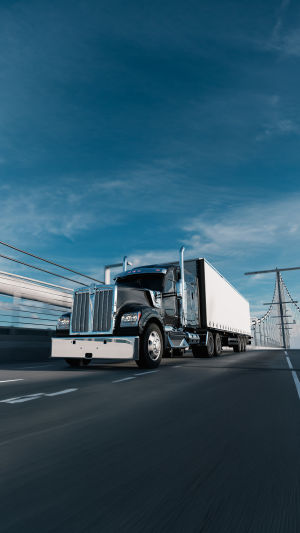
Europe’s truck industry is preparing for a major move towards cleaner transport, but the road to zero-emission vehicles is proving more difficult than expected.
Limited charging facilities, slow access to electricity connections, and high energy costs are making it harder for businesses to use electric trucks on a large scale.
<h3>A Difficult Transition for Truckmakers</h3>
Heavy-duty vehicles play an important role in moving goods across Europe. Unlike passenger cars, trucks often cover long distances, carry substantial loads, and operate on demanding schedules. Their replacement therefore requires more than simply offering a new type of vehicle. Transport businesses need to know that they can recharge reliably, control operating expenses, and keep deliveries running on time.
European manufacturers have introduced zero-emission models for different transport needs. However, the number of buyers choosing them remains limited. Figures published by the European Automobile Manufacturers’ Association (ACEA) show that zero-emission trucks accounted for just 2.4% of new heavy-duty truck registrations in Europe at the time of its September 2026 statement.
The difference between countries is also significant. In Poland, Spain, and Italy, the share remained below 1%. Germany recorded 4.3%, while France stood at 2.4%. Such figures show how far the market still has to develop before zero-emission trucks become a common choice for transport operators.
<h3>Charging Access Remains a Major Barrier</h3>
A reliable charging network is essential for making electric trucks practical. Heavy vehicles need suitable facilities along major routes as well as at depots, where they can recharge between journeys or during scheduled breaks.
The available network remains limited. ACEA reported that Europe had fewer than 2,000 public charging points suitable for trucks. Its assessment indicated that at least 700 additional truck-compatible chargers would be needed every month to support wider adoption. The issue is not only the number of charging points. Their location, charging capacity, and availability all matter.
A station that cannot accommodate a large vehicle or provide enough power within a reasonable period may not meet the needs of a busy transport business. Electricity grid connections create another difficulty. Even when companies are ready to install charging equipment, connecting a new site to the power network can take several years. Delays of this kind can hold back investment and make it harder for operators to plan their transition.
<h3>Operating Costs Influence Buying Decisions</h3>
For transport companies, the purchase price is only one part of the decision. They also consider energy expenses, maintenance, vehicle range, charging time, and how much work a truck can complete during a normal operating day. Electric trucks may offer advantages in some operations, particularly where vehicles return to the same depot regularly. However, businesses that travel long distances need dependable charging options and predictable energy costs.
Without them, planning routes and calculating the cost of each delivery can become more complicated. Hydrogen is another option being developed for certain heavy-duty applications. However, its refuelling network is also at an early stage. ACEA reported that fewer than a dozen hydrogen refuelling stations were operational in Europe, with existing facilities facing practical limitations.
<h3>Why Manufacturers Want More Time</h3>
The leaders of seven major European truck and bus manufacturers have called for the 2030 compliance timetable to be extended by three years. Their position is that vehicle makers cannot complete the transition on their own when important parts of the supporting network remain underdeveloped.
Under the existing targets, manufacturers must reduce emissions from new heavy-duty vehicles by 43% in 2030 compared with 2025 levels. The required reduction rises to 64% in 2035 and 90% in 2040. Companies that fail to meet the applicable requirements can face financial penalties, although an emissions-credit system provides some flexibility for the period from 2025 to 2029.
Manufacturers argue that a longer adjustment period would give the market more time to develop. They also want faster installation of charging facilities, quicker grid connections, and operating conditions that make zero-emission trucks more attractive to customers. The request highlights a wider challenge: vehicle technology can advance faster than the infrastructure needed to support it.
<h3>Building a More Practical Path Forward</h3>
A successful transition will require cooperation across the transport industry. Truck manufacturers can continue improving vehicle performance, while charging providers and energy companies work to expand facilities and strengthen electricity connections. Transport operators also need clear information about vehicle range, charging requirements, energy expenses, and suitable routes. Better access to this information can help businesses decide which parts of their fleets are ready for electrification.
Europe’s move towards zero-emission trucking depends on more than producing new vehicles. The manufacturers’ request for additional time reflects the gap between vehicle development and the readiness of the wider transport system. Closing that gap will be essential to making cleaner trucks a realistic choice for more businesses while keeping goods moving reliably across Europe.


