

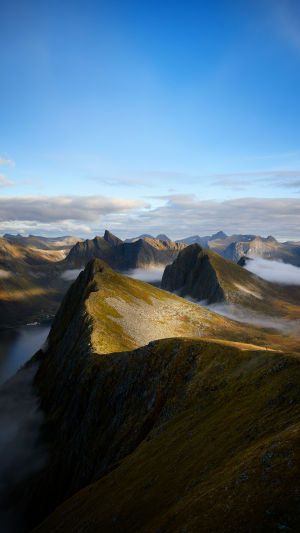
Welcome back, everyone. You probably picture Norway as a place of deep fjords and northern lights, and Troms County delivers both.
But it does not just hand you a postcard. It hands you a working Arctic region where you need to think about light, weather, and ferries before you book anything.
<h3>Why Troms earns the trip</h3>
Troms sits well above the Arctic Circle, and Tromso is its main city, spread across an island connected to the mainland by the Tromso Bridge. The city has around 77,000 residents, which makes it the largest urban area in northern Norway. What pulls people here is the combination of easy access and genuine wildness. You can stand on a city street in the afternoon and be on a mountain trail within twenty minutes.
The Arctic Cathedral, with its white triangular shape on the mainland side, is one of the most photographed buildings in the region. The Fjellheisen cable car takes you up to Storsteinen at roughly 421 meters for a wide view over the city and the surrounding islands.
<h3>Chasing the northern lights</h3>
The aurora season runs roughly from late September to late March, and Tromso sits in the auroral oval, one of the better places on the planet to see it. But you do not just show up and expect a show. Cloud cover is the main obstacle, and tour operators drive far inland toward the Finnish border or out along the coast to find clear sky.
A guided chase typically costs between $120 and $200 per person for a five to seven hour trip. If you want to go independent, rent a car and watch the forecast, but be honest about winter driving on ice.
Troms
<h3>Getting there and around</h3>
Tromso Airport Langnes handles direct flights from Oslo in under two hours, and the airport bus drops you downtown in about fifteen minutes for a modest fare. Once you are in the city, most of the center is walkable. For the wider county, the Hurtigbåt express boats connect Tromso to smaller coastal stops, and the road network reaches places like Lyngen and the Lyngen Alps, a range that draws ski tourers from across Europe.
Buses run between the main towns, but schedules thin out in winter, so check timetables before you commit to a route.
<h3>What to budget and when to go</h3>
Norway is not cheap, and Troms is no exception. A mid-range hotel room in Tromso runs about $150 to $220 per night in winter, and a simple restaurant meal will set you back $25 or more. Summer prices drop somewhat but demand stays high. June and July give you the midnight sun, with daylight around the clock.
That is the season for hiking trails like the climb to Prestvannet lake or the longer routes on Kvaloya. Winter is for aurora and whale watching around Skjervoy, where humpback and orca pass through from roughly November to January.
<h3>A few practical notes</h3>
Layer up no matter the season. Weather shifts fast here, and a sunny morning can turn to sleet by afternoon. Book aurora tours and accommodation well ahead if you are traveling in winter, since capacity in Tromso is limited. And keep an eye on the ferry and bus schedules, because missing the last connection in a remote area means a long wait.
Troms rewards the traveler who plans around its conditions rather than against them. Check the forecast, build in a buffer day, and let the Arctic set the pace. You will come back with more than photos.


