

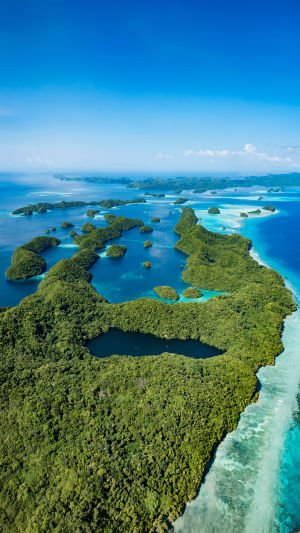
Swimming among jellyfish might sound frightening, but on a remote island in the Pacific Ocean, it has become one of the world's most unusual travel experiences.
Hidden among Palau's tropical islands, Jellyfish Lake is home to hundreds of thousands of golden jellyfish whose stings are generally too mild to harm humans. Visitors can snorkel through the water and observe these extraordinary creatures moving gracefully beneath the surface.
Reaching the lake takes some effort, but the journey offers spectacular scenery and a rare opportunity to explore an unusual natural ecosystem.
<h3>What Makes Jellyfish Lake Unique?</h3>
Officially known as Ongeim'l Tketau, the lake lies on Eil Malk, also called Mecherchar Island, within Palau's Rock Islands.
It is approximately 30 metres deep and contains salt water, despite being separated from the open sea.
Scientists believe the ancestors of its jellyfish became isolated as sea levels changed millions of years ago.
Over time, the golden jellyfish developed extremely mild stinging capabilities. They still possess stinging cells, so describing them as completely stingless would be inaccurate, but they generally pose little danger to swimmers.
Another fascinating feature is their relationship with microscopic algae living inside their bodies.
These algae produce energy through photosynthesis, encouraging the jellyfish to move towards sunlight.
On sunny days, the animals migrate across the lake, creating an extraordinary underwater spectacle.
<h3>How Do You Reach The Lake?</h3>
Most visitors begin their journey in Koror, Palau's main tourist centre.
From there, a boat travels through the Rock Islands Southern Lagoon, a UNESCO World Heritage Site famous for its turquoise water and forest-covered limestone islands.
The boat journey usually takes approximately 45–60 minutes.
After arriving on the island, visitors must complete a steep, rocky walk lasting around 10–15 minutes before reaching the lake.
Comfortable footwear is essential, particularly after rain when the path may become slippery.
Guided excursions are the most practical option, as visitors need boat transport and must follow conservation regulations.
<h3>When Is The Best Time To Visit?</h3>
November to April generally offers drier weather and favourable conditions for exploring Palau's surrounding reefs.
However, tropical showers can occur throughout the year.
The number of jellyfish also changes naturally, so visitors should not expect identical conditions every day.
Checking the lake's current status with a local operator before booking is particularly important.
Morning visits can be especially interesting because the jellyfish respond to sunlight and may gather in brighter areas of the lake.
<h3>How Much Does The Experience Cost?</h3>
Palau is a relatively expensive destination, especially when boat excursions and conservation permits are involved.
A full-day group excursion including Jellyfish Lake may cost approximately €190–220 per person, depending on the operator and group size.
Visitors also need a special Jellyfish Lake permit, commonly priced at US$100, equivalent to roughly €85–95 depending on exchange rates.
The permit covers access to the lake and designated Rock Islands areas. Its validity and current conditions should be confirmed before purchase.
Accommodation in Koror may cost approximately €90–200 per night for a double room, while a reasonable food budget is €30–60 per person daily.
For a four-day trip with three nights of shared accommodation, one lake excursion and ordinary daily expenses, allow approximately €550–950 per person, excluding international flights.
Additional boat tours and premium accommodation can increase the total considerably.
<h3>How To Protect The Jellyfish</h3>
Jellyfish Lake is a fragile environment, and visitors must follow strict rules.
Scuba diving is prohibited, partly because deeper water contains conditions unsuitable for recreational diving.
Snorkellers should move slowly, avoid touching or lifting jellyfish and refrain from using fins in ways that could injure them.
Palau also restricts sunscreens containing chemicals harmful to marine ecosystems. Protective swimwear provides a practical alternative.
Visitors should avoid introducing sand, shells or other materials into the lake.
Jellyfish Lake
<h3>What Else Can You Explore?</h3>
Palau offers exceptional opportunities to discover coral reefs, tropical fish, sea turtles and manta rays.
Guided snorkelling trips around the Rock Islands reveal colourful underwater habitats, while sheltered lagoons provide opportunities for less experienced swimmers.
Conditions vary with tides, currents and weather, making knowledgeable local guides especially valuable.
For travellers interested in marine wildlife, combining Jellyfish Lake with several days of reef exploration can turn a single unusual activity into an unforgettable tropical holiday.


