

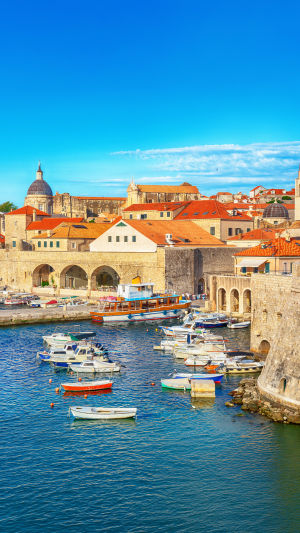
Croatia's Dalmatian coast combines historic architecture, Adriatic scenery, lively waterfronts, and a network of islands. Dubrovnik and Split are two of its best-known destinations, but they offer different travel experiences.
Dubrovnik focuses on a compact historic setting enclosed by stone walls, while Split combines Roman heritage with a larger contemporary city.
Understanding these differences makes it easier to choose the destination that matches your itinerary.
Dubrovnik
<h3>Dubrovnik: Historic Architecture by the Adriatic</h3>
Dubrovnik's Old Town is enclosed by substantial stone fortifications and filled with historic buildings, narrow lanes, small squares, and views across the Adriatic.
Its compact center makes walking the natural way to explore. The city walls provide elevated views over the rooftops and coastline, while the streets below lead to historic landmarks, small cafés, and waterfront areas.
Dubrovnik is particularly appealing for travelers who want to concentrate on architecture, history, photography, and scenery without spending much time traveling between major attractions.
<h3>Split: Roman Heritage and City Life</h3>
Split grew around Diocletian's Palace, a Roman-era complex that remains integrated into the modern city. Historic stone structures stand alongside shops, cafés, courtyards, and residential spaces.
This combination gives Split a distinctly urban character. The waterfront promenade provides a natural place for an evening walk, while the surrounding streets offer easy access to dining and local services.
The city's ferry connections are another major advantage. Seasonal services reach several Dalmatian islands, making Split a convenient base for travelers planning multiple coastal excursions.
<h3>Costs and Best Time to Visit</h3>
Travel expenses depend on season, location, accommodation type, and how early you reserve.
For a comfortable double room, plan approximately $150–$300 per night during the main travel season. Central properties and peak summer dates can cost more.
A practical food budget is:
- Breakfast: $6–$12 per person
- Casual lunch: $12–$20 per person
- Mid-range dinner: $25–$40 per person
- Coffee or soft drink: $2–$5
July and August are generally the busiest months. May, June, September, and early October can provide a more relaxed setting and broader accommodation availability.
<h3>How to Get There</h3>
Both destinations have international airports and direct connections by road and sea.
- Dubrovnik: Dubrovnik Airport is located outside the city. Airport buses and taxis connect with the center, while local buses serve destinations beyond the Old Town. The historic center itself is best explored on foot.
- Split: Split Airport is outside the city and is connected to the center by airport buses and taxis. The main bus and ferry terminals are close to the historic core, which simplifies onward travel.
Split is especially convenient for island travel. Seasonal boat routes connect the city with destinations such as Hvar, Brac, Šolta, and Vis.
Seasonal coastal boat services can also connect Split and Dubrovnik, allowing travelers to combine both cities in one itinerary.
<h3>Accommodation</h3>
Dubrovnik offers the greatest convenience when you stay near the Old Town, particularly if sightseeing is the main purpose of the visit. Properties farther from the historic center provide additional choices for travelers seeking different price levels.
Split has accommodation across the historic center and surrounding neighborhoods. Staying within walking distance of the ferry terminal can save time for travelers planning several island trips.
During summer, advance reservations are recommended in both destinations.
<h3>Local Food</h3>
Dalmatian cuisine emphasizes seafood, seasonal vegetables, grains, pasta, rice, fruit, and regional pastries.
Dubrovnik has restaurants and cafés throughout the Old Town and along the waterfront. Dining immediately beside major attractions can cost more, while nearby streets often provide a wider range of prices.
Split has an extensive selection around the historic center, market areas, and waterfront. Travelers can choose between quick meals and longer sit-down dining according to their schedule and budget.
Allow approximately $40–$70 per person per day for food if you combine casual meals with a mid-range dinner.
<h3>Beaches and Island Excursions</h3>
Split is particularly well positioned for travelers who want frequent island trips. Seasonal services connect the city with several major destinations across the Dalmatian archipelago.
Within Split, Bačvice and Kasjuni are convenient choices for swimming and time beside the sea.
Dubrovnik offers a more concentrated combination of historic sightseeing and coastal scenery. Lokrum provides an easy island excursion from the harbor, while nearby coastal areas offer opportunities for swimming, walking, and boat trips.
The distinction is straightforward: Split is highly practical for an itinerary built around several islands, while Dubrovnik works particularly well for travelers prioritizing its historic center and surrounding coastline.
<h3>Dubrovnik or Split?</h3>
Choose Dubrovnik for a compact historic environment, impressive stone architecture, panoramic coastal scenery, and a sightseeing-focused itinerary.
Choose Split for a larger urban setting, Roman heritage integrated into modern city life, and convenient access to multiple islands.
If your schedule permits, combining both creates a more varied coastal journey. Dubrovnik provides a concentrated historic experience, while Split adds a broader city atmosphere and convenient onward connections.
Dubrovnik and Split represent two distinct sides of Croatia's Dalmatian coast. Dubrovnik brings together fortified architecture, historic streets, and dramatic Adriatic scenery, while Split combines Roman heritage with contemporary city life and strong island connections.
For a short cultural escape, Dubrovnik offers an easily navigable historic setting. For a longer coastal itinerary, Split provides greater flexibility for exploring the surrounding islands. Including both destinations creates a balanced trip that combines heritage, seaside scenery, local food, and coastal exploration.


