

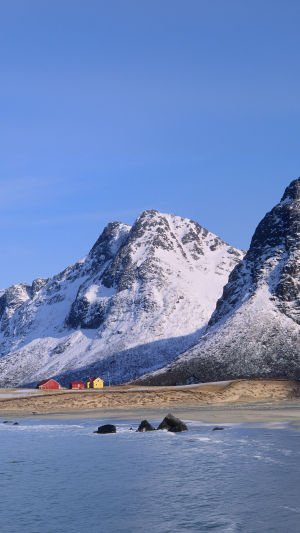
Lykkers, imagine waking up beside a quiet fjord, watching snow-covered mountains rise behind traditional fishing villages, then heading outside after dark to look for the Northern Lights.
Winter gives the Lofoten Islands a completely different atmosphere, with fewer daylight hours, dramatic coastal scenery, snowy landscapes, and long evenings beneath the Arctic sky.
<h3>When to Visit Lofoten in Winter</h3>
Winter generally runs from November through March, while January to March usually offers more reliable snow. December and January have the shortest daylight, but this also creates longer opportunities for aurora watching. From February onward, daylight gradually increases, making it easier to combine outdoor activities with sightseeing.
<h3>Look for the Northern Lights</h3>
The Northern Lights are one of the main reasons travelers choose Lofoten during the colder months. The season generally extends from late August or September into April, although clear skies and sufficient darkness are needed for good viewing.
You can search independently from areas with limited artificial light, or join a guided evening tour. For example, a four-hour Northern Lights excursion from Svolvær is currently listed at about US$178 per person, with departures around the evening hours. Another guided option costs about US$178 and runs for approximately four hours.
Lofoten
<h3>Explore Reine and Henningsvær</h3>
Winter is a lovely time to explore Lofoten's fishing villages at a slower pace. Reine is surrounded by steep mountains and fjord scenery, while Henningsvær spreads across several small islands connected by bridges.
Walk along the waterfront, photograph traditional cabins, browse local galleries, and stop at a café when the weather turns cold. These village visits are generally free, making them useful additions to an itinerary that already includes paid activities.
<h3>Try Winter Kayaking</h3>
For something more adventurous, winter kayaking offers a close view of the coastline from sea level. Guided trips from Svolvær use stable double kayaks and include the necessary equipment. A two-hour winter kayaking experience currently starts at approximately US$131 per person and is designed for visitors aged 15 and above.
<h3>Take a Snowshoe Walk</h3>
Snowshoeing is another way to enjoy Lofoten's winter scenery without committing to a demanding ski trip. Guided snowshoe experiences allow visitors to explore snowy landscapes while learning about the local environment. A three-hour guided Snowshoe Nature Explorer experience currently starts at around US$132 per person. The exact schedule depends on conditions and seasonal availability, so confirm the departure time when booking.
<h3>Getting Around Lofoten</h3>
A rental car offers the greatest freedom, especially for reaching beaches and smaller villages. However, winter driving requires experience with snow, ice, darkness, and changing visibility. The E10 is the main road connecting much of the archipelago, but smaller roads can become difficult during heavy snowfall.
Public transportation is another option. Local buses connect areas from Narvik toward Å, while ferries and express boats serve several routes. A basic Nordland bus ticket starts at about US$4.70, while the seven-day Travel Pass Nordland costs approximately US$209 and covers unlimited bus and express boat travel across Nordland. Ferries in the region are free for foot passengers, while vehicles are charged separately.
<h3>Where to Stay</h3>
For a classic Lofoten experience, consider staying in a rorbu, a traditional fisherman's cabin converted into accommodation. Reine, Svolvær, and other coastal villages offer cabins, hotels, and guesthouses. Prices vary considerably by date and property.
As a current example, some Reine Rorbuer cabins have recently been listed from roughly US$220 to US$380 per night depending on size and season, while larger waterfront cabins can cost considerably more. Booking early is useful during popular winter periods.
<h3>Pack for Changing Weather</h3>
Warm layers are essential. Bring a waterproof outer layer, insulated jacket, wool or thermal base layers, gloves, a warm hat, and waterproof footwear. For icy paths, traction aids can also be useful. Keep your outdoor schedule flexible because storms can affect roads, ferries, and flights. Allowing extra time between destinations can make the journey much more comfortable.
A winter journey through Lofoten is about more than chasing the Northern Lights. So, would you spend your first evening searching for the aurora, exploring a quiet fishing village, or waking up beside a snowy fjord?


