

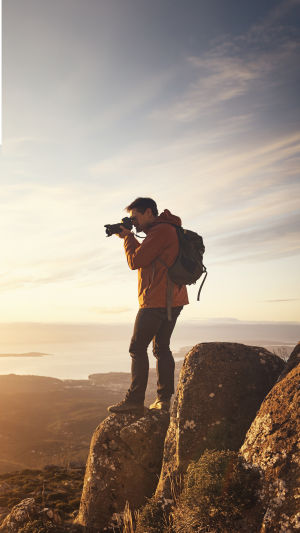
A wide-angle lens can transform the way a scene is presented. Its broad field of view allows photographers to include more surroundings while giving foreground subjects greater visual impact.
Used thoughtfully, it can add depth, scale, and a strong sense of place to an image.
<h3>Master the Perspective</h3>
Wide-angle lenses capture a broader portion of a scene than standard or telephoto lenses. The closer an object is to the camera, the more prominent it appears, while distant elements occupy less space.
This relationship creates a distinctive sense of depth. Instead of simply stepping backward, move closer to an important foreground subject and build the composition around it.
A 16mm lens on a full-frame camera provides a diagonal field of view of roughly 107 degrees, making it possible to include a substantial amount of the surrounding environment.
<h3>Capture Expansive Scenes</h3>
Landscapes are a natural application for wide-angle photography. Foreground details such as rocks, paths, plants, or textured surfaces can provide a visual starting point, while distant scenery completes the composition.
The same approach works well in urban environments. A wide focal length can encompass buildings, streets, and surrounding structures when physical space makes it difficult to move farther away.
For tall architecture, camera position is important. Keeping the camera level generally produces more natural vertical lines, while tilting upward can cause them to converge.
<h3>Photograph Compact Interiors</h3>
A wide field of view is especially useful in rooms and other confined environments. Bedrooms, kitchens, studios, vehicle interiors, and similar spaces can be photographed more effectively when there is little room to reposition.
Very wide settings can make objects near the edges appear enlarged or stretched. Keeping important subjects away from the extreme edges can help maintain balanced proportions.
<h3>Build Strong Lines</h3>
Architecture and wide-angle photography complement each other because geometric patterns become prominent across a broad frame.
Columns, pathways, fences, roads, walls, and other linear elements can direct attention toward the main subject. Positioning these features from the foreground toward the background creates a clear visual path through the image.
Experimenting with camera height can further change the relationship between foreground and background, giving familiar structures a more distinctive appearance.
<h3>Explore the Night Sky</h3>
Wide lenses are well suited to night-sky photography because they can include a large section of sky alongside a landscape.
A fast aperture, such as f/2.8, can help gather more light. Exposure settings should be adjusted according to the camera, lens, sky conditions, and desired level of star sharpness.
A shutter speed of around 20–25 seconds can be a starting point for some setups, but high-resolution cameras may require shorter exposures. Test the image and enlarge the stars on the camera screen to check for unwanted movement before continuing.
<h3>Get Close to the Action</h3>
Wide-angle lenses can create an immersive viewpoint when photographing nearby movement. Cycling, skating, dancing, and similar activities can be framed together with the surrounding setting.
Position the camera close enough for the subject to remain prominent while leaving sufficient room to show the environment. Timing is equally important, particularly when the subject is moving toward or across the frame.
<h3>Know When to Switch Lenses</h3>
A wide-angle lens is most useful when the environment is an important part of the photograph. It is less appropriate when you want a tightly framed subject with minimal surroundings.
For portraits, working too close can exaggerate certain features. A little more distance can produce a more balanced appearance.
Longer focal lengths are also useful for distant subjects when tighter framing is preferred. The choice should depend on how much of the surrounding scene you want to communicate.
<h3>Make Every Part of the Frame Count</h3>
The strength of wide-angle photography comes from purposeful composition rather than simply fitting more into the image. Look for a clear foreground, useful environmental details, strong geometry, or an interesting relationship between nearby and distant subjects.
Use the extra space deliberately, position yourself with intention, and let perspective become part of the visual story.


