

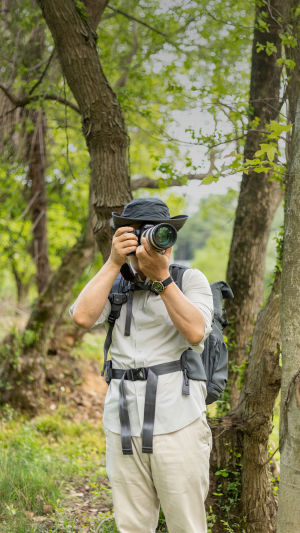
Telephoto photography can transform the relationship between a subject and its background.
Distant mountains can appear larger, rows of trees can seem tightly grouped, and separate layers of a landscape can take on a compact appearance.
This effect is commonly known as compression. Although a long focal length makes it easier to achieve, the change in perspective comes from the camera's position.
<h3>Perspective Starts With Distance</h3>
Perspective changes when you move the camera. Photographing a subject from close range creates a stronger difference in apparent size between nearby and distant elements. Moving farther away reduces that difference.
A longer focal length then allows you to fill the frame without returning to the closer position.
For example, photograph a parked car from a short distance, then move farther back and use a longer focal length to keep the car approximately the same size. The background can appear more prominent and closer to the car in the second photograph.
<h3>How Telephoto Framing Works</h3>
A long focal length captures a narrower portion of the scene. When used from a greater distance, it isolates distant elements and places them into a tighter composition.
The mountains have not physically moved toward the subject. Instead, the change in viewpoint alters their apparent relationship within the frame.
Camera position controls perspective, while focal length controls the field of view and magnification.
<h3>Creating Natural Portraits</h3>
Moderate telephoto focal lengths are widely used for portrait photography because they allow comfortable working distances and controlled framing.
Working farther from the subject can help maintain natural-looking proportions compared with photographing from very close with a wide-angle lens. The narrower field of view also gives greater control over which background elements appear around the subject.
The result can be a clean composition in which the subject stands out while distant surroundings form a more unified backdrop.
<h3>Building Layers in Landscapes</h3>
Telephoto lenses are particularly effective when a scene contains repeated elements at different distances. Mountain ridges, trees, buildings, and other structures can appear visually closer together, creating strong layers within a relatively narrow frame.
Atmospheric haze can further separate those layers, giving distant ridges subtle variations in tone and clarity.
Rather than showing a broad view, the photograph emphasizes selected sections of the landscape and makes distance an important compositional element.
<h3>Controlling Background Placement</h3>
A narrow field of view makes background placement especially important. An object that seems insignificant from a wider viewpoint can become prominent when captured with a telephoto lens.
Small changes in camera position can therefore make a major difference. Move slightly to one side, adjust your height, or change the shooting angle to control how background elements align with the subject.
This gives you greater control over the composition without requiring the subject itself to move.
<h3>Use Compression With Purpose</h3>
Telephoto compression is most effective when you understand the relationship between camera position, focal length, and framing. Move farther away to change the perspective, then choose a focal length that gives you the composition you want.
Whether you are photographing portraits, landscapes, wildlife, or distant subjects, the strongest results come from treating the background as part of the composition. Use distance to shape perspective and focal length to refine the frame, turning layers of space into a deliberate visual effect.


