

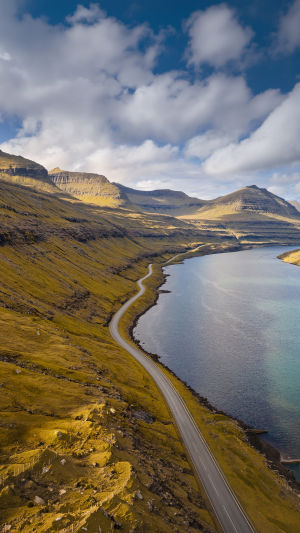
The Faroe Islands have introduced a different kind of road trip for travellers who are tired of planning every stop in advance. Their Self-Navigating Cars programme lets the navigation system choose the route, guiding visitors towards lesser-known places selected by locals.
The idea is simple: you get in the car, follow the directions and discover each destination only when you reach it.
<h3>Let the Car Choose the Route</h3>
Each journey lasts between three and six hours and normally includes four to six stops. The original programme offered 30 routes, with another 15 later added, giving travellers considerably more possibilities.
The system is free to use with a suitable rental car. The only real condition is that travellers agree to follow the route rather than changing it halfway through.
The appeal is not simply novelty. Popular destinations across Europe increasingly struggle with visitors concentrating around the same viewpoints and attractions. These routes deliberately send people towards quieter corners of the islands instead.
<h3>Expect Mountains, Villages and Unexpected Stops</h3>
You might find yourself beside Lake Funningsvatn, walking through dramatic fjord landscapes or stopping in a small village far from the busiest sightseeing routes. Some itineraries may also lead to outdoor swimming spots or viewpoints overlooking towering sea cliffs.
Because the route remains a surprise, it is better not to build another tightly scheduled activity immediately afterwards.
<b>Traveller tip:</b> Keep at least half a day free and bring waterproof clothing, sturdy shoes, snacks and water. Faroese weather can change quickly, even in summer.
Lake Funningsvatn
<h3>Driving Is Easy, but Different</h3>
A car is one of the most convenient ways to explore the archipelago. Most major islands are connected by roads, bridges and subsea tunnels, while traffic outside the main towns is generally light.
Drivers should still be prepared for narrow roads, one-lane tunnels and sudden weather changes. Headlights must remain on at all times, and the usual speed limit is 50 km/h in towns and 80 km/h outside them.
Subsea tunnels also add to the cost of a road trip. For example, driving through the Eysturoy Tunnel can cost around <b>€10 each way</b> with the lower toll rate, while motorists without the relevant subscription may pay around <b>€24 each way</b>.
<b>Budget tip:</b> Ask your rental company whether tunnel charges are included or added later. There are no conventional toll booths, so understanding the payment system beforehand avoids surprises.
<h3>Getting to the Islands</h3>
Vágar is the Faroe Islands’ only airport. Direct flights operate from destinations including Copenhagen, Paris, Reykjavík, London, Edinburgh, Oslo and Bergen, although some services are seasonal.
Travellers who prefer a slower journey can arrive by ferry from northern Denmark. The crossing takes around <b>two days in summer</b>, and bringing your own vehicle is possible.
<h3>How Much Should You Budget?</h3>
The Faroe Islands are not a low-cost destination, so accommodation and car hire should be booked well ahead, particularly between June and August.
For a comfortable independent trip, allow roughly <b>€150–250 per person per day</b> when sharing accommodation and a rental car. That should cover lodging, transport, fuel and ordinary meals, although tunnel tolls, longer excursions and more expensive restaurants can push the total higher.
Saving money is easier if you stay outside central Tórshavn, prepare some meals yourself and combine driving days with hiking.
<h3>Leave Some Space for Surprise</h3>
The strongest part of the idea is that it removes one habit modern travel has made almost unavoidable: knowing exactly what everything looks like before you arrive. Instead of following the same photographs, rankings and itineraries as everyone else, travellers give up a little control and allow local knowledge to shape the day.
<b>The Faroe Islands are already made for road trips, with winding roads, tunnels, waterfalls and villages appearing around almost every bend. A route that keeps its destination secret simply adds one more reason to enjoy the journey rather than rushing towards the next famous viewpoint.</b>


