

The latest UK market outlook points to a stronger 2026 than previously expected. New-car registrations are forecast to reach 2.183 million units this year, around 8% higher than in 2025. Growth is being helped by new manufacturers entering the market and by continued demand for electrified models.
The recovery is expected to continue into 2027, although at a slower pace. Registrations are forecast to rise another 2.9% to 2.245 million cars.
<b>The headline is growth, but the more important story is how quickly petrol is losing ground to battery-electric and hybrid alternatives.</b>
<h3>Electric Cars Keep Expanding</h3>
Battery-electric cars are expected to reach around 597,000 registrations in 2026, up 26.2% from last year. Their market share is forecast to climb from 23.4% in 2025 to 27.4% this year.
By 2027, the figure could reach approximately 720,000 registrations, giving fully electric cars a 32.1% share of the market. In simple terms, nearly one in three new cars registered next year could be battery-electric.
That is substantial progress, but it still leaves the market below the levels expected under the Zero Emission Vehicle Mandate. High electricity prices and the planned introduction of a new per-mile tax for EVs from 2028 remain concerns for the industry.
<h3>Hybrids Are Holding Their Ground</h3>
Plug-in hybrids are also growing quickly. Their registrations are forecast to increase 28.5% in 2026 to around 289,000 units, lifting market share from 11.1% to 13.3%.
Conventional hybrids are expected to rise more moderately, reaching about 310,000 registrations and a 14.2% share. By 2027, both plug-in hybrids and conventional hybrids are forecast to account for around 14.6% of the market.
<b>This suggests that many buyers still see hybrids as a practical middle step rather than moving directly from petrol to a fully electric car.</b>
<h3>Petrol Keeps Shrinking</h3>
Petrol remains the largest individual category, but its dominance is fading quickly. Around 892,000 petrol cars are forecast for 2026, down 4.9% from the previous year. Its market share is expected to fall from 46.4% in 2025 to 40.9% this year, then drop again to 35.2% in 2027. Diesel is becoming an even smaller part of the market. Its share is forecast to fall from 5.1% in 2025 to 4.3% in 2026 and just 3.5% in 2027.
<b>Petrol is still important, but the days when combustion-only cars clearly dominated new registrations are disappearing.</b>
<h3>Vans Face a Tougher Transition</h3>
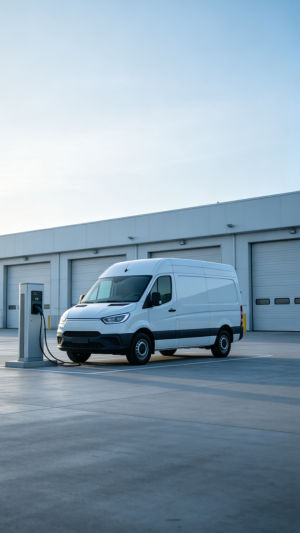
The light commercial vehicle market looks much flatter. Around 316,000 vans are expected to be registered in 2026, rising only slightly to 318,000 in 2027.
Electric vans are growing much faster. Their registrations are forecast to increase 30.8% this year and another 39% next year. Even so, their share is expected to reach only 11.5% in 2026 and 15.9% in 2027.
That leaves the van market further behind the passenger-car sector when it comes to electrification.
<h3>A Bigger but Different Market</h3>
The outlook shows a UK market that is recovering in volume while changing rapidly in composition. Fully electric cars are expanding, hybrids are gaining importance and petrol and diesel are steadily surrendering market share.
The challenge now is whether consumer demand, charging infrastructure and vehicle prices can keep pace with regulatory expectations.
<b>By 2027, Britain may not simply be selling more new cars. It may be operating a fundamentally different market, where electrified models are no longer alternatives to the mainstream — they are the mainstream.</b>


