

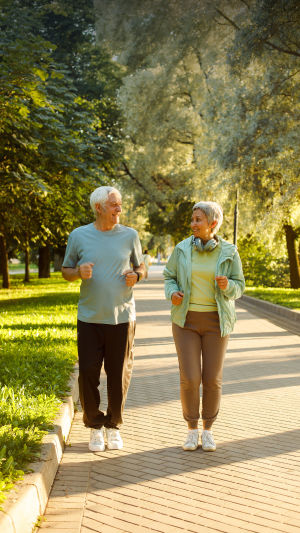
Getting enough physical activity is often framed as a matter of motivation: walk more, exercise regularly and make healthier choices. But research suggests the environment around us also plays an important role.
Sidewalks, connected streets, nearby shops, parks, lighting and safe crossings can all affect whether walking feels convenient or unnecessarily difficult. In other words, movement is not only about personal discipline. It is also about whether a neighborhood makes activity easy to build into everyday life.
<b>The practical idea is simple: people may move more when walking becomes the easiest option rather than another task they have to schedule.</b>
<h3>What Makes a Place Walkable?</h3>
Walkability describes how easily people can reach everyday destinations on foot, by bicycle or using mobility aids. Researchers look at factors such as the length of city blocks, how frequently streets connect, and whether shops, cafés, parks or libraries are close enough to reach without a car.
Smaller details matter too. Continuous sidewalks, benches, lighting and safe crosswalks can determine whether a short journey feels comfortable, particularly for older adults, children or people with limited mobility.
Clinical psychologist Dr. Abby King of Stanford University has spent years studying how physical and social surroundings influence activity. She has explained that environments can shape everyday behaviour in powerful ways, which is why making healthier choices easier may be more effective than relying on willpower alone.
<h3>Moving Somewhere Walkable Made a Difference</h3>
Recent research involving King and her colleagues examined what happened when people moved between cities with different levels of walkability.
Those who relocated to more walkable places increased their daily movement by roughly 1,100 steps. Over a week, that added up to almost an extra hour of physical activity. <b>The study suggests that changing the environment can influence activity even without asking people to begin a formal exercise programme.</b>
This matters because regular physical activity is associated with lower risks of several chronic conditions, including cardiovascular disease, type 2 diabetes, high blood pressure and depression.
However, the findings should not be interpreted to mean that living in a walkable neighborhood automatically prevents these conditions. Health is influenced by many factors, and the study mainly shows that the built environment can help encourage more movement.
<h3>You Do Not Need to Move House</h3>
Of course, relocating to a different city is not realistic for most people. That is why King and her team developed a research programme called Our Voice. Residents use a simple app to document features that make walking easier or harder in their own neighborhoods, then share those observations with community leaders.
The programme has been used in more than 30 U.S. states and in over 30 countries across six continents. The important point is that improving walkability does not always require rebuilding an entire neighbourhood. Better lighting, safer crossings, green spaces or more convenient pedestrian routes can make a noticeable difference.
<h3>Small Choices Still Count</h3>
Even in an area that is not particularly walkable, there are ways to add movement without turning every day into a workout plan. Parking slightly farther from a destination, taking the stairs, walking during lunch or arranging a walk with a friend can all increase activity. Extending the usual dog-walking route or choosing a nearby shop that can be reached on foot are similarly simple options.
<b>The goal is not to make every journey longer. It is to find places where movement can replace sitting without requiring much extra thought.</b>
<h3>Health Is Also Designed</h3>
The larger message from this research is that healthy behaviour does not happen in isolation. Individual choices matter, but streets, public spaces and local services can either support those choices or make them unnecessarily difficult. King’s work suggests that creating more walkable communities may help people become more active across different ages and starting activity levels.
<b>Sometimes the easiest way to encourage healthier habits is not telling people to try harder. It is designing places where moving naturally becomes part of everyday life.</b>


