

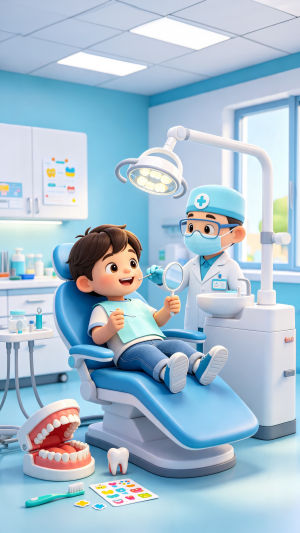
A child’s first dental visit marks an important step in establishing lifelong dental health.
It gives a dental professional an opportunity to assess tooth development, identify potential concerns early, and provide parents with guidance tailored to the child’s age.
A positive introduction to dental care can also help children become comfortable with future appointments.
<h3>When Should a Child First See a Dentist?</h3>
A child should have a first dental visit when the first tooth appears and no later than 12 months of age. Early assessment provides an opportunity to evaluate developing teeth, discuss preventive care, and identify factors that may increase the risk of tooth decay.
“The first dental visit is recommended by 12 months of age, or within 6 months of the first tooth coming in.” — Stanford Medicine Children’s Health.
As children grow, regular dental appointments allow ongoing assessment of their teeth, bite, and development. The appropriate interval between visits depends on the child’s individual needs and dental health.
<h3>What to Expect During the Appointment</h3>
The first appointment is adapted to the child’s age, development, and comfort. Depending on the circumstances, the dental professional may:
- Examine the teeth and gums
- Assess tooth eruption and development
- Check for signs of tooth decay
- Evaluate the bite and jaw development
- Review brushing and cleaning practices
- Discuss eating and drinking habits
- Recommend preventive measures when appropriate
Parents may also receive practical advice about fluoride toothpaste, brushing technique, cleaning between teeth, and other aspects of daily care.
<h3>How Parents Can Prepare a Child</h3>
Simple preparation can make the appointment feel more familiar. Parents can explain that the dental professional will look at the child’s teeth and use calm, age-appropriate language when discussing the visit.
Reading a children’s book about dental appointments or briefly practicing opening the mouth at home may help. Parents should avoid frightening descriptions and allow the dental professional to explain procedures in a way appropriate for the child.
<h3>Building Healthy Habits at Home</h3>
Daily dental care plays a central role in preventing tooth decay. Children should brush twice a day with fluoride toothpaste using an age-appropriate amount.
For children younger than 3 years, a smear approximately the size of a grain of rice is generally recommended. Children ages 3 to 6 years should generally use no more than a pea-sized amount. Parents or caregivers should supervise brushing and assist when necessary.
Frequent consumption of sugary foods and drinks can increase the risk of tooth decay, so these should be limited. When teeth begin to touch, cleaning between them should also become part of the child’s dental-care routine.
<h3>When to Arrange an Earlier Appointment</h3>
Certain concerns warrant prompt dental assessment, including:
- Persistent tooth pain or sensitivity
- Swelling around the gums or mouth
- A damaged or knocked-out tooth
- Visible cavities or significant tooth discoloration
- Persistent gum bleeding
- Difficulty chewing
A dental professional can determine the cause of the problem and recommend appropriate care.
<h3>The Bottom Line</h3>
An early dental visit establishes a foundation for preventive care and gives parents professional guidance during an important stage of childhood development. Regular dental assessments, twice-daily brushing with fluoride toothpaste, appropriate dietary habits, and consistent supervision can help children maintain healthy teeth as they grow.


