

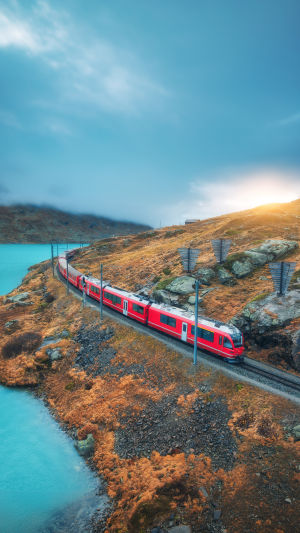
Sleeper trains are enjoying a real comeback in Europe. Once pushed aside by cheap flights and high-speed rail, overnight services are returning as travelers look for slower, more comfortable and often more sustainable ways to cross the continent.
The appeal is easy to understand: board in one city, sleep through most of the journey and wake up somewhere completely different. You also avoid a hotel night and usually arrive directly in the city center.
Prices vary widely depending on the date and whether you choose a seat, couchette or private sleeper, so booking early matters. On popular routes, reservations can open several months ahead and the cheapest berths disappear quickly.
<h3>1. Munich to Warsaw</h3>
<b>Frequency:</b> Daily
<b>Journey:</b> Around 14–15 hours
<b>Price:</b> From about €74.90
The Chopin night train links Munich with Warsaw through Austria and Poland, with stops including Salzburg, Vienna and Kraków.
It is one of the easiest ways to combine several Central European countries in one rail journey. Sleeper passengers also have breakfast included in the fare.
<b>Traveler tip:</b> If Warsaw is not your final stop, spend a day there before continuing toward Lithuania and the Baltic states.
<h3>2. Rome to Venice</h3>
<b>Frequency:</b> Daily
<b>Journey:</b> Around 7 hours
Italy’s Intercity Notte network is ideal for travelers who would rather spend daylight exploring than moving between cities.
The northbound train leaves Rome in the evening and continues toward Trieste, with carriages serving Venice. The best moment comes in the morning, when the train crosses the lagoon toward Venice while the city is only beginning to wake up.
Private cabins, couchettes and other accommodation options are available, and breakfast is included with some cabin products.
<b>Traveler tip:</b> Book a sleeping berth rather than a seat if you want to arrive ready for a full sightseeing day.
<h3>3. Brussels to Berlin or Prague</h3>
<b>Frequency:</b> Several departures per week
<b>Journey:</b> Roughly 10–16 hours
<b>Price:</b> Shared Classic compartments from €69.99–€79.99; private compartments from about €249.99
European Sleeper has revived one of the continent’s most useful overnight corridors. Trains connect Brussels with Berlin and Prague via cities such as Antwerp, Rotterdam and Amsterdam.
Shared Classic berths to Prague currently start from <b>€79.99 per person</b>, while private compartments start at around €249.99 depending on the route and date.
<b>Traveler tip:</b> This is particularly convenient for travelers arriving from London by Eurostar because you can continue east without crossing Paris.
<h3>4. Zürich to Zagreb</h3>
<b>Frequency:</b> Daily
<b>Journey:</b> Around 13–19 hours
This EuroNight service connects Switzerland with Croatia while crossing some of Europe’s finest Alpine scenery.
After leaving Zürich, the route runs through Austria and Slovenia before reaching Zagreb. In summer, longer daylight hours mean you can enjoy more of the mountain landscape before going to sleep and again after waking.
The service operates daily, and breakfast is included for passengers using couchettes and sleeping cars.
<b>Important:</b> Engineering works will temporarily cancel Zürich–Zagreb EuroNight services from late September into mid-October 2026, so check your dates carefully.
<h3>5. London to Fort William</h3>
<b>Frequency:</b> Six nights per week
<b>Journey:</b> Around 13 hours
<b>Price:</b> Seats roughly £54–£100; private Classic rooms generally from about £210
The Caledonian Sleeper is one of Europe’s great rail experiences. Leave London Euston in the evening and wake among lochs, mountains and empty Highland landscapes before arriving at Fort William.
Current published fare ranges start at around <b>£54 for a seat</b>, while Classic private rooms generally begin around £210. More luxurious Club and Caledonian Double rooms cost considerably more.
The train currently leaves London at about 21:15 on regular weekday services and reaches the Highlands the following morning.
<b>Traveler tip:</b> A private room makes far more sense if this journey is part of a holiday rather than simply transport. Fort William is the gateway to Ben Nevis and excellent Highland hiking.
<h3>6. Berlin to Gothenburg or Stockholm</h3>
<b>Frequency:</b> Varies by service and season
<b>Journey:</b> Around 13–17 hours
Overnight trains between Germany and Sweden make Scandinavia surprisingly accessible without flying.
Services travel through Hamburg and Denmark before entering Sweden. Some continue toward Gothenburg, while others reach Stockholm. Seasonal trains can also stop in Copenhagen.
The morning portion is particularly attractive, with daylight views of the Swedish countryside.
<b>Traveler tip:</b> Check schedules carefully for late 2026. Some services are undergoing timetable and funding changes, so frequency can vary significantly by date.
<h3>7. Budapest to Bucharest</h3>
<b>Frequency:</b> Daily
<b>Journey:</b> Around 14 hours
The Ister is one of the classic Eastern European sleeper journeys.
Leaving Budapest in the evening, the train travels overnight toward Romania and reaches Bucharest in the morning. The highlight comes after sunrise as the route winds through the <b>Carpathian Mountains</b> before descending toward the plains.
There may be passport checks during the night, so keep your documents close at hand rather than buried at the bottom of your luggage.
<b>Traveler tip:</b> If you have time, continue from Bucharest toward Istanbul on the seasonal international sleeper for an even longer rail adventure.
Budapest
<h3>8. Trondheim to Bоdo</h3>
<b>Normal journey:</b> About 10 hours overnight
The Nordland Line is one of the most spectacular railways in Scandinavia, running north from Trondheim and crossing the Arctic Circle on its way to Bоdо.
Normally, the overnight departure from Trondheim leaves at around 23:05 and reaches Bоdо around 09:05.
However, there is an important update for travelers in 2026: <b>the night train is currently suspended until further notice</b>. The operator expects overnight services to return during autumn 2026 after approvals and staff training are completed.
<b>Traveler tip:</b> Do not build a trip around this sleeper until the restart date is officially confirmed.
<h3>9. Paris to Latour-de-Carol</h3>
<b>Journey:</b> Around 10–12 hours overnight
<b>Price:</b> From about €19 on selected dates
For travelers heading toward the Pyrenees, this is one of France’s most atmospheric night routes.
The train leaves Paris late in the evening and arrives near the Spanish border the following morning. Current fares on selected dates can start from around <b>€19 one way</b>, though prices rise considerably on busy departures.
From Latour-de-Carol, regional trains continue into Spain, including connections that can eventually take you to Barcelona.
<b>Traveler tip:</b> For a more scenic extension, take the narrow-gauge Yellow Train through the Pyrenees rather than heading straight for the city.
<h3>9. Paris to Latour-de-Carol</h3>
<b>Journey:</b> Around 10–12 hours overnight
<b>Price:</b> From about €19 on selected dates
For travelers heading toward the Pyrenees, this is one of France’s most atmospheric night routes.
The train leaves Paris late in the evening and arrives near the Spanish border the following morning. Current fares on selected dates can start from around <b>€19 one way</b>, though prices rise considerably on busy departures.
From Latour-de-Carol, regional trains continue into Spain, including connections that can eventually take you to Barcelona.
<b>Traveler tip:</b> For a more scenic extension, take the narrow-gauge Yellow Train through the Pyrenees rather than heading straight for the city.
<h3>How to Book Smarter</h3>
Night trains are no longer a secret, so <b>book as early as possible</b>. The biggest savings usually come from committing to a date rather than waiting for last-minute deals.
A seat is cheapest but rarely ideal for an overnight journey. A shared couchette offers the best compromise between budget and sleep, while a private cabin makes sense for couples, families or anyone who values privacy.
Interrail and Eurail passes can cover the basic rail journey on many services, but <b>sleeper reservations and accommodation supplements are normally still required</b>.
Also remember that comparing a night train only with an airline ticket can be misleading. A sleeper may replace a hotel night, airport transfer and checked-baggage fees while taking you directly from one city center to another.
<b>The best European sleeper journeys are therefore not necessarily the cheapest way to travel. Their real advantage is that the journey itself becomes part of the trip: dinner in one country, sleep somewhere between borders and breakfast hundreds of kilometers away.</b>


