

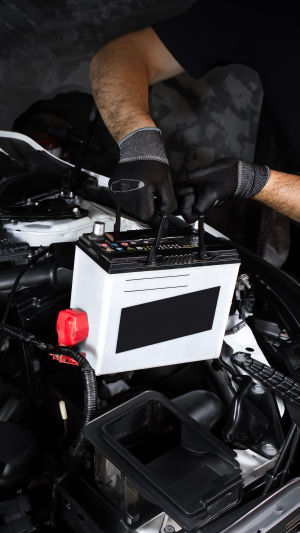
A healthy battery is essential for reliable starting and stable electrical performance. Regular inspection, proper charging, and timely replacement can help prevent unexpected battery failure.
Vehicles use different battery technologies, including conventional flooded lead-acid, Enhanced Flooded Battery (EFB), and Absorbent Glass Mat (AGM). The correct type depends on the vehicle's electrical requirements and manufacturer specifications.
<h3>Recognizing Battery Problems</h3>
A slow engine crank is one of the clearest signs of reduced battery performance. Dimming lights, difficulty starting, or a battery warning light can also indicate a battery or charging-system problem.
Inspect the battery for swelling, cracks, leaks, or heavy corrosion. A damaged or severely swollen battery should be replaced promptly. The manufacturing date can also help determine whether the battery is approaching the end of its service life.
<h3>Testing Battery Condition</h3>
A digital multimeter can provide a basic indication of battery charge. With the engine off, a fully charged conventional starter battery will generally measure around 12.8 volts. A reading below approximately 12.4 volts may indicate that charging is needed.
Voltage alone does not determine battery health. A dedicated battery tester can provide additional information about condition and starting performance, including Cold Cranking Amps (CCA).
<h3>Cleaning Battery Terminals</h3>
Corroded terminals can increase electrical resistance and interfere with starting. Look for white, blue, or greenish deposits around the connections.
After switching off the vehicle, follow the manufacturer's instructions for disconnecting the battery. For conventional lead-acid batteries, a small amount of baking soda mixed with water can help clean acidic residue. Use a suitable brush, keep moisture away from electrical components, and dry the terminals thoroughly before reconnecting them.
<h3>Jump-Starting Safely</h3>
A jump-start can temporarily restore enough power to start a vehicle with a discharged battery. Always follow the vehicle manufacturer's instructions because connection points can vary.
For a conventional setup, connect the red cable to the positive terminal of the discharged battery and then to the positive terminal of the donor battery. Connect the black cable to the donor battery's negative terminal and the remaining clamp to an appropriate grounding point on the disabled vehicle when specified.
Allow the donor vehicle to run for several minutes before attempting to start the disabled vehicle. Once it starts, remove the cables in reverse order.
If jump-starting is repeatedly necessary, the battery and charging system should be tested to identify the underlying problem.
<h3>Battery Care During Storage</h3>
A parked vehicle can still use a small amount of electrical power, gradually discharging the battery during extended periods of inactivity.
For long-term storage, a compatible smart battery maintainer can help maintain the appropriate charge level. Use equipment designed for the specific battery technology, such as conventional lead-acid, EFB, or AGM.
<h3>When to Replace the Battery</h3>
Replace the battery when it fails a proper condition test, cannot maintain an adequate charge, or has significant physical damage.
The replacement should match the manufacturer's specifications for battery type, size, capacity, and CCA rating. Vehicles with start-stop systems may require an EFB or AGM battery rather than a conventional unit.
Repeated starting problems can also result from an alternator fault, poor electrical connection, parasitic drain, or another component. Diagnosing the complete system can prevent unnecessary battery replacement.
<h3>Battery Management Systems</h3>
Many modern vehicles use a Battery Management System (BMS) to monitor battery condition and manage electrical energy. Depending on the vehicle, a replacement battery may need registration or adaptation after installation.
Because procedures vary, check the owner's manual or manufacturer-specific service information. A qualified technician can perform any required registration or adaptation using appropriate diagnostic equipment.
Good battery care is simple: inspect the battery, keep its connections clean, maintain an appropriate charge, and replace it when testing shows significant deterioration. Using the correct battery type and following the manufacturer's replacement procedures can help maintain reliable starting and electrical performance.


