

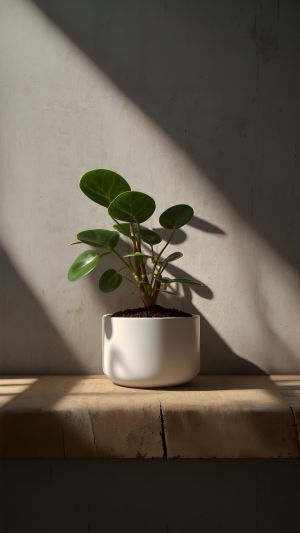
Hello, readers, and welcome! Sunlight gives plants the energy they need to make their own food. Through photosynthesis, plants use light energy to help turn water and carbon dioxide into sugars.
These sugars support important processes such as growth and development. Understanding a plant’s light needs can help you choose the right spot for healthier growth.
<h3>Sunlight Powers Photosynthesis</h3>
Plants use light energy during photosynthesis, a process that converts carbon dioxide and water into sugars. These sugars provide chemical energy and carbon that plants use for growth and maintenance.
Chlorophyll, the green pigment found in plant cells, absorbs light and helps drive this process. The oxygen released during photosynthesis comes from the splitting of water molecules. Without enough usable light, photosynthesis can become too limited to support normal growth.
<h3>Light Affects Plant Growth</h3>
Light influences how plants develop leaves, stems, and other structures. A plant growing with insufficient light may produce weak or elongated growth as it responds to limited energy. Adequate light supports the production of carbohydrates needed for new tissues.
The amount required varies among plant species, so a light level suitable for one plant may be unsuitable for another. Light intensity, duration, and quality can all affect photosynthesis. A plant's response also depends on factors such as water availability, temperature, and nutrient supply.
<h3>Why Too Much Sunlight Can Cause Problems</h3>
More sunlight does not automatically produce better growth. Some plants are adapted to lower light levels and can be damaged when exposed suddenly to strong direct sunlight. Excessive light can contribute to leaf stress, particularly when combined with high temperatures or limited water.
Plants that are moved from lower light to stronger light may need gradual exposure to reduce stress. For indoor plants, placing a light-demanding species in a dark area can limit photosynthesis, while placing a shade-tolerant species in intense direct light can cause problems.
<h3>How to Match Light to a Plant</h3>
Start by checking the plant's stated light requirement, then consider the actual location where it will grow.
1. Identify the plant's light preference. Check whether it is suited to low, moderate, or high light conditions.
2. Observe the available light. Consider how much direct or indirect light reaches the growing area during the day.
3. Watch the plant's growth. Weak, stretched growth can indicate insufficient light, although other growing conditions can also contribute.
4. Avoid sudden changes. Move plants between substantially different light conditions gradually when practical.
5. Adjust other conditions when needed. Water, temperature, and nutrients also affect plant growth, so changing light alone may not solve every problem.
A useful approach is to treat light requirements as plant-specific rather than using the same placement for every species.
<h3>Sunlight Is One Part of Plant Care</h3>
Plants need light because photosynthesis depends on light energy to produce sugars from carbon dioxide and water. However, healthy growth also requires suitable water, temperature, nutrients, and growing conditions.
When choosing a location for a plant, start with its light requirement and then consider the conditions in that space. Matching the plant to the available light can support more consistent growth without relying on a single care change.


