

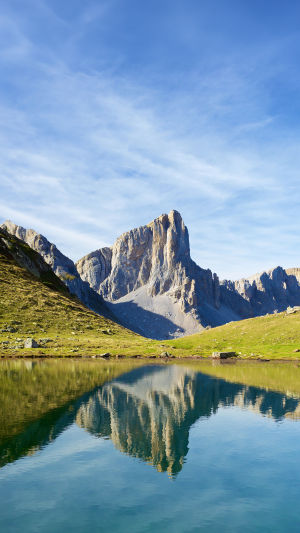
There is a growing alternative to the city break that tries to squeeze 15 attractions into 48 hours. A stillcation is built around doing less: long walks, quiet landscapes, clear night skies and enough empty space to stop checking the time.
A 2026 study by walking-holiday specialist Inghams compared almost 100 European destinations using factors including trail density, air quality, forest cover, population density, birdsong diversity and conditions for stargazing.
Wester Ross in Scotland came first, followed by the French Pyrenees, Abisko in Sweden, Switzerland’s Engadin Valley and the Dolomites in Italy.
These are not places where you need an exhausting sightseeing list. The landscape is the itinerary.
<h3>1. Wester Ross, Scotland</h3>
Wester Ross feels almost designed for travellers who want distance from busy urban life. Mountains rise directly behind sea lochs, narrow roads cross enormous stretches of open land, and villages remain small enough for darkness and silence to return quickly after sunset. The region topped the study partly because of its exceptionally low population density and limited light pollution.
Base yourself around Gairloch or Torridon and spend your days around Loch Maree, coastal viewpoints and shorter Highland trails rather than attempting to cover the entire region.
A car is the most practical option, although that does mean driving slowly on many single-track roads.
<b>Best time:</b> May, June or September for long daylight without the busiest summer period.
<b>Daily budget:</b> roughly €60–90 excluding accommodation.
<h3>2. French Pyrenees, France</h3>
The French Pyrenees offer a softer type of mountain escape. Instead of rushing between famous peaks, you can choose one valley and spend several days moving between forests, waterfalls, villages and mountain lakes.
The region performed particularly well for its natural soundscape and bird diversity. The Pyrenees National Park also has visitor centres in places including Cauterets, Gavarnie and Saint-Lary, making it easier to choose walks suited to the weather and your fitness level.
For a first trip, Cauterets makes an excellent base. Another option is Gavarnie for dramatic mountain scenery without needing to move accommodation every night.
<b>Best time:</b> June to September for hiking.
<b>Daily budget:</b> around €55–85 excluding accommodation.
The best stillcation rule here? Pick one good trail per day. The mountains do not improve because you hurried through three of them.
<h3>3. Abisko, Sweden</h3>
For genuine remoteness, head north of the Arctic Circle.
Abisko sits roughly 100 kilometres west of Kiruna and offers easy access to Abisko National Park and the beginning of Kungsleden, Sweden’s famous long-distance trail, which stretches for more than 450 kilometres through the northern mountains.
You certainly do not need to hike the entire route. Short sections through birch forest and open Arctic terrain provide the same sense of scale without turning a quiet holiday into an expedition.
Summer brings the Midnight Sun, while the darker season is associated with Northern Lights viewing. Official Swedish tourism guidance highlights Abisko as one of the country’s major aurora destinations.
<b>Getting there:</b> travel through Kiruna and continue by train or transfer.
<b>Daily budget:</b> roughly €70–110 excluding accommodation.
Stay at least three nights. Travelling this far north for a single evening rather defeats the purpose.
<h3>4. Engadin Valley, Switzerland</h3>
Switzerland is rarely the cheapest place for a quiet escape, but the Engadin Valley makes a persuasive argument for spending more and scheduling less.
The high Alpine valley combines clear lakes, larch forests and an extensivenet work of marked trails. Engadin tourism lists around 580 kilometres of walking routes, ranging from gentle lakeside paths to demanding high-altitude hikes.
Instead of automatically choosing glamorous St Moritz, consider Sils or Pontresina for a calmer base.
Some participating accommodation also includes mountain railway benefits for guests staying more than one night, so check what is included before buying separate passes.
<b>Best time:</b> late June through September.
<b>Daily budget:</b> approximately €90–130 excluding accommodation
<h3>5. The Dolomites, Italy</h3>
The Dolomites prove that spectacular scenery does not require constant adrenaline.
There are hundreds of walking options through forests, alpine meadows and beneath the region’s distinctive pale-rock peaks, with routes ranging from relaxed valley walks to serious mountain days.
For a quieter stay, choose one valley rather than chasing every famous viewpoint. San Candido, Dobbiaco or Sesto make useful bases for the eastern Dolomites, including the Three Peaks area.
Popular viewpoints can become crowded in midsummer, so begin walks early and save afternoons for long lunches, forest trails or simply doing nothing.
<b>Daily budget:</b> around €60–95 excluding accommodation.
The Dolomites, Italy
<h3>How to Plan a Real Stillcation</h3>
The wider ranking also included Picos de Europa, the Outer Hebrides, Corsica, Gotland, Kitzbühel, Kranjska Gora, St Anton, Skåne, Bled and Neustift im Stubaital.
But choosing the “stillest” destination is only half the experiment.
Stay longer in one place instead of changing hotels every night. Plan one main activity a day. Leave gaps in the schedule. Walk without treating every kilometre as a target, and choose accommodation where you can step outside without immediately needing transport.
<b>A successful stillcation should leave you with fewer photographs than an ordinary holiday — but perhaps a stronger memory of what the place actually felt like.</b>


