

Some of Europe’s most rewarding city breaks begin by ignoring the obvious choice. Instead of heading automatically to Prague, London or Berlin, travellers can find historic centres, excellent food and lively neighbourhoods in smaller or less internationally dominant cities.
These destinations are not necessarily empty — Split and Cambridge can still become busy — but they often offer an easier way to experience local life beyond the biggest tourist hubs.
<h3>1. Split, Croatia</h3>
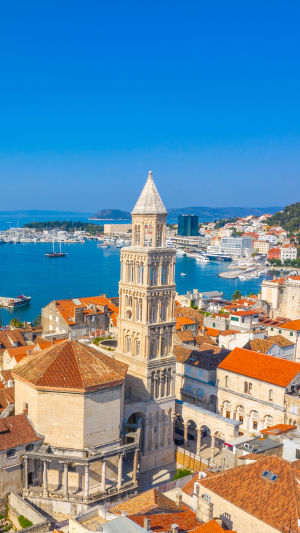
Split combines Roman history with an Adriatic waterfront. Its historic centre grew around <b>Diocletian’s Palace</b>, one of the best-preserved Roman architectural complexes and part of Split’s UNESCO-listed historic core.
Start early inside the palace, walk through the Peristyle and finish on the Riva promenade before heading toward the beaches.
<b>Stay:</b> Varoš for atmosphere or Bačvice for easier beach access.
<b>Daily budget:</b> roughly €55–85 excluding accommodation.
<h3>2. Cork, Ireland</h3>
Cork feels compact enough for a weekend but still has plenty of personality. Begin at the <b>English Market</b>, which dates to 1788 and sells fish, cheeses, baked goods, produce and other local food. It currently opens Monday to Saturday from 08:30 to 18:00 and closes on Sundays and bank holidays.
Walk afterward toward Fitzgerald’s Park or spend another day exploring the harbour towns and Atlantic scenery outside the city.
<b>Daily budget:</b> approximately €60–95 excluding accommodation.
<h3>3. Graz, Austria</h3>
Graz mixes Renaissance courtyards, contemporary architecture and one of Austria’s strongest food scenes.
The obvious first stop is Schlossberg. Walking up is free, but the <b>Schlossbergbahn funicular costs €3.30</b> for ride in 2026. The hill itself remains free to explore and gives excellent views across the red-roofed Old Town.
A 24-hour Graz public transport ticket currently costs €7.20.
Allow two days for the centre, Schlossberg and the Mur riverside.
<h3>4. Hamburg, Germany</h3>
Hamburg offers a very different Germany from Berlin or Munich. Maritime history shapes the city, while areas such as St Pauli and Schanzenviertel bring street art, independent cafés and a younger atmosphere.
Walk around Speicherstadt and HafenCity, then explore the harbour before heading into residential neighbourhoods.
For a local snack, try a fish roll rather than planning every meal around formal restaurants.
<b>Best for:</b> architecture, nightlife and waterfront walks.
<b>Daily budget:</b> around €65–100 excluding accommodation.
<h3>5. Brno, Czechia</h3>
Brno works particularly well for travellers who like history without an overloaded sightseeing schedule.
Špilberk Castle overlooks the city, while beneath the streets lies a network of underground spaces and reservoirs. The Žlutý Kopec Water Tanks are among the more unusual places to explore and help reveal the city’s industrial past.
The centre is compact enough to explore almost entirely on foot.
<b>Stay:</b> around the historic centre if visiting for only two nights.
<b>Daily budget:</b> roughly €40–65 excluding accommodation.
Water Tanks under Žlutý Kopec
<h3>6. Ypres, Belgium</h3>
Ypres is quieter and more reflective than Belgium’s larger city-break destinations.
The reconstructed historic centre is surrounded by landmarks, memorials and museums that reveal different layers of the region’s past. The Yper Museum reaches even further back, covering centuries of local history through archaeological finds, maps and everyday objects.
Cycling is particularly useful here because trails lead beyond the centre into green landscapes, preserved historic sites and peaceful countryside.
Two nights are usually enough for the city itself, though travellers with a strong interest in history may want to stay longer.
<b>Daily budget:</b> around €55–80 excluding accommodation.
<h3>7. Cambridge, England</h3>
Cambridge deserves more than a rushed day trip from London.
Its colleges, green spaces and River Cam create a city that rewards slow exploration. One classic activity is punting past the College Backs and historic bridges.
Shared tours advertised through the official visitor site can start at around <b>€29</b> at the current exchange rate.
For a cheaper afternoon, visit the Fitzwilliam Museum and wander through the city’s bookshops and parks.
<b>Best time:</b> weekdays outside the peak summer weekends.
<h3>8. Thessaloniki, Greece</h3>
Thessaloniki combines archaeological sites with a long waterfront and one of Greece’s most enjoyable casual food scenes.
Walk from Aristotelous Square toward the White Tower, then explore the Arch of Galerius and the Rotunda. The Rotunda currently costs <b>€3</b>, with summer hours listed as 08:00–20:00.
Leave room for local specialties such as bougatsa, sesame-covered koulouri and cream-filled trigona.
<b>Daily budget:</b> around €45–70 excluding accommodation.
<h3>9. Basel, Switzerland</h3>
Basel is the expensive option on this list, but it compensates with exceptional museums and an attractive Rhine setting.
The Kunstmuseum Basel holds one of Europe’s most important collections and traces its public collection history back centuries. Basel also has an unusually dense concentration of museums for its size.
Its position beside France and Germany also makes cross-border excursions remarkably easy.
<b>Daily budget:</b> around €90–130 excluding accommodation.
<h3>10. Lille, France</h3>
Lille blends French and Flemish influences in a city centre full of colourful façades, cobbled streets and lively squares.
Spend the morning around Grand Place, wander through <b>Vieux-Lille</b> and finish near Quai du Wault at sunset.
The city works especially well for food-focused weekends: bakeries, markets and small restaurants make it easy to build a trip around eating without planning elaborate reservations.
<b>Daily budget:</b> approximately €55–85 excluding accommodation.
<h3>Which One Should You Choose?</h3>
For sunshine and sea, pick Split or Thessaloniki. For museums and architecture, Graz or Basel are stronger. Cork and Hamburg suit travellers who enjoy markets, harbour districts and neighbourhood wandering, while Brno offers excellent value.
Cambridge works beautifully for a slower cultural weekend, Lille is ideal for food and walking, and Ypres stands apart for travellers interested in history.
<b>The real advantage of Europe’s “second cities” is not simply smaller crowds. It is the chance to spend less time queuing and more time actually experiencing the place.</b>


