

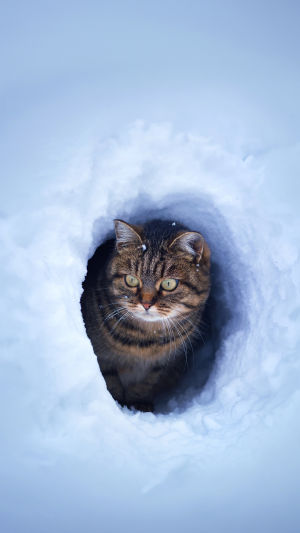
Hi, Lykkers! Have you ever looked at your cat after a chilly season and wondered, “Why does their coat look darker than before?” A cat’s fur can appear to change shade as temperature, sunlight, age, and pigment production affect individual hairs.
Seasonal changes may be especially noticeable in cats whose coloring responds to cooler temperatures. While some shifts are completely natural, others can be worth monitoring more closely.
Winter does not automatically make every cat's coat darker. The effect is most noticeable in cats with colourpoint patterns, such as Siamese, Himalayan, and some related breeds, because their coat colour is strongly influenced by temperature. Other cats may appear different during the colder months for entirely separate reasons. Here are several specific processes that can explain those seasonal changes.
<h3>1. Colourpoint Cats Can Darken in Colder Weather</h3>
The clearest example of temperature-related coat colour occurs in colourpoint cats. Their unusual pattern is connected to a temperature-sensitive form of the enzyme tyrosinase, which plays an important role in melanin production. The enzyme is less active in warmer areas of the body, helping keep the torso relatively pale.
Cooler regions, including the ears, paws, tail, and face, allow more pigment to develop, creating the familiar darker "points." During winter, the skin temperature over parts of the body can fall enough to influence pigmentation. As a result, some colourpoint cats may develop a darker coat over their body, particularly if they spend time in cooler surroundings.
When temperatures rise again, newly growing fur can gradually become lighter. This process does not mean the existing hair instantly changes colour. Instead, temperature affects pigment production as the hair grows, so seasonal differences may become noticeable gradually.
<h3>2. Indoor and Outdoor Cats May Look Different</h3>
Where a cat spends its time can also influence how its coat appears throughout the year. An outdoor colourpoint cat exposed to colder temperatures may show stronger darkening than a cat living consistently in a warm indoor environment. The difference can sometimes be surprisingly visible.
A Siamese cat kept in a warm home may retain a relatively pale body, while prolonged exposure to cooler conditions can encourage darker pigmentation in newly grown hairs. This is one reason photographs of the same colourpoint cat taken in different seasons can look noticeably different. The change is not necessarily a sign that the animal is unwell; it can simply reflect its environment and the temperature around the skin.
<h3>3. Sunlight Can Make Dark Fur Look Rusty</h3>
Winter can also change the way a cat's coat looks without directly causing darker pigmentation. Sun exposure is an important factor, especially in black cats. Repeated exposure to sunlight can cause dark hairs to develop a brownish, reddish, or rusty appearance. The effect is often easiest to see on the ends of longer hairs, where fading becomes more apparent.
A black cat that spends hours resting beside a sunny window may therefore appear less intensely black than it did previously. This is generally a cosmetic change rather than an indication of illness. The colour may become less noticeable after periods with reduced sunlight because fresh hair grows in with its normal pigmentation. However, coat colour alone should not be used to diagnose a health problem.
<h3>4. Regrowth After Spaying Can Look Different</h3>
Another unusual situation involves hair regrowing after veterinary surgery. During procedures such as spaying, part of a female cat's coat may be clipped or shaved to prepare the surgical area. Most cats eventually grow fur that resembles the surrounding coat. However, colourpoint cats can sometimes regrow darker hair over previously clipped areas because the skin in that region becomes cooler while the hair is growing.
This can create a temporary patch that looks strikingly different from the rest of the body. As the area becomes warmer again and subsequent hairs grow, the contrast may gradually diminish. For owners, the important point is that a darker patch appearing after surgery does not automatically indicate a complication. The timing and location of the colour change provide useful clues.
<h3>5. Genetics Can Produce a Rust-Coloured Coat</h3>
Not every reddish tint has a seasonal explanation. Some dark-coated cats develop a rusty appearance because of differences in pigmentation and the way their bodies produce melanin. Tyrosinase is involved in the biochemical pathway responsible for producing melanin, the pigment that gives hair much of its colour.
Genetic variation affecting pigmentation can therefore influence the final shade of the coat. Sunlight may make this effect more noticeable, particularly in black cats. However, persistent changes should not simply be blamed on winter, summer, or sun exposure without considering the cat's overall condition.
So, can a cat’s fur change colour in winter? Some can, but not every cat does. Temperature-sensitive colourpoint cats are the most striking example, while sunlight, genetics, age, and post-surgical hair regrowth can also alter the way a coat appears.


