

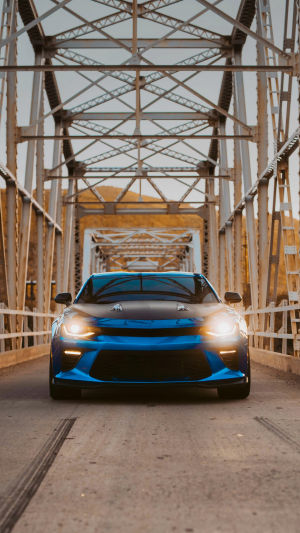
Hi, Readers! Self-driving cars are a bit like very careful drivers with a backpack full of gadgets and a brain that never gets tired.
They do not just roll down the road and hope for the best. They constantly collect clues from the world around them, sort those clues at lightning speed, and decide what to do next.
The big question is simple: how does a car know what is around it? The answer is a team effort between sensors, software, maps, and computing power.
<h3>The car's senses</h3>
A self-driving vehicle usually relies on several kinds of sensors, because no single tool can do every job well. Cameras help the car read lane markings, traffic lights, road signs, and the shapes of nearby vehicles and people. Radar is handy for measuring distance and speed, especially when visibility is not great. LiDAR, which sends out laser pulses and measures how they bounce back, helps build a detailed three-dimensional view of the surroundings.
Ultrasonic sensors are often used for nearby objects during slow driving or parking. If cameras are the eyes, radar is the steady tape measure, and LiDAR is the car's little survey crew drawing a neat map every second.
<h3>Putting the puzzle together</h3>
Collecting data is only the first step. The vehicle then has to combine all that incoming information, a process often called sensor fusion. This is where the car tries to make one clear story out of many messy clues. A camera may notice a lane line, radar may detect a moving vehicle ahead, and LiDAR may confirm the exact shape and position of that vehicle.
By blending these streams together, the system can identify what is around the car more reliably than with one sensor alone. It is a bit like asking several friends for directions instead of trusting the one who points at a bakery and calls it a train station.
<h3>Finding position on the road</h3>
A self-driving car also needs to know where it is, not just what is nearby. For that, it uses satellite positioning, onboard sensors, and detailed maps. GPS helps with general location, while inertial measurement systems track movement and direction. High-definition maps can add another layer of detail by storing road geometry, lane layouts, traffic signals, and other fixed features.
The vehicle compares what its sensors see with what the map expects, helping it stay oriented even in tricky situations. Still, maps are helpers, not magicians. Roads change, lanes shift, and construction zones love causing confusion.
<h3>Recognizing and predicting</h3>
Once the car has a sense of the environment and its own position, it has to recognize objects and predict what they might do next. Is that object a parked car, a cyclist, or a trash bin? Is the person near the curb waiting or about to cross?
These systems use machine learning and computer vision to classify objects and track their movement. Prediction is one of the hardest parts, because roads are full of surprises and people are wonderfully inconsistent. One moment everything looks orderly, and the next moment someone changes lanes like they are late for free dessert.
<h3>Planning and control</h3>
After perception and prediction comes planning. The car decides how to respond by choosing a path and adjusting speed and steering. This includes staying in lane, keeping a safe gap, slowing for traffic, stopping at signals, and navigating turns.
Control systems then carry out those decisions through the steering, acceleration, and braking systems. In other words, perception tells the car what the world looks like, planning decides what to do, and control turns that decision into real movement. It is less magic carpet, more nonstop team meeting with very fast note-taking.
<h3>The road ahead</h3>
Self-driving technology has made huge progress, but it still faces challenges. Weather can affect sensors, unusual road layouts can confuse systems, and busy city streets can throw a lot of information at once. Safety, reliability, and clear rules remain major issues as the technology develops.
Different companies also use different mixes of cameras, radar, LiDAR, and software, so there is no single recipe that fits every vehicle.
Self-driving cars sense the world by layering different tools together, then using software to turn raw data into decisions. The whole setup works like a careful navigator, a sharp lookout, and a calm driver rolled into one machine. As the technology improves, understanding how these vehicles perceive their surroundings helps us see both the promise and the challenges waiting just up the road.


