

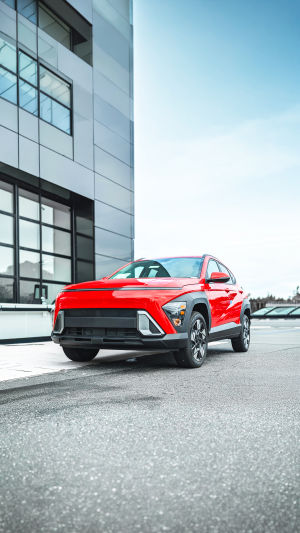
Hi, Friends! If you think cars are just four wheels and a steering wheel, buckle up—today’s auto revolution makes a caterpillar’s butterfly move look lazy.
New technologies are not just tweaking cars around the edges; they are rebuilding the entire thing from the ground up.
<h3>AI Is Now the Co-Pilot You Never Asked For</h3>
Artificial intelligence has quietly slipped into the driver's seat of the auto industry, and honestly, it is doing a pretty solid job. AI systems are now being used to help vehicles perceive their environment, make split-second decisions, and assist drivers in ways that would have seemed like science fiction a decade ago.
Think of it like having a super-focused friend in the passenger seat who never gets distracted by snacks or their phone. AI processes data from cameras, radar, and sensors all at once, helping the car understand what is happening around it faster than any human brain could manage.
This capability is at the heart of advanced driver assistance systems, which are already showing up in cars you can buy today.
<h3>Electrification Is Not Just a Trend</h3>
Electric vehicles are no longer the quirky outsiders at the car show. They have become the main event. The shift from combustion engines to electric powertrains is reshaping everything from how cars are designed to how they are maintained.
Electric motors are simpler, have fewer moving parts, and deliver instant torque that makes traditional engines feel like they are running in slow motion.
This transition is also pushing manufacturers to rethink their entire supply chains, because building an electric vehicle requires a completely different set of components than a traditional one.
Battery technology is improving fast, and charging infrastructure is expanding, which means range anxiety is slowly becoming a thing of the past, like dial-up internet.
<h3>Connected Vehicles Are Always Online</h3>
Modern cars are essentially smartphones on wheels at this point. Vehicle connectivity allows cars to communicate with other vehicles, with traffic infrastructure, and with cloud-based services in real time. This means your car can receive software updates while it sits in the driveway, just like your phone getting a new operating system overnight.
It also enables features like predictive maintenance, where the car essentially tells you something is about to go wrong before it actually does. That is like having a doctor who calls you before you even feel sick.
<h3>Sensors and Cameras Are Everywhere</h3>
To make all this smart technology work, modern vehicles are packed with sensors. Lidar, radar, ultrasonic sensors, and high-resolution cameras work together to give the car a full picture of its surroundings. These are the eyes and ears of autonomous driving systems.
The more data these sensors collect, the better the AI gets at understanding complex situations like merging onto a busy highway or navigating a tight parking lot. It is a feedback loop that keeps improving with every kilometer driven.
<h3>Software Is the New Engine</h3>
Perhaps the biggest mindset shift in the industry is this: software now defines the vehicle as much as the hardware does. Automakers are investing heavily in developing their own software platforms because the ability to update, customize, and improve a vehicle through code is now a major competitive advantage.
A car that can learn new tricks after you buy it is fundamentally different from one that is frozen in time the moment it leaves the factory. This software-first approach is changing how companies hire, how they build, and how they think about long-term customer relationships.
The auto industry is in the middle of its most exciting chapter yet, and it is moving fast. From AI-powered assistance to fully electric powertrains, connected services, and software-driven experiences, the car of tomorrow is being built right now.
Whether you are a car enthusiast or just someone who needs to get from point A to point B, these changes are going to affect you. So keep an eye on what is rolling out of those factories, because the next car you drive might just be smarter than you think!


