

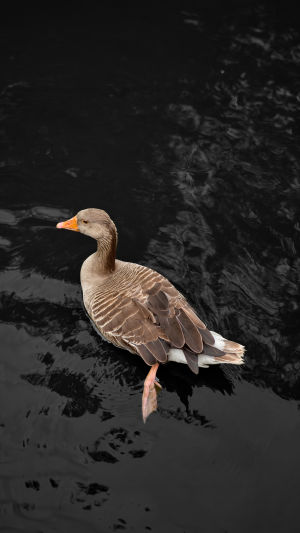
Greetings, Lykkers! When a Greylag goose walks across grass, its feet may look simple and ordinary. However, those same feet are carefully designed tools that help this bird survive in wetlands, rivers, lakes, and coastal areas. The wide shape, connected toes, and strong muscles behind each step reveal a fascinating example of natural adaptation.
Greylag geese do not have webbed feet by accident. Their feet are shaped by thousands of generations of evolution, allowing them to move efficiently through water while still functioning well on land. From swimming across calm lakes to searching for food along muddy shores, their feet play an important role in almost every part of their daily lives.
<h3>Webbed Feet Act Like Natural Paddles</h3>
The most noticeable feature of a Greylag goose’s feet is the webbing between its toes. This thin layer of skin connects the front toes, creating a broad surface that pushes against water. When the goose moves its feet backward during a swimming, the webbed area works like a paddle, helping it move forward with less effort.
During the forward movement, the toes spread apart and allow water to pass through more easily, reducing resistance. When pushing backward, the toes close together and the webbing creates a stronger surface for propulsion. This simple movement allows Greylag geese to glide across ponds and rivers while using energy efficiently.
Unlike diving birds that need powerful underwater movement, Greylag geese are mainly adapted for swimming on the water’s surface. Their feet provide enough force to steer, slow down, and maintain balance while floating.
<h3>Feet Designed for Wetland Environments</h3>
Greylag geese often live near freshwater habitats, including marshes, lakes, rivers, and flooded grasslands. These areas frequently contain soft mud, shallow water, and uneven ground. Their feet help them handle these challenging surfaces. The broad shape of their feet spreads their weight over a larger area, preventing them from sinking too deeply into muddy ground. This feature allows them to walk through wet landscapes while searching for plants, seeds, and grasses.
Their legs are also positioned farther back on their bodies compared with many land birds. This placement improves swimming ability because the feet can push water more effectively. However, it means walking can appear slightly slower or less balanced. The same structure that makes them excellent swimmers creates a different movement style on land.
<h3>More Than Just Swimming Tools</h3>
Although webbed feet are strongly associated with water, Greylag geese use them for many other activities. When taking off from a lake, they often run across the water’s surface while rapidly moving their feet. The wide webbed toes help create extra force against the water, supporting their large bodies as they begin flight.
Their feet also help with communication and defense. When threatened, a Greylag goose may use strong movements of its feet while escaping through water. The legs and feet work together with the wings to create a fast getaway. Young goslings also benefit from webbed feet from an early age. Soon after hatching, they can follow their parents into shallow water. Their specialized feet help them stay afloat and move safely while learning how to navigate their surroundings.
<h3>The Balance Between Water and Land</h3>
Greylag geese spend time in both aquatic and terrestrial environments, so their feet must perform multiple jobs. A purely swimming bird would need a different body design, while a purely land-based bird would not require webbing. Their feet represent a compromise between two worlds. The webbing provides swimming power, while the strong toes and legs allow them to walk, feed, and rest on land. This flexibility is one reason Greylag geese are successful across many habitats.
Their relationship with water also influences their feeding habits. These geese often graze on grasses near shorelines, but they can also reach underwater vegetation by dipping their heads and necks into the water. Their feet help them stay stable while searching for food in shallow areas.
<h3>Evolution Behind the Greylag Goose’s Feet</h3>
The development of webbed feet is an example of adaptation, where animals gradually develop features that improve survival in specific environments. Birds that spend more time around water benefit from feet that improve swimming ability, giving them better access to food sources and safer places to escape predators.
Over generations, these traits become common within populations. In Greylag geese, webbed feet became one of the important characteristics that helped them thrive in wetland ecosystems across Europe and parts of Asia.
The webbed feet of Greylag geese are much more than a simple swimming feature. They are carefully adapted structures that help these birds travel through water, walk across muddy landscapes, find food, and survive in changing environments. Every movement of a Greylag goose’s feet tells a story of evolution and survival.


