

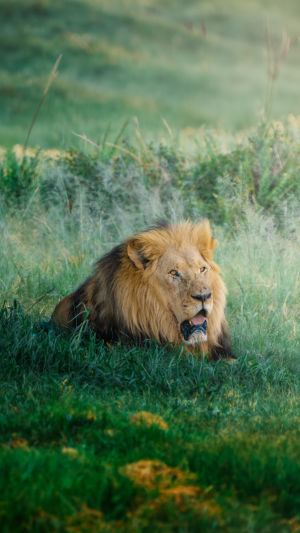
Greetings, Lykkers! Have you ever seen a lion resting under a tree and wondered why it sleeps for so many hours each day?
While it may seem lazy, this long rest is actually an important survival strategy.
Lions rely on short bursts of incredible power, which require plenty of time to recover and conserve energy. Understanding their sleeping habits reveals how they thrive in the wild.
<h3>Built for Power, Not Endurance</h3>
Lions are ambush predators, not marathon runners. Their muscular bodies are designed to generate incredible force over very short distances rather than sustain long pursuits. During a hunt, a lion may accelerate to speeds of about 50 to 60 km/h (31 to 37 mph), but only for a few seconds before fatigue sets in.
This athletic design comes with an important trade-off. Powerful muscles consume large amounts of energy, and sprinting rapidly builds heat within the body. To recover from these demanding efforts, lions spend much of the day resting. Instead of constantly searching for food, lions conserve energy until environmental conditions favor a successful hunt.
<h3>Hunting Success Is Never Guaranteed</h3>
Many people imagine lions catching prey with ease, yet reality is very different. Scientific observations show that most hunting attempts fail, often because prey detect danger early or escape before the lion closes the distance. Every unsuccessful chase wastes valuable energy.
A lion may stalk quietly for several minutes before making a final sprint, only to end up exhausted and empty-handed. For this reason, conserving energy between hunting attempts is just as important as the hunt itself. Long periods of inactivity reduce unnecessary calorie loss and increase the chances of having enough strength for the next opportunity.
<h3>The Heat Makes Rest Essential</h3>
Most lions live in environments where daytime temperatures frequently exceed 35°C (95°F). Running or fighting during intense afternoon heat greatly increases the risk of overheating. Unlike humans, lions cannot cool themselves efficiently through sweating. They mainly regulate body temperature by panting and seeking shade beneath trees, rocky outcrops, or thick vegetation.
During the hottest hours, entire prides often lie motionless, sometimes appearing completely inactive. This behavior minimizes heat production while conserving precious body water. As evening approaches and temperatures begin to fall, lions gradually become more active.
<h3>Night Offers the Best Hunting Conditions</h3>
Although lions may hunt at any time, they are primarily nocturnal and crepuscular, meaning they are most active after sunset, before sunrise, and during the cooler hours of dawn and dusk. Darkness provides several important advantages. Reduced visibility allows lions to approach prey without being detected as easily. Cooler temperatures also prevent excessive heat buildup during fast chases.
Excellent night vision gives lions another advantage. Their large eyes contain a reflective layer called the tapetum lucidum, which improves vision under low-light conditions and makes their eyes glow when illuminated. This nighttime lifestyle explains why lions often appear sleepy during daytime safari drives.
<h3>Full Bellies Lead to Long Naps</h3>
After a successful hunt, lions often consume enormous quantities of meat in a single feeding session. A fully grown male can eat more than 30 kilograms (66 pounds) of meat at once when food is abundant. Digesting such a heavy meal requires significant energy. Rather than becoming active again right away, lions typically spend many hours resting while their digestive systems process the food.
This extended recovery allows nutrients to be absorbed efficiently while minimizing additional energy expenditure. During this period, lions may move only occasionally to adjust their position or seek deeper shade.
<h3>Pride Life Allows More Rest</h3>
Unlike most wild cats, lions live in social groups known as prides. This cooperative lifestyle contributes directly to their ability to rest for long periods. Lionesses usually coordinate hunting duties, while other pride members remain nearby to watch over cubs or monitor potential threats. Male lions primarily defend the pride's territory from rival males rather than participate in every hunt.
Because responsibilities are shared, individual lions do not need to remain constantly alert. Even while resting, however, they remain aware of their surroundings. A sudden alarm call, unusual scent, or movement from nearby prey can instantly awaken the pride.
<h3>Cubs Sleep Even Longer</h3>
Young lion cubs spend even more time sleeping than fully grown lions. During the first few months of life, cubs may rest for over 20 hours each day. This prolonged sleep supports rapid physical development, including muscle growth, brain maturation, and immune system function. Since cubs rely entirely on their mothers for nourishment and protection, they conserve energy between nursing sessions.
As they mature, cubs gradually become more playful and begin practicing stalking, chasing, and wrestling—behaviors that prepare them for hunting later in life.
A sleeping lion may seem inactive, but every hour of rest serves a purpose. Conserving energy allows lions to survive unpredictable hunting success, recover after intense physical exertion, avoid dangerous daytime heat, and remain prepared for the next opportunity to hunt.


