

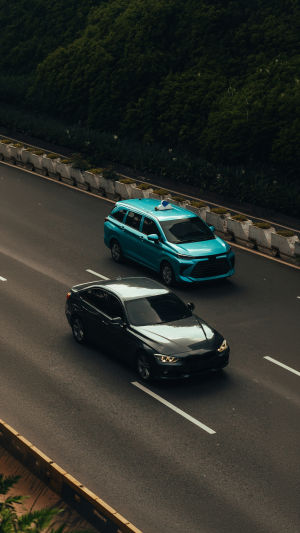
Imagine hailing a cab with your phone, but when it arrives, there's no one in the driver's seat. This isn't a scene from a sci-fi movie; it's the new reality for residents in cities like San Francisco.
The large-scale deployment of autonomous taxis, or Robotaxis, is one of the most significant real-world experiments in modern technology. But how is it actually going?
The story is a complex tapestry of impressive technological leaps, persistent growing pains, and a society learning to adapt.
<h3>San Francisco: The Living Laboratory</h3>
San Francisco has become the epicenter of this revolution. Companies like Waymo and Cruise have received state approval to offer 24/7 commercial paid services across the city. For a user, the experience can be surreal.
After requesting a ride through an app, you watch as a vehicle—typically a Jaguar I-Pace equipped with Waymo's sophisticated sensors or a Chevrolet Bolt from Cruise—navigates to you. Inside, the atmosphere is quiet and focused.
You buckle up and press a "Start Ride" button on the console screen. The steering wheel turns on its own as the car merges into the city's infamous traffic, navigating complex intersections like Lombard Street's zigzagging curves and the bustling activity of Market Street.
The technology's capability is often remarkable. These vehicles are designed to be hyper-cautious, obeying every speed limit and coming to a full, complete stop at stop signs. They use a combination of high-resolution maps, lidar, radar, and cameras to create a 360-degree, constantly updating understanding of their environment.
This allows them to predict the actions of pedestrians, cyclists, and other drivers with a level of consistency that sometimes surpasses human attention. However, this cautious nature is also a source of friction.
A common occurrence, known as a "failure to proceed," happens when a vehicle encounters an unexpected situation and simply stops. This could be triggered by something as simple as a plastic bag drifting across the road, a construction cone placed slightly out of place, or an emergency vehicle with sirens blaring in the distance.
While the car is processing the scenario for safety, it can create unexpected traffic delays and frustrate other drivers. There have been documented incidents where a cluster of Robotaxis simultaneously stalled in a neighborhood, effectively creating a temporary traffic jam until remote human operators could intervene and guide them out.
<h3>Expansion and Adaptation in Other Cities</h3>
The experiment is not confined to San Francisco. Waymo has launched services in the sun-drenched, sprawling metropolis of Tempe, Arizona, offering both inner-city rides and airport transfers.
The wide, planned roads of Tempe present a different, often less complex, driving environment than San Francisco, allowing the technology to be refined in a more predictable setting.
Meanwhile, in Austin, Texas, another tech-friendly city, both companies are expanding their operations, testing their systems in a city known for its rapid growth and unique blend of urban and suburban layouts.
This geographical expansion is crucial. It demonstrates that the technology is not a one-size-fits-all solution but must be meticulously trained and adapted to local driving cultures, road designs, and weather conditions. Rain, for instance, remains a significant challenge, as water can interfere with the delicate sensors on the vehicles' roofs.
<h3>Public Perception and the Road Ahead</h3>
The public's reaction is a mixed bag. Many early adopters and tech enthusiasts champion the convenience and the vision of a future with reduced car ownership and safer roads.
They point to data suggesting that autonomous vehicles, which don't get distracted, drowsy, or impaired, have the potential to drastically reduce the over 40,000 traffic fatalities that occur annually in the United States.
On the other hand, vocal community groups and city agencies have expressed deep concerns. Some reports have cited instances of Robotaxis blocking bus lanes, hesitating in front of fire stations, or interrupting the flow of traditional public transit.
The communication between the tech companies and municipal authorities like the San Francisco Municipal Transportation Agency (SFMTA) has been a point of contention, with the city sometimes feeling that the rollout pace has outstripped the necessary public oversight and infrastructure integration.
The current state of Robotaxis in San Francisco and other pioneering cities is a story of ambitious progress meeting the messy reality of urban life.
These vehicles are not a futuristic fantasy; they are here now, successfully completing thousands of rides, showcasing an awe-inspiring ability to navigate some of the most challenging driving environments in the world. Yet, their journey is far from complete.
The path forward hinges on the industry's ability to solve the "edge cases"—those rare but critical unpredictable events—and to build greater trust and collaboration with the cities and communities they aim to serve.
The ultimate success of Robotaxis will be measured not just by their technological prowess, but by their seamless and respectful integration into the daily fabric of our cities.


