

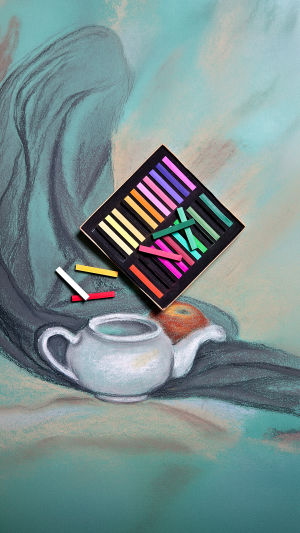
Pastel drawing is one of the most accessible and rewarding forms of artistic expression.
Renowned for their rich pigments and velvety texture, soft pastels enable artists to create vibrant colors, smooth transitions, and expressive details with minimal equipment.
Whether you are just beginning your artistic journey or expanding your creative skills, learning the fundamentals of pastel drawing can help you produce beautiful artwork while strengthening your understanding of color, light, and composition.
<h3>Why Choose Soft Pastels?</h3>
Soft pastels are made from pure pigment combined with a small amount of binder, giving them exceptional color intensity and a smooth, blendable texture. Unlike paints, they require no drying time or brushes, allowing artists to apply color directly to paper and blend it using their fingers or blending tools.
Their excellent layering ability makes it easy to build depth, create subtle gradients, and achieve luminous highlights. Because they are forgiving and easy to work with, soft pastels encourage experimentation and are suitable for artists of all experience levels.
<h3>Start with a Simple Still Life</h3>
A still life is one of the most effective subjects for practicing pastel techniques. Everyday objects such as a teapot, fruit, fabric, or flowers provide valuable opportunities to study shape, texture, shadow, and reflected light without the challenge of capturing movement.
Arrange a small group of objects beneath a single light source to create a clear and balanced composition. This simple setup allows you to focus on proportions, observe the relationship between light and shadow, and explore how colors interact throughout the scene.
<h3>Build the Drawing Step by Step</h3>
Begin with a light sketch to establish the placement and proportions of each object. Rather than focusing on small details immediately, block in the largest shapes first to create a strong foundation.
Apply broad areas of color before gradually introducing darker values, midtones, and highlights. Working from general forms to finer details helps maintain accurate proportions while reducing the risk of overworking the drawing.
Instead of relying on a single shade, layer multiple related colors to produce richer, more natural-looking surfaces with greater visual depth.
<h3>Master Blending and Layering</h3>
Blending is one of the defining characteristics of pastel artwork. Soft blending creates smooth transitions between colors, while leaving selected strokes visible adds texture, movement, and visual interest.
Alternating between blended areas and crisp edges creates contrast and naturally directs the viewer's attention toward important focal points. Layering complementary and closely related colors can also enhance depth and prevent the artwork from appearing flat.
Using the side of a pastel stick for broad coverage and the edge for precise details provides greater control throughout the drawing process.
<h3>Pay Attention to Light and Shadows</h3>
Light is essential for creating the illusion of depth and form in a still life drawing. Observe carefully where light falls on each object and how shadows extend across surrounding surfaces.
Shadows are rarely pure black. Instead, they often contain subtle warm or cool color variations influenced by nearby objects and the surrounding environment. Recognizing these delicate shifts in color can make artwork appear more realistic and visually engaging.
Highlights should also be applied with restraint. Carefully placed highlights create emphasis and realism, allowing important areas of the composition to stand out naturally.
<h3>Practice Color Observation</h3>
Strong pastel drawings begin with careful observation. Even objects that appear white often contain soft blues, warm creams, gentle violets, or subtle grays depending on the lighting conditions.
Likewise, fruit, ceramics, and fabric frequently reveal a surprising range of colors that become more noticeable through close observation. Training your eye to recognize these subtle variations results in artwork that feels richer, more convincing, and more expressive.
With consistent practice, careful observation strengthens both technical ability and artistic confidence.
<h3>Keep Experimenting</h3>
Every pastel drawing provides an opportunity to refine your skills and discover new techniques. Experiment with different papers, color palettes, blending methods, and lighting arrangements to develop an approach that complements your artistic style.
Rather than striving for perfection, focus on steady improvement through regular practice. Small refinements in composition, color selection, layering, and mark-making can significantly enhance the overall quality and visual impact of your artwork over time.
Pastel drawing combines vibrant color, expressive texture, and accessible techniques, making it an enjoyable and versatile medium for artists at every skill level. By practicing with simple still life subjects, observing light and color carefully, and refining blending and layering techniques, you can create artwork that is both visually compelling and personally rewarding. With patience, curiosity, and consistent practice, every drawing becomes an opportunity to build confidence, strengthen artistic skills, and develop your own creative style.


