

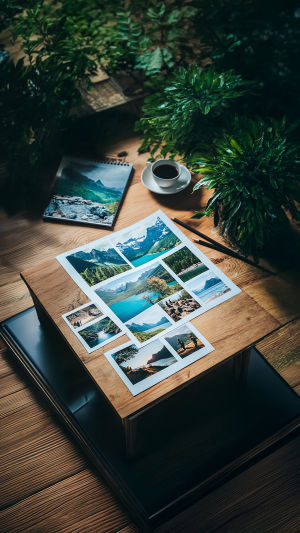
Hi, Friends! You know that feeling when you look at your own photo and something just feels... off? Like the image is wearing mismatched socks, but you cannot quite figure out which sock is the problem?
Well, nine times out of ten, the culprit is composition. Bad composition is basically the fast food of photography; it fills the frame but leaves you feeling empty and a little disappointed.
Let's see the most common composition mistakes that are quietly making your photos look cheap, and how to fix them without needing a photography degree.
<h3>Tilted Horizons Are Not "Artistic"</h3>
One of the most frequent offenders is a crooked horizon line. Some photographers tilt their camera, thinking it adds drama or creativity.
Spoiler alert: unless you are shooting an action scene or have a very intentional reason, a tilted horizon just looks like you sneezed while pressing the shutter. Always make sure your horizon is level, especially in landscape and seascape shots. Most cameras and phones have a built-in grid or level tool; use it like the gift it is.
<h3>Centering Everything Like a Passport Photo</h3>
Plopping your subject dead center in every single shot is the photographic equivalent of serving plain white rice with no seasoning. It works, technically, but it is deeply uninspiring. Try the rule of thirds instead. Divide your frame into a 3x3 grid and place your subject along the grid lines or at the intersection points. Suddenly, your photo has breathing room, balance, and a sense of visual flow that makes people stop scrolling.
<h3>Busy, Cluttered Backgrounds</h3>
Nothing kills a great subject faster than a background that looks like a yard sale. A trash can peeking behind someone's head, a telephone pole growing out of a portrait subject's shoulder, random strangers walking through your scene; these are all background disasters.
Before you shoot, take two extra seconds to scan the entire frame. Move slightly left, right, up, or crouch down. A clean background is like a quiet room -- it lets your subject speak without everyone else talking over it.
<h3>Cutting Off Limbs at Awkward Joints</h3>
Cropping a person at the knees, ankles, or wrists is a classic mistake that makes portraits look unfinished, like someone started editing and then got distracted by a snack. The general rule is to crop between joints, not at them. Cropping at the mid-thigh, mid-shin, or just above the wrist feels natural. Cropping right at the knee or elbow? That is where things get uncomfortable real fast.
<h3>No Clear Subject or Focal Point</h3>
A photo without a clear subject is like a sentence without a verb -- technically it exists, but nobody knows what it is doing. Every strong photo answers the question "What am I supposed to look at?" immediately. If your viewer has to work too hard to find the main subject, you have lost them. Simplify your frame, get closer, or use depth of field to blur distracting elements so your subject pops out like it owns the place.
<h3>Ignoring Leading Lines</h3>
Roads, fences, rivers, hallways, staircases; these are your free compositional tools, and so many photographers walk right past them without a second thought. Leading lines naturally draw the viewer's eye into the image and toward your subject.
They create depth and a sense of journey. Next time you spot a long path or a row of trees, position yourself so those lines flow from a corner of the frame into the heart of your shot. It is like giving your photo a GPS for the viewer's eyes.
<h3>Merging Subjects With the Background</h3>
When your subject blends into the background because they are wearing the same color as the wall behind them, or the lighting is flat with no contrast, the photo loses all dimension. It ends up looking like a cardboard cutout taped to a wall. Pay attention to contrast -- either in color, tone, or texture -- between your subject and background. A little separation goes a long way in making your subject feel three-dimensional and alive.
Fixing composition is genuinely one of the fastest ways to level up your photography without spending a single dollar on new gear. Take a moment before every shot to check your horizon, clear your background, find your focal point, and use the lines around you. Your photos will start looking intentional, polished, and far from cheap. Give these tips a try on your next shoot and see how much of a difference a few small adjustments can make!


