

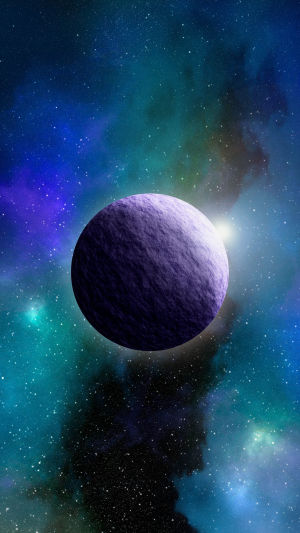
Space is filled with countless planets beyond our solar system, many of which remain unseen except through advanced scientific observations.
These distant worlds, known as exoplanets, come in a remarkable variety of sizes, temperatures, and compositions.
Although they are far beyond the reach of current spacecraft, scientists continue to uncover new details about them using powerful telescopes and precise measurement techniques. Every discovery helps expand our understanding of how planets form, evolve, and exist throughout the universe.
<h3>What Are Exoplanets?</h3>
An exoplanet is a planet that orbits a star outside our solar system. Since the first confirmed discovery of an exoplanet around a Sun-like star in 1995, thousands have been confirmed. Some are rocky worlds similar in size to Earth, while others are enormous gas giants or icy planets unlike anything found in our own planetary neighborhood.
Scientists classify exoplanets based on characteristics such as size, mass, temperature, and orbital distance from their stars. These differences reveal that planetary systems can develop in many ways, highlighting the incredible diversity of worlds in space.
<h3>How Scientists Discover Distant Worlds</h3>
Most exoplanets cannot be seen directly because they are much dimmer than the stars they orbit. Instead, scientists detect them using indirect methods.
One common technique measures the slight decrease in a star's brightness when a planet passes in front of it. Another method observes the tiny movement of a star caused by the gravitational pull of an orbiting planet. By combining these observations, researchers can estimate a planet's size, mass, and orbit with remarkable accuracy.
Advances in telescope technology continue to improve these measurements, allowing scientists to identify increasingly smaller and more distant planets.
<h3>The Diversity of Planetary Environments</h3>
Not all planets resemble those in our solar system. Some orbit extremely close to their stars and experience intense heat, while others travel much farther away, where temperatures are extremely low. There are also planets with thick atmospheres, rocky surfaces, or vast layers of ice.
This diversity shows that planetary formation is a complex process influenced by many factors, including the amount of material available during formation, gravitational interactions, and the characteristics of the host star.
Studying different planetary environments helps scientists test theories about how planetary systems develop over billions of years.
<h3>Why Planetary Research Matters</h3>
Research on distant planets provides valuable insights into the history of planetary systems, including our own. Comparing many different worlds allows scientists to refine models of planetary evolution and better understand the physical processes that shape planets over time.
These discoveries also contribute to broader fields such as astronomy, physics, and atmospheric science. Improvements in observation techniques continue to expand knowledge while inspiring new scientific questions about the universe.
<h3>Looking Toward Future Discoveries</h3>
Modern observatories continue to discover new exoplanets and gather increasingly detailed information about their characteristics. As technology advances, future observations are expected to improve our understanding of planetary atmospheres, compositions, and formation processes.
Every newly identified world adds another piece to the larger picture of our universe. While many distant planets remain mysterious, ongoing scientific research continues to reveal just how diverse and fascinating planetary systems can be.
The discovery of exoplanets has transformed our understanding of the universe by showing that planets are common and remarkably diverse. Through continued observation and technological innovation, scientists are steadily uncovering the characteristics of these distant worlds. Each new finding contributes to a deeper understanding of planetary science and the processes that shape the countless worlds scattered throughout space.


