

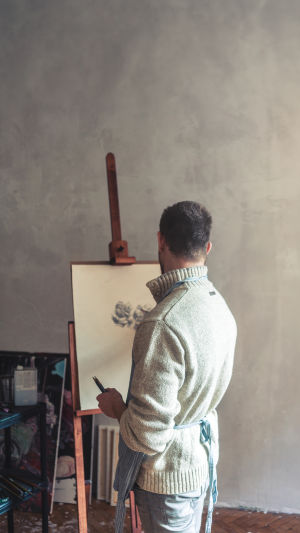
Have you ever looked at a painting and wondered why certain areas are left completely empty?
At first glance, these spaces may appear unfinished, but they often serve an important artistic purpose. Empty space is a powerful element that helps artists create balance, guide attention, and encourage viewers to develop their own interpretations.
Rather than representing a lack of detail, empty space is a deliberate creative choice. It allows artwork to breathe, creates visual harmony, and gives meaning to the relationship between the elements that are present and those that are left open.
<h3>More Than Just Blank Space</h3>
Empty space is not about leaving part of an artwork incomplete. It is a thoughtful approach that allows emotions, ideas, and imagination to become part of the viewing experience. By using open areas, artists can suggest distance, movement, atmosphere, or a sense of calm without adding unnecessary details.
In many traditional and modern artworks, areas without visible marks can represent elements such as open skies, soft surroundings, or quiet moments. Instead of explaining every part of a scene, artists often allow viewers to imagine what exists beyond the visible image.
<h3>How Space Shapes Composition</h3>
Empty space plays an important role in creating visual balance. When a subject is placed within a large open area, the surrounding space can make the subject appear more noticeable and meaningful. The contrast between detailed areas and open areas helps guide the viewer’s eyes and creates a stronger sense of composition.
Spacing is also essential in many forms of visual design. The distance between shapes, lines, and symbols affects how an artwork feels and how easily it can be understood. Carefully arranged space can create a sense of clarity, simplicity, and harmony.
<h3>The Emotional Effect of Empty Space</h3>
Empty areas in artwork can influence how viewers feel. A subject surrounded by open space may create a sense of peacefulness, reflection, or connection with the surrounding environment. The space itself becomes part of the message, helping communicate emotions without relying only on detailed images.
This principle can also be found across other creative fields. Music uses pauses to create rhythm, architecture uses open areas to improve atmosphere and movement, and writing uses silence between ideas to create impact. In each case, space becomes an important tool for expression.
<h3>Why Empty Space Still Matters Today</h3>
In a world filled with constant visual information, simplicity has become an important part of modern creativity. Artists and designers often use open space to create clearer, more balanced, and more memorable experiences.
Understanding the purpose of empty space can change the way people view art. Instead of asking why an area is not filled with more details, viewers can consider how that space contributes to the overall meaning of the work.
Empty space is not simply an absence of content. It is a creative element that allows artwork to communicate more deeply, giving viewers the opportunity to explore emotions, ideas, and personal interpretations. By understanding the role of space in art, people can discover that what is left unseen can be just as meaningful as what is shown.


