

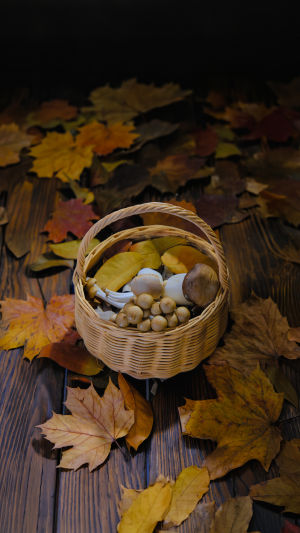
When we step into forests, grasslands, or quiet mountain paths, we often notice small natural treasures growing close to the ground.
Wild mushrooms are especially fascinating because they come in many shapes, textures, and flavors. Some are familiar in daily meals, while others only appear in specific natural environments.
In this guide, we explore ten commonly known edible types. By learning their features, we can better appreciate nature’s diversity and observe outdoor environments more carefully and safely.
<h3>Shiitake: Rich Aroma and Firm Texture</h3>
Shiitake mushrooms are widely known for their strong aroma and satisfying taste. They usually grow on decaying wood in shaded forest areas.
Their texture is firm and slightly chewy, which makes them suitable for soups and slow-cooked dishes. In natural ecosystems, they help break down wood material, playing an important role in nutrient recycling.
<h3>Straw Mushroom: Soft and Light</h3>
Straw mushrooms are often found in warm, humid environments where plant material is abundant.
They have a smooth surface and a mild flavor. Because they are harvested early in growth, their texture stays tender. In the wild, they are commonly seen near grassy or plant-rich areas where moisture is stable.
<h3>King Oyster Mushroom: Thick and Adaptable</h3>
King oyster mushrooms are easy to recognize because of their thick stem and balanced shape.
They grow in clusters and can adapt to different environments. Their structure allows them to absorb flavors well when prepared. In nature, they are usually found on decomposing plant matter, helping maintain ecological balance.
<h3>Chicken Leg Mushroom: Distinct Natural Shape</h3>
This mushroom stands out due to its shape, which resembles a small leg-like structure.
It is commonly found in grassy fields or forest edges. The texture is crisp and pleasant. It also contains natural nutrients such as amino acids and minerals, making it a valued wild variety.
<h3>Matsutake: Fragrant Forest Treasure</h3>
Matsutake mushrooms grow in pine-rich environments and are known for their deep, natural aroma.
They are often found in clean, undisturbed forest areas. Their flavor is earthy and strong, making them highly appreciated by nature observers. Because of their limited growing conditions, they are not commonly seen.
<h3>Boletus: Earthy and Deep Flavor</h3>
Boletus mushrooms have a sponge-like underside and are usually found on forest floors during warmer seasons.
Their taste becomes richer when gently prepared. They contribute to forest ecosystems by interacting with tree roots and decomposing organic matter.
<h3>Morel: Honeycomb Appearance</h3>
Morel mushrooms are easy to identify due to their unique honeycomb-like surface.
They often appear in early seasonal periods within forest environments. Their flavor is light yet complex, making them a special find for outdoor enthusiasts who enjoy seasonal exploration.
<h3>Wood Ear: Soft and Flexible Texture</h3>
Wood ear mushrooms grow on tree trunks and branches, especially in moist woodland areas.
They have a soft, slightly elastic texture and a very mild taste. This allows them to blend easily with other ingredients in various meals while adding interesting texture.
<h3>Snow Fungus: Delicate and Light Structure</h3>
Snow fungus has a translucent, cloud-like appearance and grows on decaying wood in forest settings.
When prepared, it becomes soft and smooth. It is often appreciated for its gentle texture and refreshing feel, making it a unique part of natural food diversity.
<h3>Oyster Mushroom: Cluster Growth Pattern</h3>
Oyster mushrooms usually grow in layered clusters on tree trunks or fallen wood.
They have a smooth surface and a mild flavor. Their ability to grow in groups makes them one of the most commonly observed wild mushrooms in shaded environments.
<h3>Observing Nature with Curiosity</h3>
As we explore these ten edible mushrooms, we begin to understand how diverse and balanced forest ecosystems can be. Each type has its own shape, environment, and role in nature.
Lykkers, the next time we walk outdoors, take a moment to observe the ground, the trees, and the hidden life around us. Which of these mushrooms have you noticed before? Keep exploring, stay curious, and enjoy learning from nature’s quiet details.
20 Edible Mushrooms I Can Identify Without Mistake. Part I
Video by Classy Flowers


