

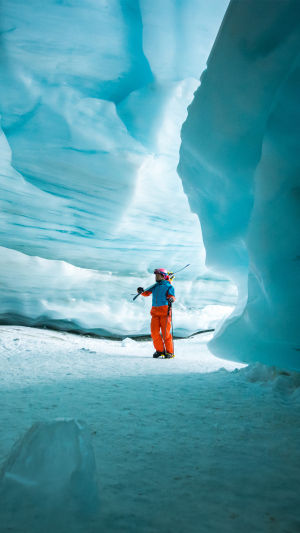
Imagine standing inside a world carved entirely from ice, where light reflects in soft blue tones and every step feels like entering another planet.
Ice cave exploration offers an unforgettable experience, but it is not only about beauty. It also requires careful preparation, smart planning, and respect for natural conditions.
This guide outlines essential clothing, equipment, and safety practices to help ensure a responsible and comfortable ice cave journey.
<h3>Layered Clothing for Stable Warmth</h3>
When entering low-temperature environments, clothing selection is the foundation of comfort and safety.
A base layer worn close to the body should be made of thermal or lightweight wool materials that retain warmth while allowing moisture control.
An insulating mid-layer such as fleece helps trap body heat and maintain stable temperature during movement and rest.
The outer layer should provide protection against wind and moisture. A durable, wind-resistant, and water-repellent jacket is essential, along with similarly protective pants designed for uneven terrain.
Additional essentials include warm socks for circulation, a fitted hat to reduce heat loss, and lightweight gloves that allow both warmth and dexterity.
<h3>Essential Equipment for a Safe Journey</h3>
Proper equipment is crucial for safe ice cave exploration.
Lighting is the most important requirement due to limited natural light. A headlamp paired with a backup flashlight ensures reliable visibility throughout the journey.
A durable backpack is needed to carry essential supplies such as spare batteries, snacks, and extra clothing layers.
Hydration should not be overlooked. A thermal bottle helps maintain drink temperature, supporting energy levels in cold conditions.
In some situations, a compact insulated sleeping layer or mat can provide added comfort during rest or emergency stops.
Every item should be chosen with a balance of lightweight design and reliability.
<h3>Planning Before Entering the Ice Cave</h3>
Preparation is essential before entering any ice cave environment.
It is important to understand cave conditions such as temperature, ice stability, and terrain structure. This information should be obtained from reliable local guidance or official visitor information sources.
Traveling in a group is strongly recommended, as it increases safety and provides support in case of unexpected situations. Sharing your travel plan and expected return time with someone outside the group adds an additional layer of safety.
Entry rules should also be checked in advance, as some ice caves limit visitor access to protect natural formations and ensure safety.
<h3>Inside the Cave: Movement and Awareness</h3>
Careful movement is essential once inside the cave.
Surfaces may be uneven or slippery, so slow and controlled walking helps reduce risk. It is important to focus on stable footing rather than speed.
Group members should stay close together and maintain visual contact to prevent separation in low-visibility areas.
Lighting should be directed forward and slightly downward to improve depth perception and highlight safe paths.
Constant awareness of surroundings is important, as ice formations may shift due to temperature changes.
<h3>Staying Prepared for Unexpected Situations</h3>
Even with careful preparation, conditions inside ice caves can change.
Carrying basic emergency tools is essential, including a reliable communication device to contact outside support if needed.
Backup power sources for lighting and communication equipment should also be included, as cold environments can reduce battery performance.
It is important to listen to physical condition. If fatigue or discomfort occurs, resting or turning back is always the safest decision.
Safety must always take priority over distance traveled.
<h3>Respecting the Natural Environment</h3>
Ice caves are delicate natural formations shaped over long periods of time.
Visitors should avoid touching fragile ice structures or leaving any marks. Noise levels should be kept low to preserve the natural atmosphere and avoid disturbing any nearby wildlife.
All items brought into the cave must be carried out to ensure the environment remains clean and preserved for future visitors.
Responsible behavior helps protect these unique natural spaces.
Exploring ice caves is a remarkable experience that combines natural beauty with adventure and responsibility.
With proper clothing, reliable equipment, and careful planning, it is possible to enjoy these frozen environments safely and respectfully.
As you leave the glowing ice walls behind, the experience becomes more than a journey through nature—it becomes a reminder of the importance of preparation, awareness, and respect for the natural world.


