

Hi, Readers!
Ever wondered what made artists turn their brushes on themselves?
The story of self-portraits is much more than people staring into mirrors and painting what they see. It's actually a fascinating journey through how humans have thought about identity, expression, and what it means to really look at yourself.
Artists first started capturing their own likenesses using polished metal or early glass mirrors, and from Renaissance masters to today's digital creators working with pixels and filters, self-portraits have remained one of art's most intimate forms. What makes this evolution so interesting is that it shows how artistic techniques changed alongside our entire understanding of who we are.
<h3>The Renaissance Breakthrough</h3>
The Renaissance period marked the true beginning of self-portrait history as we know it, since before this era, artists rarely depicted themselves as the main subjects. Think about it: you needed a decent mirror to even attempt this, and those weren't exactly common household items back then.
With improved mirror technology and a new focus on humanism that celebrated individual achievement, Renaissance artists began studying their own faces with unprecedented interest. The Flemish painter Jan van Eyck created what's thought to be the earliest known self-portrait in Western art tradition in the early 15th century. Suddenly, artists weren't just anonymous craftspeople anymore. They were individuals worth documenting.
<h3>Rembrandt's Honest Mirror</h3>
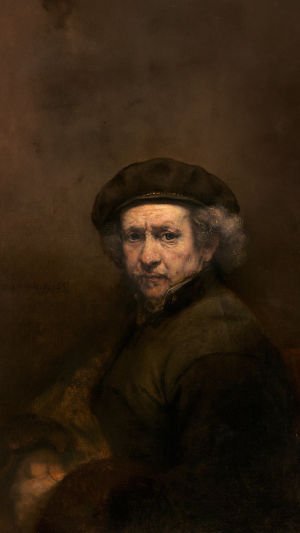
Self-portraits took a dramatic turn during the Dutch Golden Age when artists like Rembrandt van Rijn began exploring the psychological dimensions of self-representation, creating nearly 100 self-portraits throughout his career that documented his journey from ambitious young artist to reflective elder.
Here's what made Rembrandt different: unlike many of his contemporaries who presented idealized versions of themselves, Rembrandt didn't shy away from showing his aging face, personal struggles, and changing fortunes. His paintings didn't lie or flatter. They revealed something deeper, using dramatic contrasts between light and shadow to create what felt like windows into an actual person's soul.
<h3>Women Artists Finding Their Voice</h3>
Self-portraiture was particularly important for women artists during the Renaissance. It offered a way to present their own stories to the public, free from the typical objectification of the female form often depicted by male artists.
Catharina van Hemessen created what's been suggested as the very first self-portrait showing an artist at work at the easel in 1548, looking out solemnly with a modest demeanor and holding a paintbrush, showing she was both a working artist and a respectable woman.
<h3>Modern Explorations</h3>
Since the rise in popularity of self-portraiture, artists have depicted themselves in many different styles or mediums and for many different reasons, with motivations ranging from wanting to display success or indulge in self-mockery to communicating artistic ideas or emulating past masters.
Self-portraits serve as a means of exploring the artist's own psychological state or emotions, allowing artists to examine their own thoughts and feelings and explore their own experiences. The genre became a laboratory for identity itself.
<h3>The Digital Transformation</h3>
Fast forward to today, and the concept has exploded in completely new directions. The term "selfie" is believed to have first been used in Australia in 2002, though the concept of taking self-portraits has been around much longer, dating back to the early days of photography when people would take pictures of themselves with a camera mounted on a tripod or timer.
Smartphone technology changed everything, making self-portraiture accessible to literally everyone with a phone.
So what's the takeaway? Self-portraits have always been about more than just capturing what someone looks like. They're about identity, self-perception, and how we want to be seen and remembered. Whether it's Rembrandt's unflinching honesty or someone's carefully filtered selfie, the impulse is the same: here I am, this is me, this is how I exist in the world.
The tools may have changed from mirrors and oil paints to front-facing cameras and editing apps, but that fundamental human desire to document ourselves hasn't budged an inch.


