

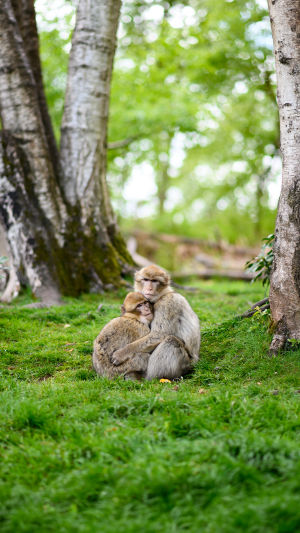
It’s great to see you, Lykkers! If you've ever watched a group of monkeys sitting together, you may have noticed something curious. One monkey carefully parts another's fur, searching through every strand with remarkable concentration.
At first glance, it looks like a simple cleaning routine. In reality, grooming is one of the most important social behaviors in the monkey world.
For many monkey species, grooming is far more than a way to remove dirt or parasites. It acts as a form of communication, a tool for building alliances, a method of reducing tension, and even a way of gaining social advantages. Scientists who study primate behavior often describe grooming as a social currency—something valuable that can be exchanged for trust, protection, and cooperation.
<h3>More Than Cleaning Fur</h3>
The most visible purpose of grooming is hygiene. Unlike humans, monkeys do not bathe regularly with water. Instead, they maintain their coats through detailed grooming sessions. During grooming, monkeys remove loose hair, dead skin, plant debris, and external parasites such as ticks, fleas, and lice.
This process helps reduce irritation and may lower the risk of infections carried by parasites. Grooming also keeps fur in better condition by separating tangled hairs and distributing natural oils throughout the coat. The benefits extend beyond cleanliness. A well-maintained coat provides better insulation, helping monkeys regulate body temperature in both warm and cool environments. What appears to be a simple search through fur is actually an important contribution to overall health.
<h3>Grooming Creates Strong Social Bonds</h3>
While hygiene matters, researchers have found that social bonding is often the primary reason monkeys groom one another. Most monkey species live in complex groups where survival depends on cooperation. Individuals rely on companions for protection, food access, infant care, and support during conflicts. Grooming helps strengthen these relationships.
The act itself involves close physical contact and sustained attention. These interactions build familiarity and trust between individuals. Monkeys frequently groom preferred companions, close relatives, and long-term allies, creating social networks that can remain stable for years. Mothers and infants provide one of the clearest examples. Young monkeys learn grooming techniques from their mothers while simultaneously developing emotional bonds that contribute to healthy social development.
<h3>The Chemistry of Friendship</h3>
Grooming does more than strengthen relationships psychologically—it also affects the body. Studies on primates have shown that social grooming can trigger the release of endorphins, natural chemicals associated with relaxation and well-being. These substances help reduce stress and create feelings of comfort. Researchers have also observed decreases in heart rate during grooming sessions, suggesting a calming physiological effect.
In large groups where competition and conflict are common, these calming benefits help maintain stability. A troop filled with individuals that trust one another is generally more cohesive and less prone to constant aggression. For monkeys, grooming functions almost like a natural stress-management system.
<h3>A Tool for Navigating Social Hierarchies</h3>
Monkey societies are often organized around social rankings. Every individual occupies a position within the group, and grooming plays an important role in maintaining that structure.
Lower-ranking monkeys frequently groom higher-ranking members. This behavior can signal respect and reduce the likelihood of aggression. By investing time in grooming influential individuals, subordinates may improve their social standing or strengthen valuable relationships. Researchers have even observed grooming exchanges that resemble transactions. A monkey may groom another in return for tolerance at feeding sites, support during disputes, or access to desirable social partners. Rather than random affection, grooming can be a strategic behavior that helps individuals navigate complex social environments.
<h3>Grooming as Social Currency</h3>
One of the most fascinating discoveries in primate research is that grooming often functions like a tradable resource. Monkeys may exchange grooming for various benefits, including protection from dominant individuals, assistance during conflicts, access to infants, or opportunities to remain close to preferred companions. In some species, individuals who groom frequently are more likely to receive support when disputes arise.
These exchanges demonstrate an impressive level of social awareness. Monkeys remember previous interactions and often direct their grooming toward individuals who have been helpful in the past. This ability to track relationships allows monkeys to build reliable networks of allies, increasing their chances of success within the group.
<h3>Friendship, Memory, and Cooperation</h3>
Long-term studies have revealed that monkeys recognize specific individuals and remember previous experiences with them. They distinguish between reliable partners and uncooperative group members. Grooming helps reinforce these memories.
Individuals who regularly groom one another are more likely to cooperate in the future, share resources, and offer support when challenges arise. In many cases, the strongest grooming relationships are found among relatives and long-term companions. Female monkeys, in particular, often maintain stable grooming partnerships that can last for many years. Research has shown that strong social connections are associated with improved well-being and, in some species, increased longevity. These findings highlight the remarkable complexity of monkey societies, where relationships are carefully built and maintained over time.
To human observers, monkey grooming may look like a simple search for insects hidden in fur. Yet behind every grooming session lies a sophisticated social system shaped by trust, cooperation, memory, and mutual benefit.


