

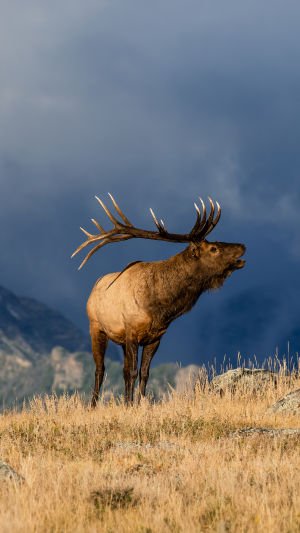
Greetings, Readers! Imagine carrying a structure weighing as much as a large suitcase on your head for months at a time. Every year, male moose do exactly that.
These giant members of the deer family grow enormous antlers that can stretch more than six feet across and weigh up to 60 pounds. Yet after investing so much energy into producing them, they simply let them fall off when winter arrives.
<h3>Antlers: A Seasonal Tool, Not a Permanent Feature</h3>
Unlike the horns of sheep and goats, antlers are temporary structures. Horns remain attached throughout an animal’s life and continue growing from a permanent core. Antlers, however, follow a different cycle—they are grown, used, shed, and regrown each year.
Only male moose typically develop antlers. Their growth is controlled largely by seasonal changes in testosterone levels. As daylight increases in spring, hormones trigger the formation of new antlers, beginning a rapid growth process that few other mammals can match. These structures are not permanently fused to the skull. Instead, they are connected through specialized tissue that allows them to detach naturally once they have served their role during the breeding season.
<h3>Growing One of Nature’s Fastest Structures</h3>
Each spring, usually around April, a new set of antlers begins to emerge from the skull. During the early stages, the growing antlers are covered by a soft layer of skin known as velvet. Velvet is rich in blood vessels and nutrients, supplying everything needed to support their rapid growth and expanding structure.
This living tissue acts like a biological construction site, delivering minerals and oxygen directly to the developing antlers. The speed of growth is extraordinary. Moose antlers rank among the fastest-growing tissues in the animal kingdom. During peak development, bulls can add several inches of growth in just over a week. By late summer, the antlers have transformed into massive, fully hardened structures. Producing them requires a huge investment of energy, protein, and minerals. A bull moose essentially regrows these enormous head ornaments from scratch every year.
<h3>Why Bigger Antlers Matter</h3>
As autumn approaches, testosterone levels rise sharply. The velvet dries and peels away, revealing polished antlers beneath. This timing is no coincidence—it coincides with the breeding season, known as the rut. For bull moose, antlers are advertisements of health and maturity. Large, symmetrical antlers signal that an individual has successfully gathered enough nutrients to support extensive growth. Females often pay attention to these visual indicators when selecting mates. Antlers also help establish social rank among competing males.
Bulls frequently engage in displays where they size each other up before deciding whether a confrontation is worth the risk. In some cases, rivals lock antlers and push against one another to determine dominance. Interestingly, these contests are often more about demonstrating strength than causing serious injury. The antlers function as tools for competition and communication, helping bulls establish status and signal their physical condition to rivals.
<h3>The Hidden Role of Scent During the Rut</h3>
Antlers are not only visual signals. During the breeding season, bulls enhance their appeal through scent-based behaviors. Male moose create shallow depressions called rutting pits. They urinate into these areas and then splash the liquid onto their bodies and antlers. While this behavior may seem strange, the scent carries chemical signals that can influence nearby females.
Researchers have observed that these odors play a role in reproductive communication. Combined with large antlers and dominant behavior, scent helps bulls advertise their readiness to breed. This means antlers participate in a much broader display system than most people realize.
<h3>Why Moose Drop Their Antlers</h3>
Once the breeding season ends, the value of carrying antlers declines rapidly. Winter is a demanding period for moose. Food becomes less abundant, temperatures drop, and conserving energy becomes critical. Carrying dozens of extra pounds of antler material no longer provides a reproductive advantage.
As testosterone levels fall after the rut, specialized cells called osteoclasts begin breaking down the connection between the antler and the skull. Over time, the attachment weakens until the antler detaches and falls to the ground. Most bulls shed their antlers between late November and early January, although timing varies according to age, health, and local conditions. By dropping these heavy structures, moose reduce the physical burden they carry through winter. The energy saved can be redirected toward survival during one of the harshest seasons in their northern habitats.
<h3>Preparing for the Next Cycle</h3>
Antler shedding is not the end of the story. Almost immediately, the body begins preparing for the next year’s growth. While specialized cells break down the old attachment point, other cells begin repairing and renewing the area. As spring returns and daylight increases, hormonal changes activate the growth process once again. The result is a fresh set of antlers, often larger and more impressive than the previous year's. As bulls mature, successive antler cycles can produce increasingly expansive racks, reflecting age, health, and access to quality food resources.
The yearly shedding of antlers may seem unusual, but it is a finely tuned adaptation shaped by evolution. Antlers help male moose compete for mates, communicate status, and attract females during a brief but intense breeding season. Once that season ends, carrying them becomes an unnecessary expense, so nature provides an efficient way to discard the extra weight.


