

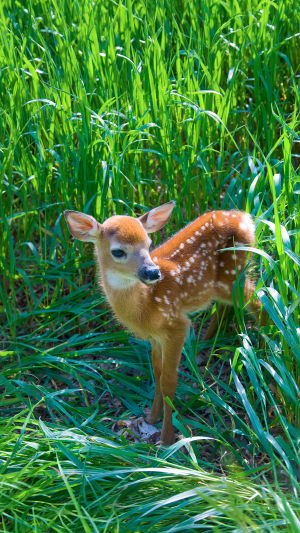
Welcome back, Readers! Seeing a tiny deer fawn resting alone in tall grass or beneath a shrub can easily cause concern. Its spotted coat and delicate appearance often make it seem abandoned.
However, in most cases, the fawn is exactly where its mother expects it to be. What looks like loneliness is actually a clever survival strategy that helps protect young deer from predators.
<h3>The Survival Strategy Behind a Solitary Fawn</h3>
White-tailed deer have evolved a remarkable approach to protecting their offspring during the first weeks of life. Unlike many mammals that keep their young close at all times, a doe intentionally spends much of the day away from her newborn. The reason is simple: a newborn fawn is far less noticeable than its mother.
During its earliest days, a fawn possesses almost no body odor, making it difficult for predators to detect by scent. Its reddish-brown coat is covered with white spots that mimic sunlight filtering through vegetation, creating natural camouflage. Even more impressive, young fawns instinctively remain motionless when danger approaches.
A fully grown deer cannot hide as effectively. A doe has a stronger scent and a much larger profile, which could attract predators such as coyotes, bobcats, or free-roaming dogs. By staying away, the mother reduces the chances of leading danger directly to her offspring. Rather than remaining nearby, she typically returns only a few times each day, often during low-light periods around dawn and dusk, to nurse and check on the fawn.
<h3>Why Human Intervention Can Create Problems</h3>
Finding a seemingly abandoned baby animal naturally awakens a desire to help. However, wildlife experts consistently advise against handling healthy fawns. One of the biggest risks involves relocation. A fawn's hiding place is carefully chosen by its mother based on vegetation cover, visibility, and proximity to feeding areas.
Moving the animal, even a short distance, may prevent the doe from locating it quickly. Another concern is stress. Wild animals experience intense physiological responses when captured or handled. Elevated stress levels can weaken young animals and interfere with their normal behavior patterns. There is also a legal aspect. In many regions, possessing or transporting native wildlife without authorization is prohibited. Wildlife rehabilitators undergo specialized training because raising young wild animals requires knowledge that most people simply do not have.
<h3>The Truth About Human Scent</h3>
A persistent myth claims that a mother deer will reject her baby if a person touches it. Scientific observations do not support this belief. Does recognize their offspring through a combination of scent, vocalizations, and behavior. A brief human touch rarely causes permanent rejection. Nevertheless, avoiding contact remains the best choice. Excessive disturbance can leave scent trails, disrupt the fawn's concealment, and encourage unnecessary movement. In nature, remaining hidden is often a young deer's greatest defense.
<h3>When a Fawn May Actually Need Assistance</h3>
Although most solitary fawns are perfectly healthy, there are situations where professional help may be necessary. Warning signs include visible injuries such as bleeding, severe limping, or difficulty holding up the head. Continuous crying over several hours can also indicate distress, especially if no mother deer returns.
A larger deer would normally check on and nurse the fawn several times a day, so prolonged signs of discomfort may warrant attention from a licensed wildlife rehabilitator. Another serious concern is evidence that the mother has died, particularly following vehicle collisions. If a deceased doe is found nearby and the fawn remains alone for an extended period, intervention from wildlife professionals may be warranted.
Immediate threats also require attention. A fawn trapped in a roadway, tangled in fencing, or under attack by domestic animals may need emergency assistance. In these situations, the safest response is to contact a licensed wildlife rehabilitator or local wildlife agency rather than attempting rescue independently.
<h3>What to Do If a Fawn Appears in Your Yard</h3>
During late spring and early summer, many homeowners encounter fawns resting in gardens, landscaping beds, or wooded corners of their property. The best approach is surprisingly simple: observe from a distance. Keep dogs supervised or indoors whenever possible. Curious pets can frighten young deer or accidentally injure them.
Children should also be encouraged to admire wildlife without approaching it. If you are concerned, monitor the area discreetly over the next day or two. In most cases, the doe will continue visiting regularly while remaining largely unseen by people. Feeding should never be attempted. Young deer depend on a highly specialized diet, and inappropriate food can cause digestive complications that may become life-threatening.
<h3>How Deer Families Change as Fawns Grow</h3>
The period of isolation does not last forever. Within a few weeks, fawns become stronger, faster, and more confident on their feet. As their mobility improves, they begin accompanying their mothers more frequently and gradually learn essential survival skills. They observe feeding habits, recognize potential threats, and become familiar with the landscape they will eventually navigate independently. The distinctive white spots that characterize young fawns slowly fade as summer progresses. By autumn, many young deer resemble smaller versions of adults and rely far less on concealment than they did during their first days of life.
A lone deer fawn may look helpless, but appearances can be deceiving. What seems like abandonment is usually a carefully refined survival strategy that has protected deer populations for thousands of years.


