

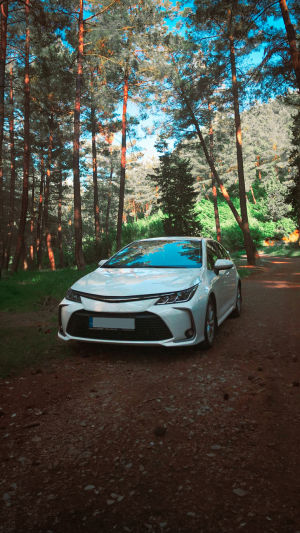
The Honda Civic and Toyota Corolla have been the two best-selling compact sedans in the United States for decades, and for good reason.
Both are reliable, fuel-efficient, and practical in ways that translate directly to lower long-term ownership costs. But when you actually compare the 2026 models side by side, the similarities thin out quickly.
They've developed into quite different cars, and which one fits better depends on what you're actually buying a car for.
<h3>Price: Corolla Has the Edge to Start</h3>
The 2026 Toyota Corolla starts lower. Base prices run from around $24,000 to about $30,000 including destination, while the Civic ranges from roughly $26,000 to $33,000. The Corolla Hybrid LE starts at around $26,000, while Honda's least-expensive hybrid sedan — the Civic Sport Hybrid — begins at about $29,300.
That gap matters for budget-conscious buyers, and the Corolla actually bundles some features at lower trims that the Civic saves for higher ones: wireless smartphone connectivity and 60/40 split-folding rear seats are standard on all Corollas, while Civic buyers need to step up to access them.
<h3>Performance and Powertrains: Civic Hybrid Is the Standout</h3>
Both cars run 2.0-liter four-cylinder base engines, but the outputs differ. The Corolla's standard engine makes 169 horsepower and 151 lb-ft of torque — better numbers than the Civic's 150 hp and 133 lb-ft. For drivers who prioritize straightforward performance from the non-hybrid version, the Corolla has a modest edge off the line.
But the hybrid comparison flips that narrative entirely. The Civic Hybrid produces 200 combined horsepower and 232 lb-ft of torque, returning an EPA-estimated 49 mpg combined. The Corolla Hybrid prioritizes efficiency over power, delivering 138 horsepower with a combined 50 mpg — more efficient but considerably less spirited.
The practical tradeoff: the Corolla Hybrid gets 1 MPG better but gives up 62 horsepower to do it. For most daily commuters that won't matter much; for anyone who occasionally needs to merge with confidence on the highway, the Civic Hybrid's power advantage is noticeable.
The Corolla does offer something the Civic can't: all-wheel drive is available on hybrid trims for an additional $1,400. The Civic is front-wheel drive across all configurations.
<h3>Interior Space: Civic Is Noticeably Roomier</h3>
This one isn't especially close. The Civic has 99 cubic feet of passenger volume versus the Corolla's 88.6 cubic feet. Rear legroom in the Civic measures 37.4 inches against 34.8 inches in the Corolla — a 2.6-inch difference that genuinely matters when taller passengers occupy the back seat. Trunk space follows the same pattern: 14.8 cubic feet in the Civic against 13.1 in the Corolla.
For taller drivers or anyone who regularly carries rear passengers, the Civic's interior dimensions are a meaningful practical advantage.
<h3>Technology and Safety: Both Are Well Equipped</h3>
The base Civic runs a 7.0-inch infotainment display, with higher trims upgrading to a 9.0-inch built-in system offering wireless smartphone connectivity. The Corolla uses an 8.0-inch touchscreen with an optional 10.5-inch display; the Toyota system is described as straightforward and easier to navigate by some reviewers, but lacks the system integration of the higher Civic trims.
Both cars include standard advanced driver-assistance packages — Honda Sensing on the Civic, Toyota Safety Sense 3.0 on the Corolla. The Corolla includes blind-spot monitoring and rear cross-traffic alert on the base trim; the Civic LX doesn't include blind-spot monitoring at the entry level. The Civic Hatchback earned a Top Safety Pick+ from IIHS; the Corolla sedan earned a Top Safety Pick; the 2026 Corolla has no equivalent IIHS award at this writing. For crash test credentials, the Civic LX carries a documented 5-star NHTSA overall safety rating.
<h3>The Bottom Line</h3>
For buyers who prioritize a lower entry price, available AWD, and a simpler infotainment experience, the Corolla is the more practical choice. For buyers who want a roomier cabin, a more powerful hybrid option, and a car that's genuinely engaging to drive, the Civic earns its premium.


