

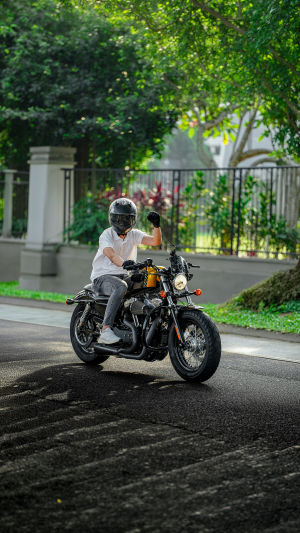
Motorcycles often feel mysterious at first, Lykkers. One moment the ride feels smooth, and the next the front end seems nervous, twitchy, or harder to guide.
Surprisingly, the problem is not always the road, the tires, or the bike itself. Sometimes the hidden trouble comes from your own arms.
When your shoulders, elbows, wrists, and hands become tense, they can send unwanted movement into the steering. The bike then feels busier than it really is.
Learning to relax your upper body is one of the simplest ways to make riding smoother, safer, and more enjoyable.
<h3>Why Arm Tension Changes Stability</h3>
Your motorcycle is built to balance and correct itself more than many riders realize. When you grip too tightly or lock your arms, you interrupt that natural behavior. Instead of guiding the bike, your body may accidentally argue with it.
<b>The bike needs small natural movement</b>
A motorcycle is never completely still while moving. The front wheel makes tiny corrections all the time. These corrections help the bike stay balanced, follow the road surface, and respond to lean angle. When your arms stay soft, those small movements happen cleanly.
When your arms are stiff, the steering cannot move freely. Every bump, road seam, or tiny shake travels into your shoulders. Then your body pushes back without meaning to. The result can feel like the bike is nervous, when actually your locked arms are adding extra input.
Try this simple parking-lot awareness drill. Sit on the bike with the engine off. Hold the grips lightly, then tense your arms. Notice how your shoulders rise and your wrists become rigid. Now soften your elbows and let your shoulders drop. The bike has not changed, but your connection to it feels very different.
On the road, think of your hands as guides, not clamps. You are giving direction, not wrestling a machine.
<b>Tight arms magnify bumps</b>
Roads are full of small surprises. A bump, groove, patch, or ripple can move the front tire slightly. A relaxed rider lets the bike absorb this and continue. A tense rider often reacts too sharply.
This happens because stiff arms create a hard link between your upper body and the steering. When the front end moves, your torso moves. When your torso moves, your hands move again. The feedback loop can make a small bump feel larger than it is.
Lykkers, a helpful test is the elbow check. During easy riding, glance at how your arms feel. Can your elbows bend slightly? Are your shoulders low? Can your fingers wiggle a little? If not, soften your grip and breathe out. That one breath often releases more tension than expected.
A lighter touch does not mean careless control. It means your body stays calm enough to let the motorcycle do its job.
<b>Fear often hides in the hands</b>
Many riders tighten their arms when they feel uncertain. It happens during turns, traffic, higher speed, wind, downhill sections, or rough pavement. The brain thinks stronger grip equals safety. On a motorcycle, too much grip can create the opposite feeling.
When fear reaches the hands, steering becomes jerky. The rider may overcorrect, lean less smoothly, or hold the bike upright when it needs to turn. The ride then feels awkward, which creates more fear, which creates even tighter arms. Very dramatic. Very common.
The useful move is to move support away from the hands. Use your legs and core to hold your riding position. Light pressure from the knees and steady posture help your arms relax. Your hands then return to their better role: precise control.
<h3>How To Ride With Softer Arms</h3>
Relaxed arms are a skill, not a personality trait. You train them through posture, breathing, grip awareness, and smoother inputs. The goal is not floppy arms. The goal is flexible control.
<b>Hold your body with your lower half</b>
If your hands support too much body weight, tension appears quickly. This is common when riders lean forward, brake, or feel unsure. The wrists start carrying pressure, and the steering becomes heavy.
Use your legs to help. Lightly connect your knees with the tank area. Keep your core active enough that your hands are not doing all the work. Your upper body should feel available, not collapsed onto the grips.
During braking, this matters even more. If you slide forward and brace through your arms, the front end may feel harsh. Instead, prepare early, hold yourself with your lower half, and keep the elbows slightly bent. The bike can settle more smoothly.
A quick exercise: while riding at a steady, safe pace, loosen your fingers for one second without removing your hands. If your upper body falls forward, too much weight is on your hands. Adjust posture until the grip feels lighter.
<b>Use smooth inputs instead of sudden corrections</b>
Motorcycles respond well to clean, measured input. Tense arms often create abrupt steering, throttle, and braking motions. Smooth arms create smooth riding.
Before a turn, look where you want to go. Let your eyes lead. Then use gentle pressure to guide the bike. Avoid forcing the front end. The more relaxed your arms are, the easier it becomes to feel what the bike is doing.
If the bike feels unsettled, do not instantly fight it. Check your body first. Are you holding your breath? Are your elbows locked? Are your shoulders lifted? Often the quickest fix is not a bigger correction, but less interference.
Use the phrase soft elbows, steady eyes. It is simple enough to remember while riding, and it points to two powerful habits at once.
<b>Practice relaxation before speed</b>
Speed can expose tension. If your arms are already stiff at low speed, they will likely become worse when the ride feels demanding. Practice softness in calm conditions first.
Choose a quiet area and ride gentle circles, wide turns, and slow straight lines. Focus only on relaxed arms and steady posture. Keep the pace comfortable. The point is to teach your body that control does not require squeezing.
You can also practice at stops. Before moving off, drop your shoulders, bend your elbows, breathe out, and reset your grip. This tiny routine trains relaxation as part of riding, not something you remember only after tension appears.
Over time, you may notice the bike feels more stable, even though the machine is the same. What changed is the conversation between rider and motorcycle. Less noise from the arms means clearer feedback from the road.
Arm tension can make a motorcycle feel twitchy, heavy, or unstable because stiff arms add unwanted steering input. For Lykkers, the fix is practical: soften the elbows, relax the shoulders, support your body with your legs and core, breathe during tricky moments, and practice smooth control in easy conditions. A calm upper body lets the bike move naturally, and the ride feels cleaner, steadier, and far more enjoyable.


