

Drones are no longer niche gadgets reserved for hobbyists or specialized professional applications.
Today, they are reshaping industries by providing new capabilities, improving efficiency, and creating innovative solutions to longstanding challenges.
From the skies above farmland to disaster zones and entertainment venues, the potential of unmanned aerial vehicles (UAVs) is being realized across multiple sectors.
<h3>Agriculture: Precision from the Air</h3>
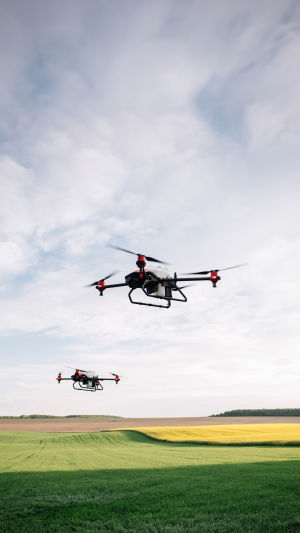
In agriculture, drones are enabling a new era of precision farming. Equipped with advanced sensors and imaging technology, drones can quickly survey vast fields, identifying areas of stress, disease, or inadequate irrigation. This information allows farmers to apply water, fertilizers, and pesticides more efficiently, reducing costs and environmental impact. Some drones also have the capability to perform targeted spraying, minimizing manual labor and expediting routine field treatments. By turning aerial data into actionable insights, drones are helping farms operate smarter and more sustainably.
<h3>Logistics and Delivery: Overcoming Barriers</h3>
The logistics sector is leveraging drones to tackle the “last-mile” delivery challenge. Drones can bypass congested roads, reach remote locations, and deliver critical supplies faster than traditional ground vehicles. This capability is particularly valuable in areas with limited infrastructure, providing reliable access to essential goods. While regulatory frameworks and airspace management remain evolving challenges, the integration of drones into delivery systems demonstrates significant potential for enhancing efficiency and service reach.
<h3>Disaster Response: Reaching the Inaccessible</h3>
In emergency and disaster response, drones offer unique advantages. They can access areas that are dangerous or otherwise unreachable by ground teams, transporting medical supplies, food, or other essentials. Additionally, drones provide real-time aerial surveys of affected zones, helping response teams assess damage, locate survivors, and plan relief operations more effectively. The agility and speed of drone deployment make them an invaluable tool in critical situations.
<h3>Entertainment: Creativity in the Skies</h3>
The entertainment industry has also embraced drones in innovative ways. Coordinated drone swarms can produce large-scale aerial displays, creating dynamic, three-dimensional visual experiences. These performances can replicate complex animations or artistic patterns in the sky while reducing noise and environmental impact compared to traditional methods, such as fireworks. Drone shows are a clear example of how technology is expanding creative possibilities.
<h3>Challenges and Future Outlook</h3>
Despite their advantages, drones face several limitations. Battery life restricts flight duration, while airspace regulations vary across regions, constraining operational flexibility. Privacy concerns also remain a critical consideration as drones become more common in urban and residential areas. Nonetheless, technological advancements in AI, autonomous navigation, and energy efficiency continue to improve capabilities, while regulatory frameworks gradually evolve to accommodate broader applications.
Drones are no longer just experimental tools; they have become transformative technology across multiple industries. By improving efficiency in agriculture, overcoming logistical barriers, enhancing disaster response, and enabling innovative entertainment experiences, drones are reshaping the way organizations operate. While technical limitations and regulatory challenges remain, ongoing advancements in battery life, AI, and autonomous navigation ensure that drones will continue to expand their role in everyday life. The integration of drones into industry and society signals a future where aerial technology is not just a support tool but a central driver of innovation and progress.


