

There's a moment when a trend stops being a trend and starts being the baseline. That's roughly where green technology sits right now. It's no longer a niche sector pushed along by subsidies and idealistic investors.
The green economy has surpassed $5 trillion in total value and is on track to hit $7 trillion by 2030, making it the second-fastest growing sector globally, behind only technology. For businesses still treating sustainability as an optional add-on, that trajectory is a pretty clear signal.
Patrick Herhold, Managing Director and Senior Partner at Boston Consulting Group, states that “The breadth of commercial opportunities in the green economy crosses industry and regional divides. With $2T in growth expected in the next five years there are plenty more opportunities for companies to harvest”
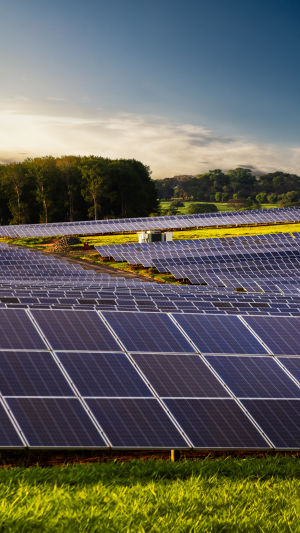
The cost story is a big part of why this happened. Solar photovoltaic electricity costs dropped around 82% between 2010 and 2019, and that trend has continued. Lithium battery costs have fallen by roughly 90% since 2010. Offshore wind got about 50% cheaper over the same period. When the economics work this well, adoption doesn't need to be mandated. It starts to happen on its own because it's just cheaper.
<h3>Jobs Are Following the Money</h3>
Green technology growth isn't clustering in a handful of tech hubs. It's spreading into regions that haven't historically been economic powerhouses. Wind farms in rural areas, solar manufacturing facilities in mid-sized cities, battery storage plants in formerly industrial regions — these are creating real employment and tax revenue in places that need it.
The Green Technology and Sustainability Market is forecast to hit $73.9 billion by 2030, driven substantially by AI integration and ESG compliance demands from institutional investors.
That ESG pressure matters more than people often realize. Large pension funds and institutional investors have increasingly built sustainability performance metrics into their investment criteria, which means companies without credible green strategies are starting to face actual funding disadvantages, not just reputational ones.
<h3>Carbon Capture and Clean Hydrogen Are Maturing</h3>
Two technologies that seemed perpetually "five years away" are finally getting real traction. Carbon capture systems can now trap up to 90% of CO2 emissions from certain industrial processes, which is a meaningful number for sectors like steel and cement that are genuinely difficult to electrify.
Clean hydrogen, produced using renewable energy rather than fossil fuels, is scaling up in Europe and parts of Asia, with infrastructure investment picking up pace.
These aren't silver bullets. Carbon capture still requires significant energy to operate, and green hydrogen production is expensive at scale. But both are moving from demonstration projects to commercial deployment, which changes the economics conversation.
<h3>Where the Biggest Opportunities Are</h3>
According to the BCG and World Economic Forum's joint analysis, over 55% of global emissions can now be addressed using cost-competitive technologies. A further 20% could be tackled with minor cost premiums under favorable policy environments.
That's a remarkably different picture from even five years ago, when clean alternatives were still significantly more expensive than fossil-fuel-based options across most sectors. Energy and transportation remain the core growth areas, but circular economy solutions, sustainable agriculture technology, and climate-resilient infrastructure are all scaling rapidly.
Companies that moved early into these spaces are consistently outperforming their conventional counterparts on revenue growth. The data increasingly backs what the early adopters bet on: going green isn't a cost. It's becoming a competitive edge.


