

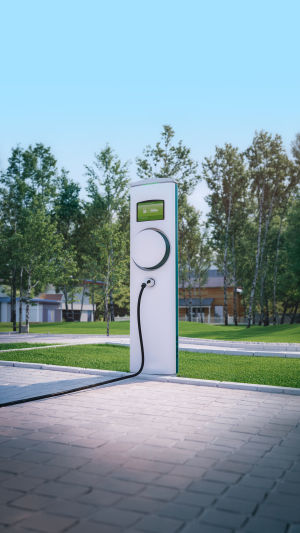
Most EV charging — around 80 percent of it — happens at home. That makes the decision about how to charge at home one of the more practical choices a new EV owner faces.
The answer depends on how far you drive each day, what your home's electrical setup looks like, and how much convenience is worth to you.
<h3>Level 1: The Slow Option That Works for Some</h3>
Every EV comes with a Level 1 charging cord that plugs into a standard 120-volt household outlet. No installation required — it just plugs in. The tradeoff is speed: Level 1 adds roughly 3 to 5 miles of range per hour. For a full battery electric vehicle with a large battery, a complete charge from near-empty could take 40 hours or more.
That said, Level 1 is genuinely sufficient for some drivers — specifically those who drive fewer than 40 to 50 miles per day and have 12 or more hours to charge overnight. If that's your situation, the included cord may be all you need, at least to start.
<h3>Level 2: The Standard for Most EV Owners</h3>
Level 2 charging uses a 240-volt circuit — the same voltage as a clothes dryer or electric range. It delivers 12 to 40 miles of range per hour depending on the charger's output and your vehicle's onboard charger rating. A full charge for most EVs takes 4 to 8 hours, meaning overnight charging consistently delivers a full battery by morning.
Level 2 requires installing a dedicated 240-volt circuit, which means hiring a licensed electrician. The cost for the charger unit itself typically runs $300 to $1,000. Installation adds $200 to $1,500 depending on your electrical panel's current capacity and how far the new circuit needs to run. If your panel needs upgrading to accommodate the new circuit, that adds to the total.
<h3>Smart Chargers Make a Meaningful Difference</h3>
Most Level 2 chargers sold today are "smart" chargers — they connect to your home Wi-Fi and communicate with an app. This allows you to schedule charging during off-peak electricity rate hours (typically overnight), monitor energy usage, set charge limits to protect battery health, and receive notifications. These features save money over time and make managing battery care much less manual.
<h3>Check for Utility Rebates Before You Buy</h3>
Many utility companies offer rebates for purchasing and installing Level 2 chargers — sometimes $200 to $500 off. Some states add additional incentives on top of that. It's worth spending 15 minutes researching what's available in your area before buying, because the incentives can meaningfully reduce the upfront cost. Manufacturers and EV dealers often have this information readily available.
<h3>Level 3 Is Not for Home Use</h3>
DC fast charging (Level 3) is found at highway stations and commercial locations. It uses three-phase power infrastructure that typical homes don't have and isn't practical or cost-effective for residential installation. It's designed for public charging networks on road trips, not for routine home use.
<h3>The Bottom Line</h3>
For most EV owners who drive a typical daily distance and park at home overnight, a Level 2 charger represents the best combination of convenience, speed, and long-term battery care. If you're a light driver with a short commute, the Level 1 cord that came with your EV might genuinely be all you need. The honest answer depends on your actual driving habits — not on which option sounds more impressive.


